

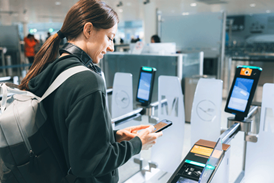


Ahead of International Airport Summit 2026, airport security experts share practical lessons on deploying CT technology, accelerating throughput and overcoming regulatory barriers.
Airport security checkpoints are under increasing pressure to accommodate passenger growth while maintaining rigorous security standards. Computed tomography (CT) scanners, automated tray-return systems (ATRS), remote screening and artificial intelligence (AI)-supported threat detection are creating opportunities to improve throughput, but their benefits depend on more than the technology itself.
Lane configuration, staffing, training, passenger preparation and regulatory approval all influence whether new equipment delivers the expected operational gains.
Ahead of International Airport Summit 2026 in Rome, airport security leaders share their experiences of increasing capacity, navigating regulatory constraints and preparing frontline teams for the next generation of screening.
Scaling capacity: the power and realities of 3D CT screening
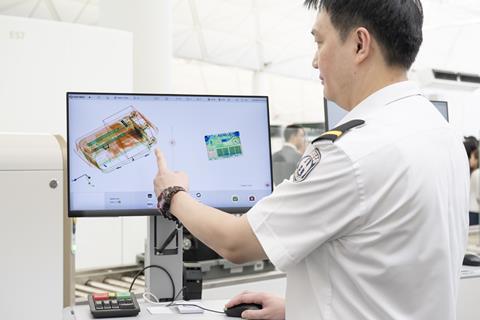
CT scanners produce 3D images of cabin baggage, allowing security officers to examine its contents from different angles. Where approved operating procedures permit, the technology can reduce the need for passengers to remove laptops and liquids from their bags, simplifying the divestment process.
However, faster baggage screening does not automatically mean faster passenger throughput. Airports must also consider body scanning, alarm resolution, tray collection and the availability of trained security officers.
Hong Kong International Airport: increasing lane capacity
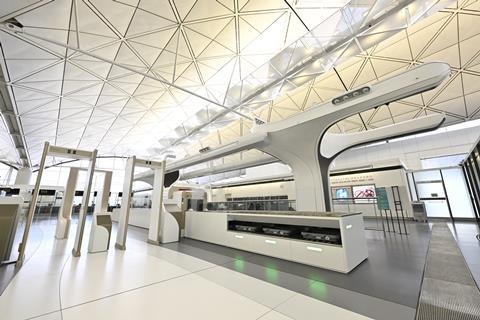
Jacob Cheung, Executive Director of Aviation Security Company (AVSECO) in Hong Kong, reports a significant increase in lane capacity following the deployment of smart security CT technology.
“In the past we handled about 240 passengers per hour per lane. Now we’ve actually increased this by 50% to about 360 per hour per lane, which makes a lot of difference… the security process is much smarter and it’s more accurate.”
The reported increase represents a 50% rise in the airport’s stated lane throughput. It demonstrates the potential of combining new screening technology with an operational model designed to support higher passenger volumes.
For airports planning similar projects, the relevant question is how the entire lane performs, rather than how quickly an individual scanner processes a tray.
Manchester Airport: reducing divestment
At Manchester Airport, Managing Director Chris Woodroofe highlights the passenger experience benefits of reducing the need to remove items from hand luggage. He also describes the implications of expanding body-scanning capacity. “Not having to take liquids and laptops out of your bag makes a massive difference… When you move to 100% body scanning rather than 25%, that generates more resource, but the new equipment works really well and we can see throughputs getting better into the future.”
The experience illustrates how checkpoint transformation can create new resource requirements. While reducing divestment can simplify the passenger journey, increasing body-scanning capacity also requires investment in equipment, space and staffing.
Navigating regulatory constraints: auto-clear and remote screening
The introduction of automated screening and remote image analysis raises an important question: how can airports deploy new technology while maintaining the security standards required by regulators?
In Europe, CT screening equipment must meet applicable aviation security performance requirements, and airports must operate within the relevant approval framework. The regulatory environment also demonstrates why technical capability and operational permission are not always the same thing.
In July 2024, the European Commission introduced temporary restrictions affecting certain C3 cabin-baggage screening configurations. From 1 September 2024, the relevant equipment was subject to a maximum individual liquid-container volume of 100ml. The Commission described the measure as a precautionary response to technical issues with existing equipment configurations.
The example highlights the importance of aligning procurement, certification and regulatory engagement. Airports need confidence that equipment can be deployed within a clear operating framework, while regulators need evidence that new procedures maintain the required security standards.
Auto-clear: the next stage of checkpoint automation
Chris identifies automated tray screening as a potential next step in improving checkpoint efficiency. He draws a comparison with automated decision-making in hold baggage screening:
“I think the next phase really is to start looking at APIDs… auto screening of some of the trays. The computer knows that there’s nothing wrong with that image. We might as well just auto clear it… The computer in hold baggage makes a decision on 70-75% of the bags. It’s only 25% that actually gets shown to an operative, but it means that operative can really focus on the images that need their attention.”
The comparison raises a practical question for checkpoint operators: how much of the screening workload can be handled through automated detection, and how should human officers be deployed to manage alarms and more complex images?
Automated image detection does not eliminate the need for human oversight. Its operational value depends on approved detection capabilities, image quality, operating procedures and the way uncertain or suspicious items are referred for further examination.
Remote screening: technology ahead of the operating model
Remote screening separates the location of the screening officer from the physical checkpoint. It can support more flexible staffing arrangements and centralised image analysis, but it also introduces questions around connectivity, system resilience, workforce organisation and regulatory approval.
Marisa von Wieding, Vice President of Operations at The New Terminal One at JFK, describes the airport’s approach to procuring remote screening technology before formal pilot approval. “We took a risk and we have procured remote screening for the TSA checkpoint… at the time when we purchased it, it wasn’t even approved, but it’ll be the first terminal that we go live in, in a non-pilot form.”
The example highlights the importance of early engagement with regulators, particularly where procurement and terminal construction schedules move faster than approval processes.
Frontline change management and passenger preparation
Technology deployment also changes the tasks performed by security officers, the skills required to operate equipment and the way staff are scheduled across the checkpoint.
The transition can be particularly complex in existing terminals, where new CT lanes must be introduced alongside legacy equipment without interrupting daily operations.
Phased rollouts and training
Jacob explains the challenge of operating different types of equipment during the transition. “When we introduced the new smart security system, we had to do it in parallel with current operations. We had both conventional machines and new machines, so we had to do it in a phased approach. This meant that the staff had to learn two types of machines. So, the new skills need to be picked up.”
Training must cover more than the technical operation of the scanner. It should also address alarm resolution, passenger communication and the differences between legacy and new equipment.
Resourcing change management
Chris argues that transformation requires dedicated ownership and structured engagement with the people who will ultimately operate the new system:
“Change is not a side of a desk activity. You need to resource a proper change team who can help to manifest the change, but at the same time with a sponsorship model that makes sure that the people who are going to own it in the end feel like they’re part of the decision-making process.”
For airport security, this means co-ordinating equipment installation, staffing, training, standard operating procedures and passenger communications.
Pre-security customer preparation
Passenger behaviour remains an important factor in checkpoint performance, even when new technology reduces the number of items passengers need to remove from their bags.
At Charlotte Douglas International Airport (CLT), Vice President Martha Edge describes the importance of preparing passengers before they enter the screening lane. “The airport is doing some things to support with divestiture and pre-security, really planning and prepping the customer for that process. So that way, if there is a longer queue, we’re out working the queue, working the line and getting people ready.”
CLT applies a philosophy of HI + AI = ROI (Human Intelligence + Artificial Intelligence), using real-time movement data to help deploy frontline staff pre-emptively and manage operational pressure points.
The wider lesson is that passenger preparation and queue management should be treated as part of the security operation. Clear information, visible staff support and timely intervention can help maintain a consistent flow through the checkpoint.
Join the discussion at International Airport Summit 2026 in Rome
To explore how international airports are deploying CT technology, overcoming regulatory bottlenecks and preparing frontline teams for high-throughput screening, join industry leaders at International Airport Summit 2026 in Rome this November.
Panel session: Delivering throughput with CT, automation and realistic regulatory models
Event: International Airport Summit 2026
Dates: 10–12 November 2026
Location: Rome, Italy
Moderator:
- Stacey Lora, Vice President, Safety & Security, JFK International Air Terminal.
Confirmed speakers:
- Dr Jan-Henrik Andersson, Chief Commercial Officer & Chief Security Officer, Munich Airport
- Mohamed Rameez, Associate General Manager, Security Coordination & Facilitation, Maldives Airports Company Limited (MACL)
- Hamad AlZayni, Head Airport Security Operations & Training, Bahrain Airport Company.
The session will examine the practical realities of checkpoint transformation, from technology procurement and regulatory approval to workforce planning and passenger flow.
Register for your complimentary aviation leader ticket today.
*Complimentary aviation leader tickets are applicable to senior managers and above from airports, airlines, regulatory bodies and aviation authorities




No comments yet