


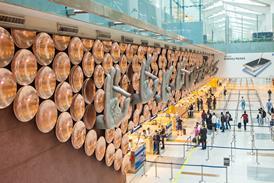

As India accelerates towards 300 airports by 2040, Chairman Vipin Kumar of Airports Authority of India, talks exclusively to International Airport Review about combining infrastructure expansion, sustainability, and advanced technology in reshaping national connectivity and making aviation accessible to millions.
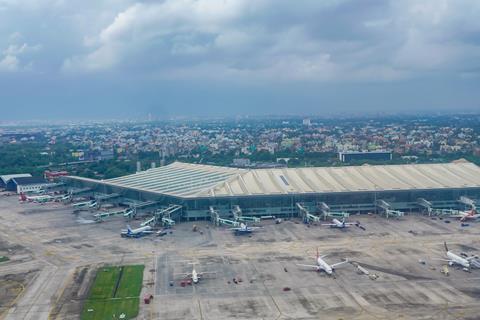
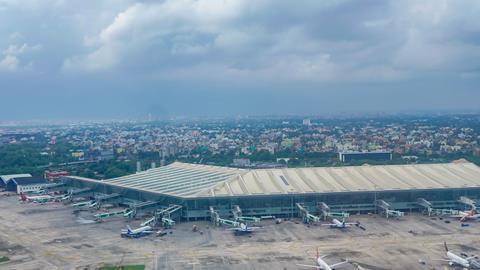
As the world’s most populous country, India’s aviation growth is beginning to reflect its size. Over the last decade, aviation has become recognised as a necessity rather than a luxury, as the Chairman of Airports Authority of India (AAI), Vipin Kumar, asserts. In 2014, India had around 74 operational airports. Today, that number has grown to more than 155, with over a billion USD of investment.
Over the next four years, AAI is looking to develop approximately 50 more airports. In the long-term, their ultimate vision is to expand to 300 airports by 2040. This will be possible under the UDAN (Ude Desh ka Aam Nagrik) scheme.
Air traffic in India was mostly concentrated amongst six metropolitan cities, while many regions craved for air connectivity. This skewed development of air connectivity would create disparity in growth if not addressed appropriately. This is why the objective of UDAN is to ensure that air travel is not limited to a small segment of society, but is accessible and affordable for the common citizen.
More than 90 airports in India already operate using 100% solar energy, and this number is increasing.”
“India has enormous untapped potential in the aviation sector. To realise this, the government, along with the Airports Authority of India, has been actively developing airport infrastructure across the country,” states Kumar.
What determines new airport locations?
Given the high number of airports that AAI want to construct, key to optimising growth is the locations where it builds. Introduced in 2016, as a baseline criterion, a Greenfield Airport Policy meant that that there should not be another airport within a 150km radius.
Several other conditions are also evaluated, including passenger demand, regional potential, and requests from state governments. Land availability and acquisition are critical, as well as airspace considerations.
Kumar notes: “We are also evaluating approximately 400 existing or previously used airstrips to determine whether they can be revived or upgraded. Site selection is always carried out in close collaboration with state governments, as they play a key role in providing land.”
For AAI, land acquisition remains one of the most significant challenges, as it can be time-consuming and complex. Though with the Greenfield Airport Policy, guidelines for completing these tasks smooth out the process.
Project timelines are another factor of consideration. While construction itself may take around two years, the full development cycle of an airport can take three to four years.
Developing technology and sustainability
AAI’s focus is also not simply on building infrastructure, but on developing sustainable and future-ready airports.
With rising passenger demand and limited resources such as airspace and infrastructure, optimisation is critical.
“We are implementing Airport Operations Control Centres (AOCC) across multiple airports to improve co-ordination and efficiency. Artificial intelligence is also being introduced to optimise the use of runways, check-in counters and security checkpoints,” says Kumar.
Automation is a key focus area. Technologies such as self-service baggage drop and digital passenger processing are being expanded. The Digi Yatra initiative, for example, enables seamless, contactless passenger journeys through biometric authentication.
Challenges do arise from the demand for technology, as specialised equipment such as inline baggage handling systems and security infrastructure often have long procurement and delivery timelines, sometimes up to two years after contract award.
To address these issues, we are focusing on improving processes, adopting new technologies, and promoting domestic manufacturing under ‘Make in India’ to reduce both costs and lead times.
These advancements allow Indian Airports to handle more flights and passengers within existing infrastructure, improving overall capacity and efficiency.
More than 90 airports in India already operate using 100% solar energy, and this number is increasing. Sustainability is embedded across all aspects of development, including construction materials, energy systems and water management.
Over the next four years, AAI is looking to develop approximately 50 more airports.”
AAI are implementing rainwater harvesting and aiming for complete water reuse wherever possible for its airports. The goal is to ensure that airports are environmentally responsible while remaining efficient and cost-effective to maintain.
India’s aviation expansion is therefore not simply about increasing the number of airports, but about reshaping how connectivity supports economic growth, regional development and social mobility across the country. As AAI continues to expand infrastructure, integrate advanced technologies and strengthen sustainability measures, the focus remains on building an aviation network that is both accessible and future-ready.
With ambitious long-term targets and continued government support through initiatives such as UDAN, India is positioning itself to become one of the world’s most connected and rapidly developing aviation markets over the coming decades.
About the interviewee
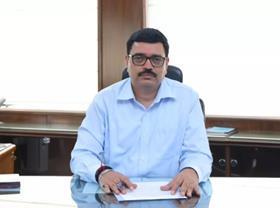
Vipin Kumar is the Chairman of the Airports Authority of India (AAI), serving at Additional Secretary level within the Ministry of Civil Aviation, Government of India. He leads one of India’s largest aviation organisations, responsible for developing, upgrading, maintaining and managing airport infrastructure and airspace operations across the country. Under his leadership, AAI oversees more than 130 airports and provides air navigation services across approximately 2.8 million square nautical miles of Indian airspace, while playing a central role in expanding regional connectivity, modernising infrastructure and supporting the rapid growth of India’s aviation sector through initiatives such as the UDAN regional connectivity scheme.
Prior to joining AAI, he served as Additional Secretary to the Government of India between 2020 and 2024, where he was part of the core team responsible for implementing the National Education Policy 2020. He has also held several senior administrative positions throughout his career, including District Magistrate across multiple districts and Resident Commissioner of Bihar in New Delhi. Vipin Kumar is an Electronics and Communication Engineer and graduated from Malaviya National Institute of Technology Jaipur.








No comments yet