


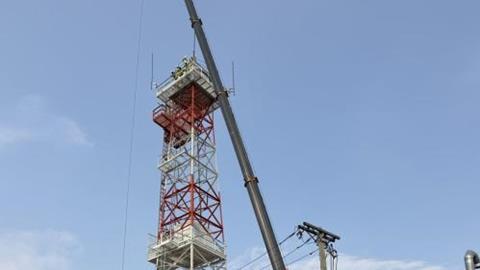
Newark Liberty International Airport has installed a new Surface Movement Radar, the fifth of its kind deployed nationwide, as part of a wider $30 million infrastructure upgrade.

Newark Liberty International Airport (EWR) has switched on a new Surface Movement Radar (SMR-4), replacing a system that had been in operation for three decades. The upgrade was announced by US Transportation Secretary Sean P. Duffy and Federal Aviation Administration (FAA) Administrator Bryan Bedford, and forms part of a wider programme to modernise air traffic infrastructure at one of the country’s busiest airports.
The SMR-4 will allow controllers to track aircraft and vehicles across runways and taxiways in all weather and visibility conditions. Newark’s installation is the fifth SMR-4 system to be deployed at a US airport, according to the FAA.
$30 million infrastructure programme
Over the next three years, EWR is set to receive $30 million in federal funding to support further upgrades, in addition to the radar installation. The airport has already replaced 90 per cent of its copper wiring with high-speed fibre to improve communications, and is in the process of moving from paper-based to electronic flight strips.
Further improvements planned by the end of summer 2027 include new electronic information displays intended to improve situational awareness for controllers, upgraded voice switches to support communication between controllers, pilots and other air traffic facilities, and a new long-range radar system to provide a more modern method of tracking aircraft position.
“Newark sees well over a thousand flights per day, and the new Surface Movement Radar will help controllers keep those flights safe at this major U.S. hub,” said Bedford. “This is just the latest step in the FAA’s work to modernise our skies for the Golden Age of Travel.”
The radar forms part of a broader effort to address performance issues at Newark, which was ranked among the worst-performing airports in the country for delays during summer 2025. Since then, the FAA has overseen a software patch to address system glitches, accelerated the rollout of fibre to replace copper wiring, completed runway construction ahead of schedule, and rebalanced flight volumes to match controller staffing levels.
According to the FAA, these measures have contributed to Newark becoming one of the better-performing airports for on-time flights in the north-eastern United States.
Nationally, the FAA states that it has replaced 60 per cent of copper wiring across its network, converted 363 radio sites, installed 96 new Surface Awareness Initiative systems, transitioned 19 towers to electronic flight strips, and installed 151 IP voice switches at control towers over the past year.





No comments yet