

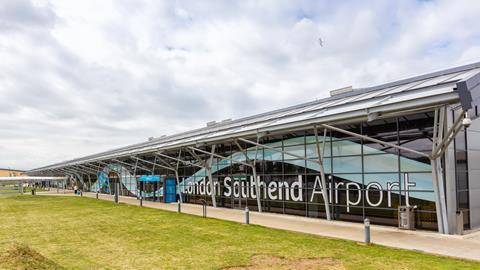
Marc Watkins, Route Development Manager at London Southend Airport, speaks exclusively to International Airport Review to explain how the airport has become the UK’s fastest growing.
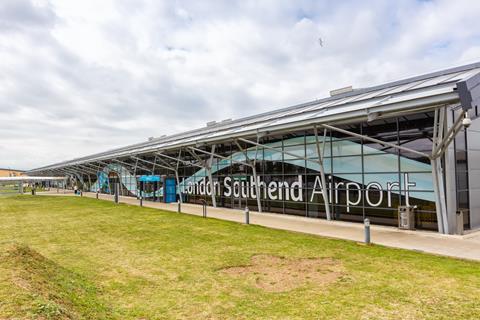
London is the world’s largest aviation market, and with six airports across the capital, competition is tough. Though the smallest of the six airports, London Southend Airport is proud to be achieving great growth in the sector. They were the fastest growing airport in the UK in 2025 and are continuing this momentum so far in 2026.
This is why, as Marc Watkins, Route Development Manager at London Southend Airport, explains, they describe themselves as a ‘challenger airport’.
“Everybody around the world knows Heathrow. A lot of people know Gatwick and, increasingly, Stansted, Luton and London City. London Southend is still less familiar. We’re very fortunate to have an easyJet base, which helps raise awareness, but we still must work hard to get ourselves on the map,” says Watkins.
New routes and immediate opportunity for more
For London Southend, its growth can be seen as a disruptor in the market. An important part of continued success is changing consumer perception. At the moment, they have a strong network in Spain, offering nine destinations. Yet, newly announced routes also show how EasyJet is diversifying its network from London Southend.
This summer, Ibiza has been added, alongside the return of domestic flights to Jersey. They also have a short-season Oktoberfest service to Munich, plus two new routes to Belfast City and Budapest.
“Overall, we now serve 15 countries, primarily across Europe and North Africa, as well as domestic UK destinations,” states Watkins.
This demonstrates the greater interest airlines are showing in regional and secondary airports at present. London may be the world’s biggest aviation market, but it is also extremely congested. Many London airports have plans to add capacity, but London Southend already has capacity available, which it is capitalising on.
“If an airline speaks to us, they can operate tomorrow. They don’t have to worry about slot constraints or whether the terminal has enough space. Other airports may have long-term expansion plans, but until those projects are delivered, we offer airlines an immediate opportunity to grow in the London market,” says Watkins.
we are confident we have sufficient capacity to support our ambitious growth plans.”
Convenience for the passenger
Though physically smaller than the capital’s other airports, London Southend uses its footprint to its strength, utilising the benefits this can provide for passengers.
Total journey time is an important factor that encompasses the entire passenger experience, from the moment the aircraft arrives to when passengers reach their destination. At London Southend, passengers can arrive on a plane and within minutes be sitting on a train into central London.
Watkins adds:
“No other London airport can really offer this. We have a railway station directly outside the terminal building, with Greater Anglia services into Liverpool Street, stopping at Stratford along the way.
“Even our car parks are within walking distance of the terminal, so passengers avoid the longer transfer times that can come with larger airports.”
In terms of other multimodal connectivity, London Southend currently has local bus services serving the surrounding catchment area. Longer-distance coach links will naturally follow as passenger numbers increase, but its rail connectivity already gives the airport a very strong position.
This simplicity and convenience are what London Southend trades on, and this generates increasing attraction from the London population.
As the airport continues to grow, maintaining the passenger experience will remain a priority. The terminal already has capacity for up to three million passengers, which is another major advantage. This means London Southend won’t need major construction work or terminal expansion in the immediate future.
The airport has enough flexibility within the existing footprint to add more security lanes and accommodate further growth without disrupting the passenger journey.
“Beyond that point we would need to expand, but for the next few years we are confident we have sufficient capacity to support our growth plans,” Watkins asserts.
About the interviewee

Marc Watkins is Route Development Manager at London Southend Airport, bringing more than 25 years’ experience in aviation business development, route planning, marketing and airline relations from roles at Birmingham, Coventry and Cardiff airports.



No comments yet