
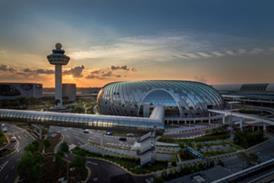
Runway capacity is the hardest limit on airside operations, and few airports are adding new tarmac. Hannover Airport CEO, Dr Martin Roll, InJourney Airports President Director, Rizal Pahlevi, and Mactan-Cebu International Airport Authority General Manager and CEO, Julius Neri Jr, explain where you can unlock extra capacity.
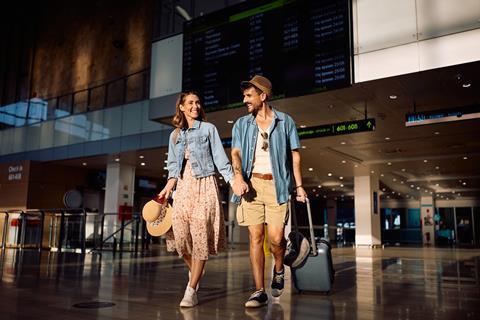
Airside capacity divides into two kinds of constraint. There are hard limits, set by the number and size of a runway, and there are softer ones: terminal footprint, gate numbers, whether those gates are staffed or automated. The hard limits are expensive and slow to shift. The soft ones are where most airports are finding room to grow before they ever touch a runway.
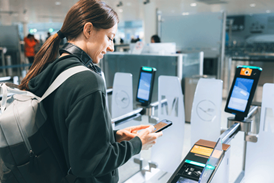
Take gates, for example. At Mactan-Cebu International Airport in the Philippines, Julius Neri Jr, General Manager and CEO of the Mactan-Cebu International Airport Authority (MCIAA), is replacing four obsolete e-gates whose fixed-height cameras sit too high for children and wheelchair users. In their place, MCIAA is installing 20 state-of-the-art e-gates this year, 12 in arrivals and eight in departures. With five times as many gates, open to a far wider range of passengers, Neri says the upgrade “will immediately unlock capacity” without moving a wall.
The soft limits: gates, biometrics and a friction-free journey
Rizal Pahlevi, President Director of InJourney Airports, which operates 37 airports across Indonesia, thinks about soft limits mostly in terms of friction. “Across the frictionless airport journey, the process is digital, from check-in until boarding,” he says, pointing to online check-in, biometric and facial-recognition gates, and real-time digital flight information as the layers that have cut passenger processing times across the group’s airports. The upside shows up downstream, he adds: shorter queues gift passengers more time and less stress, which translates into more dwell time in the commercial spaces. Pahlevi says baggage handling, specifically how fast the first and last bag reach the belt, is the group’s next target.
Digitalisation also closes gaps that used to cost time on the ground. One recurring headache for Neri’s team at Mactan-Cebu was baggage security: passengers already through the gate, sometimes already boarded, would be called back down to a level three screening facility because something prohibited had been detected in their checked luggage. The airport has since installed cameras over the screening area so passengers can watch their own bag being checked remotely, taking the friction, and the risk of a dispute, out of an already awkward moment.
Across the frictionless airport journey, the process is digital, from check-in until boarding.”
Data tells the facts, people still make the call
Data plays a similar role for Neri. “When you look at data, what you get is facts – not a subjective opinion,” he says. Knowing precisely when peak and lean hours fall lets an airport deploy its resources correctly, but the interpretation is still a human job. “Data is very, very important, but its limits will be defined by how it’s interpreted.”
At InJourney, that interpretation starts with how different the group’s airports are from one another. Jakarta’s passenger base is largely business travellers, Pahlevi says, while some of the group’s leisure-focused airports see a completely different profile, and the data has to be read accordingly. The group runs its own passenger surveys alongside external research, uses CCTV analytics to read crowding at check-in, security and boarding gates, and has connected tenants’ point-of-sale systems directly to its dashboards for a real-time view of commercial performance.
Increasingly, that reading is being done by AI rather than a person watching a screen. Pahlevi points to computer vision on the group’s CCTV network, used to detect crowd behaviour and predict passenger flow before it builds up, and to business intelligence tools tracking tenant performance and what passengers are actually buying. Rolling any of this out across 37 airports happens in order of size, he adds, with the busiest sites (those above five million passengers a year) going first and lessons passed down to the smaller ones in turn.
Dr Roll explains how Hannover Airport is at an earlier stage in this process. “We are looking at what AI is bringing up, especially how to allocate the planes to positions, how to fasten the processes of the aircraft, so that the turnover time gets faster,” he says, working with an internal team and Air IT, an aviation IT supplier half-owned by the airport itself.
Data is very, very important, but its limits will be defined by how it’s interpreted.”
The hard limit, and what to do while you wait for it
Not every airport needs to squeeze quite so hard. Dr Roll says Hannover’s own runway capacity, two major runways and a smaller one, will comfortably see the airport through the coming years. So, its soft limit pressure is shifting to aircraft parking stands instead, as new aircraft on order start arriving faster than the airport can park them. The runway itself still needs work, and Hannover is investing more than €100 million to fully modernise its 3.8km northern runway over the coming years.
Where a hard limit does need moving, the returns can be significant even without full flexibility. Mactan-Cebu opened its second, parallel runway in 2025, but the two sit too close together to be used independently. Even so, Neri estimates that using one runway for take-offs and the other for landings will improve efficiency and capacity by around 25%. With the airport not yet near capacity, he says, “we have room to spare and room to grow.”
None of this works without co-ordination. At Mactan-Cebu, the airport operations centre gives every airline, ground handler and the terminal operator a desk alongside MCIAA itself, so decisions are made in consultation rather than in isolation. Any capacity increase also has to pass stringent local and international audits, and Neri says that takes investment in equipment, training for security staff and a willingness to work with every agency involved.
Pahlevi describes something similar at InJourney’s busiest airports: an integrated operations control centre that co-ordinates departments during predictable surges, such as Christmas, New Year and Ramadan peaks, backed by standard operating procedures agreed with Indonesia’s transport ministry and other stakeholders.
Dr Roll adds a sustainability angle to the same balancing act. The vast majority of Hannover’s airside vehicle fleet is now electric, reducing its exposure to fuel prices, and the airport is investing heavily in photovoltaics to become more energy self-sufficient. Automating that fleet further is a different question. As a midsized airport, he says, the business case doesn’t yet stack up the way it might at a mega-hub.
Between those two ends sits the actual work of squeezing the lemon: e-gates built for more passengers, data that tells where and when to deploy staff, cameras that replace a walk to a screening room, and an operations centre where a decision doesn’t wait for a meeting. None of these touch a runway, and all of them buy time. When the hard limit eventually has to move, as it is now on Hannover’s northern runway, the softer gains are what get an airport there with room still to spare.


No comments yet