
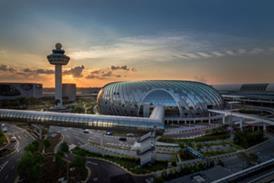

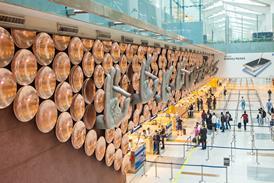
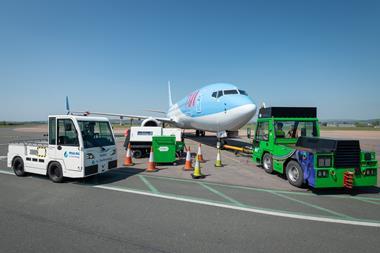
This week’s Picture of the Week is from Bristol Airport who has just announced three projects focused on renewable energy, carbon removal and hydrogen operations have secured funding through Bristol Airport’s 2026 Aviation Carbon Transition programme.
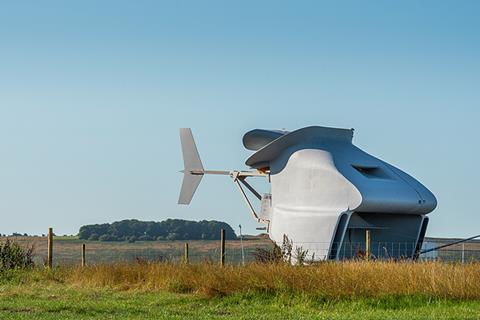
Bristol Airport has announced funding for three innovation projects designed to support the decarbonisation of aviation and airport operations through its Aviation Carbon Transition (ACT) Programme.The selected projects for 2026 will explore low-height wind power, the feasibility of direct air capture technology, and hydrogen-powered airport operations. The annual programme is open to organisations and companies with proposals aimed at reducing emissions associated with aviation and airport activity.Now in its fourth year, the ACT Programme has awarded hundreds of thousands of pounds to innovation projects since its launch. Bristol Airport said the 2026 round attracted a record 28 applications, with three projects selected for funding.Each project will focus on reducing Bristol Airport’s Scope 3 emissions, including those generated by aircraft operations and journeys made by passengers and staff travelling to and from the airport.
Low-height wind power study
The first successful project, Falcon: Airport Wind, is led by Seamach and will assess the feasibility of developing a low-height wind farm at Bristol Airport, alongside wider potential applications linked to CO₂ direct air capture.The study will examine ways to address challenges traditionally associated with wind turbine deployment at airports, including radar interference and operational safety considerations.Bristol Airport currently uses solar panels for on-site renewable energy generation, which produced enough energy last summer to power 400 homes.
Direct air capture assessment
The second project, Developing Direct Air Capture Locally to Bristol Airport, has been proposed by Equilibrion.The study will evaluate the feasibility of establishing direct air capture infrastructure in South West England to remove carbon dioxide from the atmosphere. The project will identify potential local sites, compare available technologies and develop a roadmap for incorporating direct air capture into Bristol Airport’s decarbonisation plans.According to the airport, captured CO₂ could be used in the production of sustainable aviation fuel (SAF).
Hydrogen operations modelling
The third project, Supercool: Hydrogen Turnaround and Cold Chain, is being led by HyFlux.The initiative will create a digital twin simulation of hydrogen-electric aircraft operations at Bristol Airport. The model will examine the production, liquefaction and transportation of hydrogen within the region.Commenting on the successful projects, Clare Hennessey, Director of Sustainability at Bristol Airport, said:
“We received a huge number of applications to our 2026 ACT Programme, making choosing successful projects a tough decision.“The projects we’re supporting are exceptional and will look to overcome some of the challenges we and the wider aviation industry face. Our region has a unique cluster of aerospace companies, expertise, and world-leading universities. Our ACT Programme provides them with funding for innovative ways to reduce emissions, with the option of the Airport being available as a testbed for new technology.”
The 2026 ACT Programme follows an announcement by the Department for Transport that Bristol Airport will participate in three projects aimed at decarbonising flight through the £8 million Zero Emissions Flight Demonstrator Programme.These initiatives include plans for the first flight of a liquid hydrogen-powered aircraft from a UK airport, reinforcing Bristol Airport’s role in supporting aviation innovation and emissions reduction.




No comments yet