


Gaurang Harit, Project Director at Malaysia Airports Holdings Berhad outlines how KLIA is modernising its baggage handling system while protecting live operations through a proactive, resilience‑led delivery strategy.
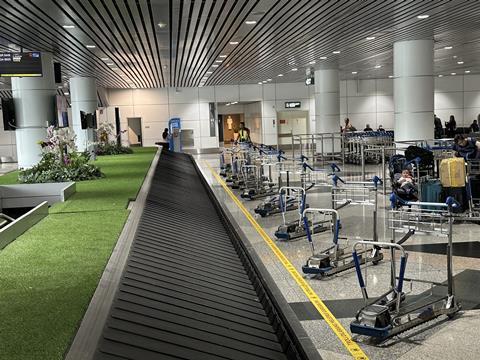
When Kuala Lumpur International Airport (KUL) opened in 1998, its baggage handling system stood among the most sophisticated in Asia, engineered for scale, precision, and the demands of an ambitious new hub. For over two decades, it performed that role reliably. But infrastructure has a lifecycle, and for an airport with KLIA’s regional aspirations, standing still was never an option.
The case for modernisation was clear: a new high-speed ICS (individual carrier system) offering shorter connecting times, substantial early baggage storage capacity, and the throughput efficiency needed to support KLIA’s positioning as a premier aviation hub in Asia. What was less straightforward was how to deliver that transformation without ever compromising the operational continuity of a major international airport running at threshold capacity.
That challenge, between building the future while protecting the present, is where the real leadership was tested.
Getting ahead of the crisis
The conventional approach to managing a live BHS replacement programme is to plan for contingency, to design a response framework for when things go wrong. The approach taken at KLIA was different. The question asked early was not how do we recover from disruption? But, how do we prevent the conditions for disruption from arising in the first place?
Answering that question required bringing stakeholders together before any problem had materialised. Airlines, ground handlers, operations teams, and project delivery partners were convened to surface concerns, map vulnerabilities, and co-design a response. The output of that process was Fallback 360: a structured business continuity framework built around four interconnected pillars, with a digitalisation layer running beneath all of them.
The name reflects the intent: a 360-degree view of operational risk, addressed comprehensively, before the pressure arrived.
Pillar one: fallback capacity
The foundation of any resilience framework is the ability to keep operating when primary systems are under stress. At KLIA, this meant introducing additional system capacity before the existing assets are shut down. The completion of Phase 1 of the asset replacement programme was commissioned, this added 2,700 bags per hour of new subsystem capacity, providing the operational headroom the programme needed as subsequent construction phases got underway.
The most consequential decision in this pillar, however, was not about equipment. It was about sequencing. As baggage volumes continued to climb and the scale of upcoming construction became clearer, it became evident that the original project phasing needed to be revisited. A comprehensive review was undertaken, bringing together all key stakeholders around a structured risk assessment framework. The outcome was a re-sequenced programme that deliberately front-loaded subsystem capacity and availability gains, ensuring the system was strongest at precisely the moments construction pressure was highest. It was a proactive governance decision, made early enough to shape outcomes rather than simply manage them.
Pillar two: system reliability
Fallback capacity addresses what happens when a system fails. System reliability is about reducing the likelihood of failure in the first place. At KLIA, the cross-belt main sorters, the core sorting infrastructure of the BHS, had been in continuous operation for over two decades. Their scheduled refurbishment was a non-negotiable element of the programme.
In parallel, the programme evaluated condition monitoring and predictive maintenance technologies, moving away from time-based maintenance cycles towards data-driven intervention. Specialist vendors were assessed, and use cases from leading international airports that had already deployed these solutions were studied as reference points. The ambition was to establish a system availability benchmark above 99% and to build the maintenance discipline needed to sustain it consistently. That benchmark was not simply a KPI. It was a statement of the operational standard KLIA expected of itself.
Pillar three: SOP enhancement
Technology and infrastructure create the conditions for resilience. Procedures and people deliver it. The third pillar recognised that no fallback system, however well designed, can compensate for unclear accountabilities when the pressure is on.
Revised fallback standard operating procedures were developed with explicit responsibility matrices, defining who does what, and when, across airlines, ground handlers, and airport operations teams during crisis scenarios. Make-up unit opening times were reviewed and optimised. Stakeholder co-ordination mechanisms were strengthened to compress response times and reduce the ambiguity that inevitably emerges when multiple organisations must act in concert under pressure.
The lesson here is a familiar one in complex infrastructure environments, but one that still goes under-applied: invest in the human system with the same rigour applied to the technical one.
Pillar four: capacity optimisation
The fourth pillar addressed a subtler but equally important lever: reducing unnecessary demand on the BHS before bags even enter the system.
Analysis identified that transfer bags and early baggage system bags collectively represented a significant proportion of peak-hour injection volumes, at approximately 15% and 8% respectively. Managing these flows more intelligently reduced system stress during the highest-demand periods and improved overall throughput efficiency without additional infrastructure investment.
Beyond the terminal perimeter, the programme also explored off-airport and remote check-in models, enabling baggage acceptance at partner locations for select flight categories. Beyond the operational benefits of distributing check-in demand more evenly, this initiative reflected a broader aspiration: to extend the passenger experience beyond the terminal boundary and offer genuinely differentiated service to specific traveller segments.
The digital layer: intelligence from existing infrastructure
Running beneath all four pillars was a digitalisation initiative that, in many respects, defined the character of the entire programme.
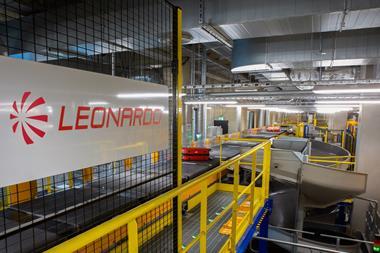
Working with the BHS technology partner, the programme undertook a systematic digitisation of the existing asset base. Rather than waiting for new infrastructure to deliver data transparency, the focus was on extracting operational intelligence from what was already in place. The result was a connected baggage ecosystem providing real-time visibility across all major interfacing points, giving baggage operations teams, airlines and ground handling agents a shared, fact-based picture of system status at any given moment.
The value of this capability was most apparent during disruptions experienced across the construction phasing. When automated systems are under stress and manual fallback procedures come into play, the risk of short shipment and baggage misconnection rises sharply. Digitalisation addressed this directly, shifting accountability from assumption to data and giving frontline teams the situational awareness to manage mixed automated and manual operations with confidence. Facts, not instinct, became the basis for decision-making at the moments it mattered most.
The philosophy underpinning this was straightforward: do more with less. At a time when the asset replacement programme was directing significant capital towards new infrastructure, the digital layer ensured the existing system was contributing more intelligence, more transparency, and more operational value than at any point in its working life.
A model worth replicating
The Fallback 360 framework offers a replicable model for airports worldwide navigating live BHS modernisation programmes. Its relevance extends well beyond KLIA. As airports across Southeast Asia, South Asia, and the Gulf prepare for the next generation of capacity expansion, many involving greenfield terminals or complete BHS replacements, the pressure to maintain operational continuity during delivery will be a defining challenge for each of them.
The principles are transferable: build fallback capability before it is needed; instrument existing assets rather than waiting for new ones; align procedures and people with the same discipline applied to technology; and digitalise early, because operational transparency is not a feature of next-generation infrastructure. It is a discipline that can be embedded in any system, at any stage of its lifecycle.
What the KLIA experience reinforces, above all, is the value of asking the hard questions early, before construction creates pressure, before stakeholders are managing a crisis, and before the cost of getting it wrong has already been incurred. The most important conversations in a complex infrastructure programme are often the ones that happen before anything has gone wrong. Fallback 360 was built on that conviction.
This article was published in International Airport Review’s baggage innovation eReport in May 2026.







No comments yet