

Airports are being asked to move more aircraft through the same stands and runways. Huawei used its Shanghai event in September to show how AI-driven milestone detection, forecasting and a single operational picture are changing the way operations centres work.
Knock-on delay is the largest single source of delay in European aviation, and the stand is where much of it starts. Eurocontrol’s analysis of all-causes delay for 2024 puts average delay at 17.5 minutes per flight. Airports themselves were a small primary cause, at 1.7 minutes per flight, but reactionary delay accounted for 46% of all delay minutes. A turnaround that slips by 20 minutes mid-morning is still being paid for at the end of the day, across rotations that had nothing to do with the original problem. The stand is also one of the few places where the airport, rather than the airline or air traffic control, can intervene.
The pressure is increasing. ACI World forecast in January 2026 that global passenger traffic will reach 10.2 billion this year, up 3.9%, and warned that capacity constraints, including airport infrastructure limitations, jeopardise the industry’s ability to meet projected demand. Most airports cannot build their way out of that quickly. What they can do is run the infrastructure they have more precisely, and that depends on knowing, to the minute, what is happening on every stand, rather than finding out from a radio call or a handler’s manual timestamp 20 minutes later. That is the job AI is now being asked to do: capture what is happening on the apron without anyone reporting it, forecast what happens next, and put the result in front of the people who decide.
What was on show in Shanghai
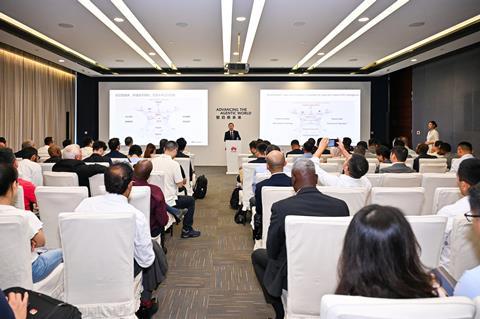
That was the thread running through Huawei’s aviation session at Huawei Connect 2026, held in Shanghai from 17 to 19 September. The company has spent several years building a portfolio for airports and airlines around a single idea: that operations should be driven by live data and the models that read it rather than by experience alone. Thomas Xu, president of its Smart Aviation business unit, framed the portfolio as a set of algorithms, for the apron and for proactive operations, feeding a single picture of the airport, an architecture Huawei calls the “Aviation Agent”. The session brought together airport operators, airlines and air navigation providers, among them China West Airport Group, the Tanzania Airports Authority and AirNav Indonesia, to present what that shift looks like in practice. The Tanzania Airports Authority, for one, described a strategy it calls “Digital-First”, with a roadmap developed with Huawei, that is to put an intelligent operation centre and AI-based turnaround applications at its centre.
Huawei says it has now worked with more than 200 airports and 60 airlines across more than 40 countries and regions.
Measuring the apron automatically
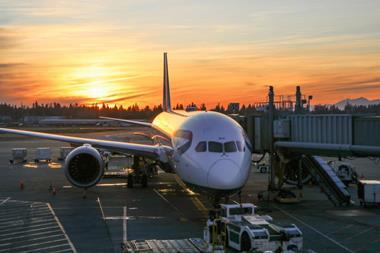
The most immediately practical of the airport solutions on show is one Huawei calls AI Turnaround. The problem it addresses, as Huawei describes it, is that key ground handling milestones still depend on manual reporting, so the data is incomplete and late, and at some milestones the gap between reported and actual time exceeds 30 minutes. An operations centre working from that data is managing the apron with a picture that is already out of date. Without real-time visibility into ground handling support activities, the operations centre cannot respond to exceptions in a timely manner — potentially resulting in flight delays.
Huawei’s approach uses AI video analytics, running on its own AI hardware, to detect 26 turnaround milestones automatically, from vehicle arrival and departure to aircraft parking and pushback. In effect, computer vision takes over the handler’s timestamp, logging each event as it happens rather than when someone has a free hand to record it. The company claims detection accuracy of 98% or better, with a timing deviation of 30 seconds or less. Huawei also says that where it has been deployed, the average number of abnormal flights per day attributable to ground operations fell from ten to two.
Detection on its own is not the point. The real objective is full-process, real-time visibility into apron operations. Beyond enabling the AOC to respond promptly to flights with ground handling exceptions — thereby reducing delays — there is another significant value: statistical analysis of large volumes of ground handling data can reveal weak links and drive targeted optimisation. Furthermore, forecasting models are only as good as the milestone data fed into them, and an airport that can trust its turnaround timestamps can start to forecast rather than react.
From reacting to predicting
That is the purpose of the second solution, which Huawei describes as proactive operation. In practice it does two jobs. The first is prediction: it combines data from more than 10 sources to forecast key milestones, including estimated arrival and in-block times. The second is optimisation: operations research algorithms adjust flight schedules and departure sequencing against a set of constraint rules. Huawei says the system forecasts in-block times to within three minutes with better than 95% accuracy.
Huawei claims some impressive operational outcomes. Accurate Estimated In-Block Time (EIBT) prediction can be used to optimise the precise scheduling and allocation of stands, boarding gates, jet bridges, passenger stairs, baggage carousels, and ground handling resources. It can also support passenger flow forecasting — for example, predicting when and in what numbers arriving passengers will reach the arrivals hall, so that the number of open arrival channels, security lanes, border/customs counters, and immigration desks can be adjusted in advance. It also enables early warning of passenger flow peaks, helping to avoid congestion in the arrivals hall. Schedule adjustment that previously took two people four hours now takes one person an hour. For departure sequencing, operation data shows that under comparable historical scenarios, average taxi time fell by 1.5 minutes, reducing aircraft fuel consumption and carbon emissions, utilisation of baggage and cargo tractors improved by 10%. On key routes, the company says, punctuality rose from 82% to 95%.
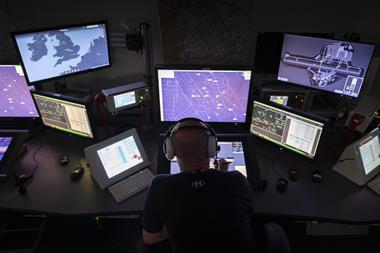
Sitting above both is the intelligent operation centre, or IOC, a smart solution developed by Huawei based on the Total Airport Management (TAM) concept. According to Huawei, it aggregates more than 20 production systems and, through data governance and model research, has established a scenario-based, metrics-driven operational management system for airports. It has developed nine industry algorithm models and a TAM scenario suite shared across more than 10 departments, so that decisions no longer wait for information to be relayed layer by layer across departments. This enables cross-domain collaboration across four major areas — air-ground, apron, terminal, and ground transport — ultimately realising Total Airport Management (TAM). The airport AOC’s operation model has accordingly shifted from a previously reactive, experience-based approach to a proactive, intelligent decision-support model driven by data and AI. Huawei has delivered the IOC to more than 10 large airports, including airports in Shenzhen, Xi’an and Xiamen, and says it has cut scheduling coordination time by more than 10 minutes, reduced operational conflicts by 10% and, in complex scenarios, shortened taxi time for conflicting flights by 3.5%.
Planning–construction–operations collaboration
The gap between how airports are built and how they are run is a long-standing industry challenge: systems specified and paid for during construction that turn out to be disconnected from what the operations team needs on opening day. Huawei’s response is a digital twin that runs from design through construction into operation, with the BIM model delivered alongside the physical asset and verified against it. According to Huawei, its Full-Lifecycle Digital Twin solution supports airports across five layers — design and construction, the data foundation, global situational awareness, scenario simulation, and asset operations — and covers more than 35 operational scenarios across flights, passengers, vehicles and assets. The solution builds an industry knowledge graph that fully reproduces airport operating logic and enables rapid reconfiguration of simulation scenario rules through parameter adjustment. This allows BIM data assets created during the construction phase — including 27 categories, 10,500 models, and 15 million square metres of building information modeling — to be reused across the full lifecycle, turning what Huawei calls the “digital family assets” into genuine “operational assets”.
Huawei reports that the solution has been successfully implemented at Xi’an Xianyang International Airport, where it has addressed the long-standing disconnect between airport planning, design, construction, and operations.
Intelligent transformation for airlines
On the airline side, the release at the aviation session was an AI inference appliance for airlines, launched with China Aviation Navigation Data and Xiamen Airlines. Its first uses are parsing NOTAMs into structured data, translating maintenance documents and analysing safety reports. Huawei says automated NOTAM parsing achieves nearly 100% accuracy and has improved analyst productivity by 50%, with AI parsing and human review running as a closed loop. Xiamen Airlines told the session that the large models it has developed with Huawei have also taken safety report processing to 99% accuracy with, by its measure, a 40% gain in efficiency. A related flight disruption recovery agent, which generates reallocation plans for aircraft, crew and ground resources, has been piloted at an airport handling 30 aircraft and more than 100 sorties a day. Huawei says it produced plans within two minutes and that more than 95% of its recommendations were adopted.
The hard part
None of this is plug and play, and Huawei’s own materials make the point implicitly.
Video-based milestone capture has physical limits. It needs a clear view of every stand it is meant to monitor, in all weathers and at night, and on older aprons that can mean new civil works and power as well as compute.
The models also need looking after. A vision model trained on one apron’s vehicles, markings and lighting may need retraining or recalibration when a handler changes its fleet or a stand layout is altered, and forecasting models drift as schedules and traffic mix change. Airports should ask who retrains them, how often, and whether that work sits with the supplier, an integrator or an in-house team that may not yet exist.
The IOC’s value rests on integrating 20 or more production systems, most of which were procured separately, from different suppliers, under different data standards. Huawei’s planning-to-operation architecture defines more than 2,200 data standards. That is a measure of how much agreement an airport has to reach, across its own departments and with handlers and airlines, before a total airport management (TAM) model is possible. The airport itself plays a critical coordination role in a IOC project. Beyond that, Huawei, as a partner of airports, its understanding of the airport operations, the quality of data governance and implementation experience will inevitably determine project success.
The adoption figure in the disruption recovery pilot deserves attention for the same reason. More than 95% is a strong result, and it reflects something deeper: these systems are designed to augment, not replace, the human controller. By analysing the interconnections within flight execution plans, the Flight Disruption Recovery Agent anticipates the propagation path of a “delay chain.” Through the synergy of ontology, agent-based reasoning, and operations research optimisation, it generates coordinated resource reallocation plans across flights, aircraft, crew, and ground handling — enabling rapid flight recovery, enhancing the passenger experience, and mitigating losses for the airport. What ultimately matters most is a deep understanding of airline operations and how AI is truly integrated into business workflows. Only then can human expertise be translated into AI-augmented efficiency — and only then will the resulting recommendations be embraced by duty managers.
What airports should do next
Before any procurement, audit the airport’s own operational data and ICT infrastructure: which turnaround milestones are captured automatically today, which are reported manually, and how large the gap is between reported and actual times. Any forecasting model will inherit that gap until it is closed. And this timing gap, in essence, reflects a perception gap between the operation centre and actual on-ground operations. It impairs the AOC’s situational awareness, prevents timely and accurate response, and can ultimately lead to flight delays.
And airport intelligence initiatives should be viewed as a transformation of the airport’s decision-making model, not as an IT project. The technology on show in Shanghai, AI included, is maturing. Whether it pays off at a given airport will depend far more on data, understanding of the business, translation of AI capabilities into operational efficiency, than on the model behind it.






No comments yet