

Cornwall Airport Newquay is expanding its commercial revenue through a unique offering: an unparalleled testing environment for drones and spacecraft, as Nigel Scott, Commercial Director, exclusively tells International Airport Review.
Aviation beyond traditional modes of flying is rapidly changing. With recent developments of future flight technologies and drones, the need for testing on airfields has risen. Cornwall Newquay Airport sits on a unique opportunity to profit from this demand.
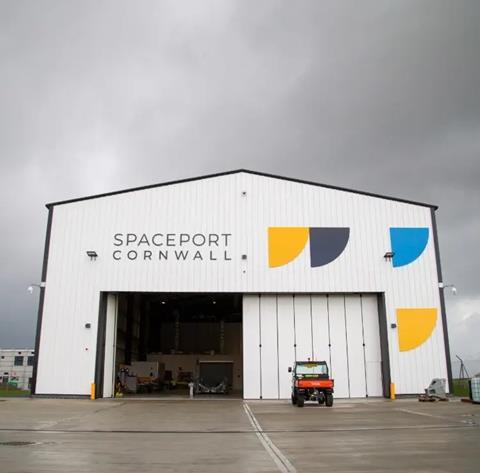
Nigel Scott, Commercial Director, Cornwall Airport Newquay explains: “Cornwall Council owns the airport and had already invested in Spaceport Cornwall. The thinking was simple: if we have this excellent facility, how else can we use it?”
So, a decision was made to begin operations of Spaceport’s testing at Cornwall Airport Newquay two years ago.
Effectively, Newquay is turning one of its perceived weaknesses – a relatively low volume of passenger traffic – into a strength, by creating space for innovation and growth.
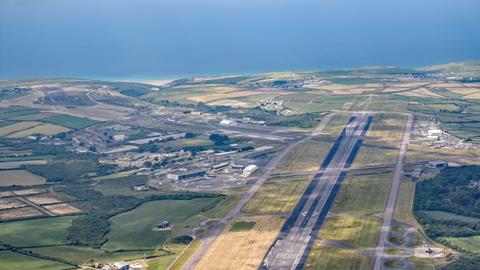
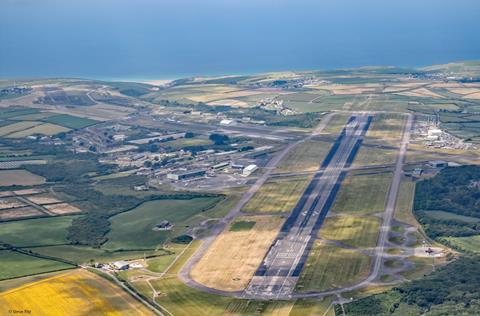
Newquay Airport has created an unparalleled drone testing environment to develop and certify next-generation autonomous systems, from small-scale drones through to supersonic uncrewed vehicles. Covering around 650 hectares of land, Newquay Airport has plenty of space across its estate for testing. The site was formerly a military airfield, which means it has extensive infrastructure, taxiways and available land.
Everything we do is regulated and approved by the CAA.”
Newquay is currently the UK’s only airport with a vertical space launch site and one of a small number of designated space facilities in Europe.
What makes Cornwall particularly attractive is that it is not a densely populated urban environment.
“Naturally, if something goes wrong during testing, you don’t want drones operating over heavily populated areas. We can provide a safe environment for development and testing,” states Scott.
Much of Europe, as well, has highly congested airspace. Cornwall, by comparison, provides access to relatively uncongested airspace over the Atlantic. As aircraft or drones climb, they are not immediately entering heavily trafficked flight corridors. This gives Newquay flexibility and creates opportunities that many other airports simply cannot offer.
Testing the future
Originally, the Spaceport programme was focused on supporting space launch activities, but what it has really enabled is the development of a broader ecosystem around both space and future flight technologies.
One advantage Newquay has is that it is not an extremely busy passenger airport. That gives the airport operational gaps that allow it to support activities such as vertical take-off (VTOL) aircraft, Unmanned Aerial Vehicle (UAVs) and drone testing.
Scott notes how testing works alongside passenger operations:
“The reality is that we have some very useful gaps in our flight schedule, sometimes two or three hours during the day. During those periods you can schedule drone launches and testing activities.”
Newquay currently have around four or five companies actively operating within the ecosystem, and as of publication, is speaking with approximately 10 more.
What’s interesting is that the airport has found that once one company joins, they often introduce partners and suppliers they work with. That creates a collaborative environment where organisations can share expertise and develop products together.
Newquay recently announced a partnership with Open Skies Network. One of their most exciting projects involves working with the NHS to transport blood and medical supplies between hospitals. Drones offer a fast and efficient alternative to traditional road transport, particularly when moving time-sensitive medical materials.
They are also involved in other advanced drone applications, which demonstrate the practical value of future flight technologies. Currently, they are conducting drone-related activities two or three times a week.
That frequency is increasing as more companies join the ecosystem and as Newquay Airport secure additional permissions and licences.
Regarding how these companies operate their testing, the arrangements vary. Some companies lease buildings directly. Others rent facilities from Newquay. Some are international organisations that have established operations in Cornwall, while others are local businesses that have expanded and relocated to the airport.
“We also have companies specialising in advanced composite materials. These businesses support sectors including Formula One, aerospace and drone manufacturing, all of which rely heavily on lightweight materials,” says Scott.
For the airport’s space and drone activity, safety is paramount to its operations.
“Everything we do is regulated and approved by the CAA,” affirms Scott.
There are extensive procedures and documentation requirements that must be completed before any operations are authorised.
The more expertise, businesses and infrastructure we build, the more attractive the location becomes to other organisations.”
At the moment, all operations are conducted under Visual Line of Sight rules, meaning the drone is never out of sight of the operator. The aircraft are monitored and integrated into airport operations, so they coexist without creating issues.
A very busy airport would struggle to accommodate this type of activity, but Newquay’s operating environment allows them to do so safely.
The next stage for the airport is pursuing Beyond Visual Line of Sight (BVLOS) operations, which would allow drones to operate further away from the pilot. Naturally, that requires even greater oversight and safety measures.
One airport, multiple income streams
Passenger services remain important for Newquay, but regional airports generally don’t generate huge profits solely from passenger operations. Activities such as leasing facilities, supporting technology companies and attracting investment help diversify revenue streams.
Scott also explains how companies become attracted to the airport and the opportunities it could provide: “The National Drone Centre at Predannack, which is nearby, already does a significant amount of drone work. However, they don’t have radar, air traffic control or some of the aviation infrastructure that we can provide.
“That gives us a unique capability that complements what already exists in Cornwall.”
These activities contribute to the airport’s financial sustainability while also supporting employment, business growth and economic development across Cornwall.
Reflecting on the long-term vision, Scott remarks that: “We believe there is a genuine first-mover advantage.
“The more expertise, businesses and infrastructure we build, the more attractive the location becomes to other organisations.”
There’s significant overlap between the needs of the space sector and future flight technologies. Newquay Airport clearly see those sectors developing together and reinforcing each other’s growth and its own.
About the interviewee

Nigel Scott is Interim Commercial Director at Cornwall Airport Newquay, where he leads the airport’s commercial strategy, aviation growth and route development activities. He is responsible for expanding airline partnerships, securing new routes and strengthening regional connectivity, while also supporting the airport’s ambitious Spaceport programme. With more than 25 years of leadership experience spanning aviation, infrastructure and consumer brands, including senior roles at Bristol Airport, Dyson, Unilever and Kärcher, Nigel brings extensive expertise in commercial growth, strategic partnerships and business development.



No comments yet