


Michelle Sandbrink, Corporate Strategy and Sustainability Management at Fraport AG answers audience questions received during IAR’s energy revolution webinar.
What actions are being implemented at your airport to engage all stakeholders in this energy transition process?
Fraport engages all stakeholders in the energy transition through continuous, target group-specific information and regular dialogue. Comprehensive information on sustainability goals, climate protection measures, and current projects is provided via the corporate website, the annual environmental statement, and the annual report, with milestones communicated through targeted press releases. Employees stay informed through internal platforms such as the intranet, while specific initiatives like subsidised public transport passes and company bikes for staff and infrastructure projects for partners encourage active participation. Furthermore, Fraport maintains various exchange formats with key partners such as Lufthansa to ensure ongoing collaboration and mutual learning in the energy transition process.
What would you have to modify in the airport infrastructure to support hydrogen production?
Hydrogen production for aviation would require fundamental changes to airport infrastructure. These changes require extensive space as well as infrastructure adjustments for delivery, storage facilities and fuelling.
It seems that one reason for investing in solar panels at the airport is decarbonisation. Could you say whether they are also profitable?
At our airport, photovoltaic systems are installed both to make a significant contribution to achieving our decarbonisation targets and to take advantage of generating electricity directly on site. By producing energy locally, we increase our independence from fluctuating electricity prices and also secure certificates of origin for the green electricity generated. Only PV systems that are demonstrably economically viable are implemented, including both vertical ground-mounted systems and rooftop installations.
What role are you taking on airline fuel selection? Views on hydrogen flights and any preparations for that?
Fraport does not have direct influence over the airlines’ choice of aircraft fuel, as decisions regarding fuel type and quantity are made by the airlines themselves. However, we actively support the introduction and use of sustainable aviation fuels (SAF) and preparations for alternative propulsion systems, such as hydrogen-powered flights.
From your perspective, what are the most critical sustainability dimensions to prioritise for long-term airport development toward 2050, and which emerging trends are likely to shape airport strategies over the coming decades?
Key priorities for sustainable airport development include establishing refuelling infrastructure to enable high SAF blending ratios, closely tracking advancements in electric and hydrogen-powered aviation, and fostering zero emission mobility on the ground. The use of renewable energies is essential, for example through installing photovoltaic systems. Electrification of the apron fleet requires optimising operational areas and expanding charging infrastructure. Additionally, emerging trends like robotics, automation and artificial intelligence are shaping airport strategies and are increasingly becoming integral to operations and planning for the future.
What loss of efficiency is a result of the vertical PVs vs. typical PV installations?
Vertically oriented PV systems are very efficient in their electricity production. They achieve their highest yields primarily in the morning and afternoon hours, which complements rooftop systems that reach their production peak mostly at midday. Our experience so far shows that the total yield of vertical PV installations is almost identical to that of “classic” south-facing PV systems.
The main difference lies in the required area. To avoid shading between the rows of modules and to capture the optimal sunlight, vertical ground-mounted PV systems need a minimum row spacing of about 6 metres. In contrast, classic south-facing ground-mounted systems require significantly less spacing, usually only enough for maintenance paths. As a result, more PV capacity can be installed on a given area with a classic ground-mounted system than with a vertical installation.
However, classic systems almost completely cover the ground, which leads to more shading and, due to the lack of rainfall distribution, tends to have a negative impact on biodiversity. Vertical installations, on the other hand, allow much more light and rain to reach the ground, which offers ecological advantages.
When will your research project on bi-directional charging progress to full implementation?
The research project ReSkaLa@Fra (real-world laboratory for scaling bi-directional charging infrastructure at Frankfurt Airport) is currently progressing, with the charging infrastructure for electric vehicles continuously being expanded. By 2027, as part of the ‘Electro-Mobility’ project, up to 92 bi-directional charging points and a total of up to 950 charging points will be established at the airport. Over the next few years, bi-directional charging and other innovative solutions will be further tested and developed before full implementation.
How much do photovoltaic panels accumulate dirt when located near an airport runway?
The susceptibility to dirt accumulation on vertical PV systems is generally very low. Due to their upright orientation, dirt particles are much less likely to settle, and any dirt that does accumulate is usually washed away by the next rainfall. Additionally, we use only frameless modules, which are not only more efficient but also minimise the risk of dirt deposits, as there are no frame edges or gaps where dirt can collect.
Does proximity to the runway lead to an increased cleaning frequency for the photovoltaic panels?
Our experience so far shows that proximity to the runway does not lead to increased soiling of the modules. Aircraft movements or airside operations have not had any noticeable negative impact on the cleanliness of the PV modules.
However, the installation has only been in operation for a relatively short period, so it is not yet possible to make long-term, reliable statements about cleaning frequency. At present, everything indicates that increased cleaning will not be necessary.
How is vertical PV providing maximum energy?
Vertical PV systems achieve their highest energy yields primarily in the morning and afternoon hours. Due to their orientation, they produce what is known as a “double-peak” generation profile: production rises sharply in the morning and reaches its first peak, drops significantly around midday, and then increases again in the afternoon, resulting in a second production peak.
In combination with our rooftop systems oriented east-west, this creates a very balanced generation profile throughout the day. While the rooftop systems focus more on midday production, the vertical modules reliably deliver energy during the early and late hours. Together, both types of systems ensure continuous PV power generation from morning to evening.
To what distance are the solar panels installed near the runway? How about OLS infringement?
The vertical PV system was installed near Runway 18 West. The first row of PV modules is located approximately 100 metres from the runway centreline and has a height of about two metres. The subsequent rows are higher, as two modules are mounted on top of each other in those sections. It is important to note that, for take-off runways, such as Runway 18 West, shorter distances are permitted for the construction of facilities compared to landing runways.
For the photovoltaic installations, did you already have discussions with your ATC? Did they raise potential issues related to interference with navigation systems (ILS, MLAT, radar, etc.)?
We are in ongoing communication with air traffic control regarding our photovoltaic installations. For the vertical ground-mounted PV system near Runway 18, detailed co-ordination took place in advance with both the experts for ground-based radar systems at Fraport and the German Air Traffic Control (DFS). Neither party raised concerns about possible interference with navigation, surveillance systems, or radar. During the construction phase, test measurements were also carried out to detect potential impacts early on. According to current findings, these measurements show no negative effects on systems relevant to air traffic control. Furthermore, the risk of glare from the PV modules was thoroughly examined by an external expert office. Due to the vertical orientation of the modules, no glare risks for pilots or tower staff are expected.
The installation has only recently been put into operation, therefore, long-term results are not yet available.
With so many solar panels, how do you cope with the seasonality and daily production profile? Will you install batteries? Are you considering PPAs (wind/hydro/biomass) to complement the mix?
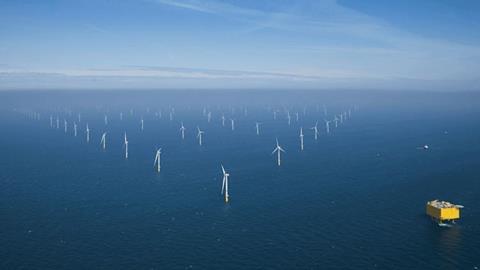
The currently installed PV systems at the airport cover only a portion of our total electricity demand. The remaining required energy is supplied through power purchase agreements (PPAs) for renewable energy, primarily from wind power. A major long-term offshore wind PPA is set to commence this summer and will play a key role in meeting our overall demand for renewable electricity. In parallel, we are planning to deploy battery storage systems to optimally utilise short-term surpluses from on-site renewable generation. The first larger battery storage projects are already in concrete planning and are expected to be implemented in the near future. This will provide additional flexibility in our energy system.
Michelle recently took part in International Airport Review’s live webinar on ‘Accelerating the energy revolution in airports’. You can watch the webinar on-demand at your leisure by registering your details on our website.
Watch the webinar on-demand





No comments yet