


As airports confront rising external threats, Patrick Cuschieri, Vice President Aviation Security at Bahrain Airport Company, examines how resilience, co-ordination and situational awareness are reshaping modern aviation security priorities.
Airports today are increasingly exposed to risks extending far beyond the terminal perimeter. Drones, regional instability and wider geopolitical tensions are forcing the aviation industry to rethink how it approaches operational resilience, crisis co-ordination and preparedness for low-probability but high-impact direct-attack threats.
The threat environment is changing
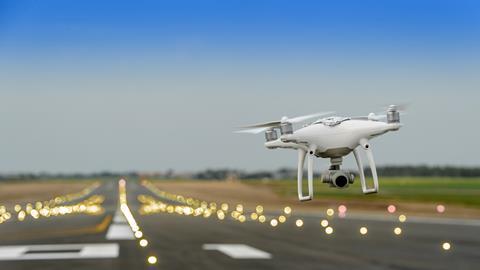
A single drone hovering near a runway today can disrupt an airport more effectively than many traditional security threats of the past. In some parts of the world, airports have temporarily suspended operations not because of a direct attack on the terminal itself, but because of events unfolding far beyond the airport perimeter. The reality is changing quickly. Airports are no longer only concerned with what enters through checkpoints and access control doors. Increasingly, they are being forced to think about threats approaching from the sky, from neighbouring regions, and sometimes from conflicts taking place hundreds of kilometres away.
For a number of years, aviation security (AVSEC) focused heavily on unlawful interference, terrorism, prohibited items, insider risks and attacks originating within the airport environment itself. Those threats remain very real and continue to demand constant vigilance. However, regional instability, drone warfare, stand-off weapons and the wider spillover effects of geopolitical conflict are now forcing airports to reconsider how they assess vulnerability, continuity and operational resilience.
Understanding the expanding threat envelope
What is changing is not simply the nature of the threat, but the direction from which it may emerge. Traditionally, airport security concentrated heavily on controlling what entered the airport through checkpoints, gates, restricted areas and access control measures. Modern physical threats fundamentally alter that model because they may originate well beyond the airport boundary. A drone launched several kilometres away may still disrupt flight operations. Missile activity in the wider region may force immediate airspace restrictions or operational suspensions even in instances where the airport itself is not the intended target.
This creates a challenge for airports because the operational consequences can be significant even without a direct strike on airport infrastructure. The issue is no longer limited to preventing a hostile act inside the terminal. It is increasingly about understanding how external regional events can rapidly affect airport operations, passenger confidence, airline continuity and national connectivity.
In many ways, airports now find themselves operating closer to the realities faced historically by critical national infrastructure, than purely commercial transport hubs. Modern conflicts have shown that civilian infrastructure may become exposed either deliberately or indirectly during periods of escalation. Whether through drones, missiles or wider airspace instability, airports can quickly become operationally affected by events taking place far beyond their immediate control.
Scenarios that many airports would barely have discussed a few years ago are now openly being reviewed at executive and government level. The difficulty is that while the probability of such events remain relatively low in many parts of the world, the consequences are potentially catastrophic. That combination inevitably changes the conversation around preparedness.
Counter-UAS and situational awareness
One area where this shift is becoming particularly visible is in the growing focus on counter-UAS detection capabilities. Drones have rapidly evolved from being viewed primarily as nuisance devices into a genuine operational and security concern for airports worldwide. Yet the reality is that most airports do not possess the legal authority, operational mandate or technical capability to independently neutralise hostile drones. In many countries, only military or designated state authorities may lawfully conduct interdiction activities.
As a result, many airports are increasingly viewing counter-UAS systems not necessarily as “defeat” mechanisms, but as situational awareness tools. The value lies in early detection, tracking and assessment. Understanding whether a drone is approaching the airport, hovering near critical infrastructure or operating suspiciously can provide valuable time for operational decision-making. That information may support temporary ground holds, tactical operational pauses, runway inspections, deployment of security resources or co-ordination with national authorities.
Importantly, this distinction matters because there is sometimes a misconception that airports can independently solve the drone threat through technology alone. The reality is considerably more complex. Any form of electronic interdiction, signal disruption or kinetic response carries legal, technical and aviation safety implications. Airports therefore remain heavily reliant on co-ordination with state agencies when serious threats emerge.
Will airports invest in anti-missile technology?
The same principle applies when discussing future questions surrounding anti-missile technology. Only a few years ago, the idea of airports considering missile-related resilience measures would have sounded unrealistic within most aviation discussions. Today, the topic is increasingly being raised privately within parts of the industry, particularly in regions exposed to geopolitical instability.
Realistically, large-scale anti-missile systems are unlikely to become standard airport-owned infrastructure in the foreseeable future. The financial, military and legal implications are simply too significant. These systems remain national defence assets rather than civilian airport capabilities. However, what may become more common is the integration of airports into wider national situational awareness and air defence frameworks.
Future airport investment is therefore more likely to focus on resilience and operational survivability rather than direct military-style defensive capability. This may include enhanced early warning integration, hardened communication systems, resilient operational infrastructure, protected power and data systems, emergency command and control enhancements and improved recovery capabilities following disruption.
Co-ordination is critical
In reality, airports cannot manage these threats alone. No airport security department, regardless of experience or resources, can independently respond to missile threats or regional airspace instability. Effective management depends heavily on co-ordination between military authorities, civil aviation regulators, police services, intelligence agencies, emergency management structures and air navigation providers.
This is where operational co-ordination becomes absolutely critical. We now know that during rapidly evolving situations, fragmented decision-making can quickly become as dangerous as the threat itself. Airports increasingly require pre-defined escalation structures, communication channels and operational activation criteria agreed in advance with national authorities. Decisions surrounding suspension of operations, reduction of capacity or airport closure carry enormous operational, economic and reputational consequences. Those decisions cannot be improvised in the middle of a crisis.
Resilience may become more important than prevention
Perhaps the biggest shift taking place today is the growing recognition that resilience may ultimately become just as important as prevention itself. Certain kinetic threats may not always be fully preventable at airport level. That is an uncomfortable reality, but an increasingly accepted one within parts of the industry. The focus therefore begins to move toward how airports continue operating under uncertainty, how quickly they can adapt to evolving conditions and how effectively they can recover following disruption.
The airports that will likely perform best during future crises may not necessarily be those with the largest terminals or most advanced passenger facilities. They may instead be the airports capable of maintaining situational awareness, making disciplined operational decisions, protecting people effectively, communicating clearly and restoring operations rapidly after disruption.
This is where the discussion starts changing. Business continuity, crisis management and operational resilience can no longer sit separately from aviation security. They are increasingly becoming part of the same operational conversation.
The reality is that airports today operate within a far more dynamic and unpredictable environment than even a decade ago. Aviation security has always evolved in response to changing threats, but the pace of geopolitical and technological change is accelerating rapidly. Airports are therefore being forced to rethink traditional assumptions about exposure, preparedness and operational continuity.
Luckily, not every airport will face direct regional conflict threats. Many may never experience such conditions at all. Nevertheless, recent global events have shown clearly that airports can no longer assume they are insulated from wider regional instability. The question is no longer whether geopolitical events can affect airport operations. The real question is how prepared airports are to continue operating when they do.
This article originally appeared in the Airport security in a geopolitically complex world eReport published in July 2026. To read the full report click here.





No comments yet