




Airports face a persistent vulnerability: insider risk. In a geopolitically complex world, the challenge lies not only in external threats but in detecting, managing, and mitigating risks posed by trusted individuals within the perimeter, explains Ajesh Verma, Head of Security and Safety at Noida International Airport.
Why insider risk keeps security teams up at night
Airports are extraordinary environments. Thousands of staff - from ground crew and baggage handlers to IT technicians, caterers, and customs officials - move through sterile and restricted zones every day. Each one is both an operational necessity and a potential vulnerability.
The concern is not paranoia but probability. Insider incidents span a wide spectrum: opportunistic theft of baggage or cargo, facilitation of smuggling and trafficking, deliberate data exfiltration, and sabotage of critical infrastructure. Unlike external attackers, insiders already hold legitimate credentials, know the layout, understand shift patterns, and recognise blind spots.
In aviation, where a single lapse can have catastrophic safety, reputational and regulatory consequences, that exposure window is unacceptable.
Automation’s paradox: less oversight, more risk
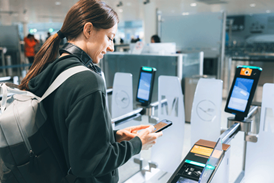
Digital transformation has delivered real gains. Automated baggage systems, self-service boarding, biometric gates, and AI-assisted scheduling have made airports more efficient and scalable. For passengers, the experience is smoother; for operators, margins improve.
But modernisation introduces a paradox. As automation reduces human oversight, informal supervision drops. Fewer interactions mean fewer chances to notice anomalies such as:
- An employee accessing zones unrelated to their role
- A baggage handler diverting bags from standard flows
- A contractor lingering after a job is complete.
Soft oversight that once caught problems early is being engineered away. Meanwhile, automation creates new insider attack surfaces. A single privileged IT account with broad access to operational systems or passenger data can pose far greater risk than any physical master key. Insider threats now encompass network intrusion, tampering with access control, and interception of sensitive data.
AI watching the watchers: promise and peril
Airports are increasingly deploying AI-powered insider threat detection platforms. These systems monitor behavioural and technical signals, seeking patterns that suggest elevated risk. Indicators include:
- Unusual login times or atypical access locations
- Attempts to open files outside normal workflows
- Bulk data downloads or removable media use
- Anomalous communication patterns.
Predictive analytics can correlate weak signals that no human analyst would connect. For example, a spike in after-hours access may take on new significance when combined with recent disciplinary issues or grievance language in communications. The strategic goal is early intervention: identifying risk before it becomes an incident.
Some platforms go further, using natural language processing to analyse internal communications for signs of disengagement, financial distress, or coercion. When calibrated responsibly, these tools can be powerful. But they carry ethical and legal risks.
Misclassification can unfairly label individuals. Overly intrusive surveillance erodes trust and morale. Continuous monitoring raises questions of proportionality, consent and privacy.
Courts often support proportionate monitoring in safety-critical roles, but “proportionate” must be defined, documented and audited. Blanket sentiment analysis without clear policies, union consultation, and oversight risks legal challenges and a toxic workplace culture - conditions that increase insider risk.

Where access control still falls short
Physical access control remains the first line of defence, yet weaknesses persist:
- Credential sharing: badges and PINs casually passed between colleagues.
- Tailgating/piggybacking: unauthorised individuals following staff through secure doors.
- Stale permissions: access rights not revoked promptly when roles change.
- Segregation failures: fragmented responsibility for physical and digital access.
- Contractor blind spots: temporary access often outlives actual engagement.
These are not exotic exploits but systemic weaknesses. Operational pressure to keep airports moving means legitimate security friction is often side-stepped or informally tolerated.
Biometrics and identity governance: raising the floor
Stronger identity governance, anchored in biometric verification, helps harden weak points. Multi-factor authentication, combining biometrics with smart cards or tokens, is expanding across staff access. Biometrics make credential sharing harder, impede anonymous misuse, and create reliable audit trails.
Effective identity management requires:
- Role-based access control with regular entitlement reviews
- Just-in-time access provisioning with automatic expiry
- Unified identity repositories linking physical and logical access
- Continuous authentication in high-risk zones.
Biometrics alone won’t solve insider risk, but they raise the baseline significantly.
Bridging the physical-cyber divide
A persistent vulnerability is the divide between physical security and IT teams. Historically siloed, they often confront the same threats without sharing information. For example:
- An employee triggering physical alarms may also generate unusual network activity
- A terminated staff member may lose badge access quickly but retain system credentials for weeks.
Managing insider risk requires operational convergence. Leading airports are establishing:
- Shared dashboards integrating physical and digital events
- Unified investigation protocols across domains
- Common privilege and identity policies spanning doors, systems and data.
Some operators are creating converged security operations centres, bringing physical, cyber and safety monitoring under one roof for a unified intelligence picture.

Trust, culture and the human equation
Technical controls are essential, but culture is the most powerful determinant of insider risk. Incidents often emerge from grievance, financial stress, opportunity and rationalisation. Employees who feel valued and connected to their mission are less likely to become threats and more likely to report concerning behaviour.
Aggressive surveillance without workforce engagement often fuels distrust and resentment. Effective insider risk programmes blend robust technology with deliberate attention to the human environment. Key elements include:
- Accessible employee assistance services
- Clear grievance mechanisms
- Transparent communication about monitoring policies
- Leadership modelling ethical behaviour.
When staff believe security measures protect rather than punish, compliance and early reporting improve.
Conclusion: securing the space inside the perimeter
The insider threat in aviation is neither new nor solved. What has changed is its scale, impact and sophistication. Airports that manage insider risk most effectively will:
- Close the gap between physical and cyber operations
- Govern identity and access with rigour and continuous review
- Deploy AI monitoring thoughtfully and ethically
- Invest as seriously in culture and people as in technology.
The perimeter still matters, but true security depends on managing what happens inside it - in systems, on ramps, and in the minds of the people who keep planes moving every day.
This article appeared in International Airport Review’s Airport security in a geopolitically complex world eReport published in July 2026. To read the full eReport click here.







No comments yet