
Ahead of his participation in PTE World in London, Doug Wycoff shares how Tampa Airport is using digital innovation to optimise assets, streamline passenger flows and build a proactive, data-led airport operating model.

What are the key priorities for digital innovation at Tampa International Airport (TPA) in 2026 and beyond?
TPA is moving with speed to expand our digital footprint to ensure the customer experience continues to progress. In particular, towards guiding the passengers through our facility and ensuring they understand all the benefits our facility has to offer. These initiatives need to be less of a burden on the passenger, by seamlessly understanding where they want to go. This effort starts at their origin and brings passengers into our facility by sharing delays, waits, parking and concessions, without the need for them to research what is available.
What role does innovation play in improving both operational efficiency and passenger experience at TPA?
At TPA, innovation plays a significant role today and in our future. This starts with the executive suite, while rolling all the way through our teams. For the past two years, we have been focusing on creating automated solutions for the business units. These solutions have automated their day-to-day decisions, allowing them to expand their skills while moving on to other challenges. We engage our business units, letting them share with us both the challenging and unchallenging tasks they deal with on a daily basis, and simply alert them when an issue has occurred that needs their attention. Our businesses are obviously there for our passengers, so as we innovate the passenger receives the residual benefit of efficiency.
What macro trends do you think airport CEOs should be keeping a close eye on?
The critical piece for CEOs is to ensure that their organisation is leveraging automation throughout their teams in an innovative and efficient manner. Today’s airport must optimise all its real estate to ensure it is efficiently using every inch of space to develop its revenue generating strength. Also, leveraging technology to ensure their teams are making data-driven real-time decisions to create a proactive, not reactive, culture. This approach will ultimately allow for slower growth in staff count even as the passenger count continues to rise. Developing the critical measuring KPI’s will ensure the performance level of the organisation is growing and developing.
Which technologies will have the biggest impact on operational efficiency for airports in the next two to three years?
At the forefront will be LiDAR and camera AI analytics for assessing key passenger processing statistics to streamline traditional manual tasks throughout their facility. These solutions will streamline gate turn times, higher passenger volume areas, roadway management and garage management, to name a few of the larger benefits. Specifically in the U.S., common use self-service bag drop solutions can change the airline space demands for many medium- to large-scale airports. GIS data will be a driving factor in managing the assets and usage of key elements across the campus.
Is TPA using agentic AI? If so, where is it having the biggest impact?
TPA is utilising this AI approach within the operational teams to build solutions, from the cleaning of bathroom cadence against the contract, to hold room volumes, under wing safety, to preventing roadway backups, parking capacity, and check point management. The operations teams are establishing the alerts and hourly statistics needed to change the face of decision-making within the airport industry. The critical dashboards allow everything from gate management to trend analysis to ensure the proactive management of these key solutions withing the facility. Operations is working with the TSA to help with a scheduling model to improve the staffing schedule based on the check points real time volumes and current processing times.
Doug will be speaking at IAR's Breakfast Briefing on how agentic AI is revolutionising airport operations on 18 March at the Crowne Plaza, London Docklands, make sure you join us to hear him speak and ask him your burning questions.
What challenges do airports face when adopting advanced AI solutions, and how can they overcome them?
When adopting advanced AI solutions, airports face challenges managing the changing culture of new technologies, and the general resistance of the teams, including executive management, to change. Airports cannot continue to manage the day-to-day business the way it has always been just to avoid risk and push back from its customers. Growing and changing always has some built-in risk, but correctly managing these risks will allow for more efficient airport growth and better optimisation of all airport facilities. Change is hard, and many organisations do not have the strength in leadership to make these required changes for success. Never has the airport industry had a better opportunity to step out and control their own destiny and the pace of growth.
What will your focus be at PTE? What are you there to talk about/present on?
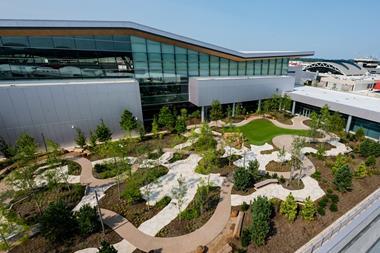
TPA is currently in the middle of three significant projects totalling over US$2 billion. TPA will be presenting on their new $1.5 billion new 16 gate international airside and the unique approach that we took from an employee led nine-member steering committee and over 90 other employees from focus groups to ensure that each group is represented and that we are building a facility each team can support.
What are you looking forward to learning from other airports at PTE?
Anything that can make TPA better than it is today. Any solution, piece of software or hardware that can change the way we do business by making us more productive, financially stronger and overall efficient. With these projects underway we will be listening to how others have crossed over from design to production.
Doug is speaking on the below session at PTE World:
‘Beyond the blueprints: rethinking collaboration to design a terminal’
18 March 12:25-12:55 GMT