

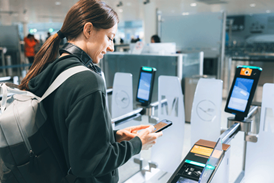

Edinburgh and Budapest airports, both part of the VINCI Airports network, have introduced services that let passengers check in luggage before they reach the terminal.

Edinburgh and Budapest airports, which both joined the VINCI Airports network in 2024, have introduced services allowing passengers to check in their baggage before they arrive at the terminal.
Home collection for Edinburgh passengers
At Edinburgh, Lufthansa and easyJet passengers can now have their luggage collected from home, the office or a hotel and checked in ahead of their flight through a service operated by Airportr. Once their bags have been collected, passengers can travel to the airport unencumbered and proceed directly to security on arrival. Edinburgh is the first airport in Scotland to offer the service. easyJet already runs a comparable collection and delivery service with Airportr at London Gatwick, another VINCI Airports site, where passengers can travel to the airport baggage-free and collect their luggage at their destination.
Downtown check-in for Budapest passengers
In Budapest, passengers can check in hold baggage in the city centre through the AirportHUB Bag Free HUB service, an official airport partner. Anyone holding a boarding pass with a barcode or QR code can drop off luggage at the downtown store, freeing them to continue sightseeing before travelling to the airport without bags and going straight through security screening.
The service applies to flights departing between midday and midnight, with baggage required at least four hours before departure. Passengers must also complete online check-in beforehand and ensure their baggage meets the relevant airline’s size, weight and shape requirements. The process mirrors self-service check-in found in terminals: passengers print and attach their own bag tags before handing luggage to store staff, with an instructional video and on-site AirportHUB staff available to help.
“Passengers with a valid boarding pass featuring a barcode or QR code can enjoy their last few hours of sightseeing without their baggage, reach the airport more conveniently and avoid the queues associated with checking in baggage at the terminal.”
Checked baggage is transported to the airport in a locked vehicle with a secure cargo compartment under continuous supervision, before being screened and handled in the same way as other hold baggage at the terminal. The downtown drop-off is currently available to Wizz Air passengers, with Budapest Airport and its partners working to extend the service to other carriers.
What does this mean for the industry?
While offering off-airport luggage drop is nothing new, it does open up a wider discussion on where the airport journey begins, how far airports will extend their service beyond their terminal and whether off-airport baggage handling can solve opertional as well as passenger pain points.
For decades, the airport experience started when the passenger arrived at the terminal. But check-in has moved online, boarding passes now often live on phones, and increasingly security can be booked in advance. Now, baggage - one of the biggest reasons passengers still need to arrive early and interact with airport infrastructure - is beginning to move off-airport too.
For anyone that has navigated public transport with a large suitcase or attempted to manhandle one into a locker at a city centre location, they will know that the option to send your luggage ahead of your arrival at the airport promises a more comfortable journey to the airport and also time to get some last minute sightseeing in before your flight home.
VINCI Airports’ latest initiatives at Edinburgh and Budapest demonstrate two different approaches to moving baggage processing upstream. Moving baggage acceptance away from the terminal could therefore offer benefits beyond passenger convenience, potentially reducing pressure on check-in halls and bag-drop facilities during peak periods. IATA’s latest baggage guidance now specifically includes off-airport acceptance models, while its work on electronic baggage tags identifies off-airport processing as an opportunity to reduce queues and improve terminal flow.
However, scaling these services will depend on more than passenger demand. Security, baggage tracking, airline participation, chain-of-custody requirements and integration with existing baggage handling systems will all need to work seamlessly. Budapest, for example, transports bags to the airport in a secure vehicle before they undergo screening and enter the standard baggage process.
The concept of off-airport baggage processing is not new, but the industry may now be reaching a point where digital baggage management, tracking and more mature partnerships make wider adoption increasingly realistic. The question is no longer simply whether passengers would prefer to travel without their luggage, but how much of the airport journey can move beyond the terminal without compromising security, reliability or operational efficiency.












No comments yet