
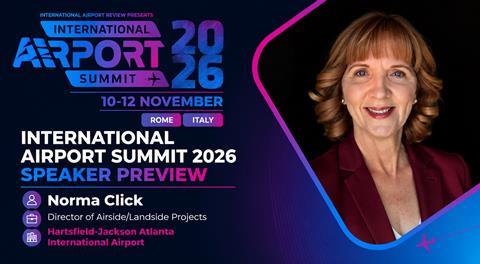
Norma Click, Director, Airside/Landside Projects at Hartsfield-Jackson Atlanta International Airport, explains how careful planning, stakeholder collaboration and operational flexibility underpin major airfield construction projects - a topic she will be discussing at the International Airport Summit 2026.
Major rehabilitation on the airfield is not for the faint of heart at the world’s busiest airport. With three airfield complexes, five parallel runways and approximately 46 million square feet of pavement, closing critical infrastructure at Hartsfield-Jackson Atlanta International Airport (ATL) requires a level of planning and collaboration unmatched in many industries.
Whether replacing a heavily used taxiway or reconstructing an entire runway, co-ordination with stakeholders begins well before construction. The focus is twofold: (1) how do we safely complete the work in the shortest practical timeframe while (2) preserving as much usable pavement as possible for aircraft movement around the work zone?
As we often tell our airline and Federal Aviation Administration (FAA) partners, “The closure will be painful, but our goal is to minimise it as much as possible.”
Planning for the inevitable
Every two to three years, ATL undertakes a major taxiway pavement replacement project. Although our Portland cement concrete pavement can have a service life extending beyond 40 years, regular evaluation and planned replacement are essential to preventing deterioration from becoming an operational emergency.
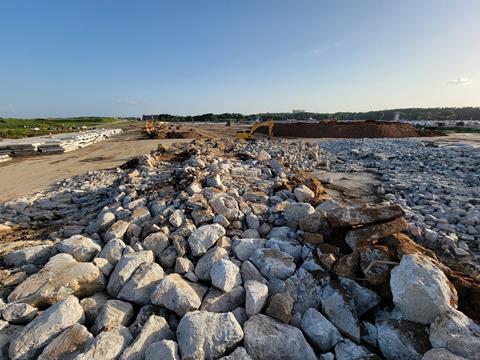
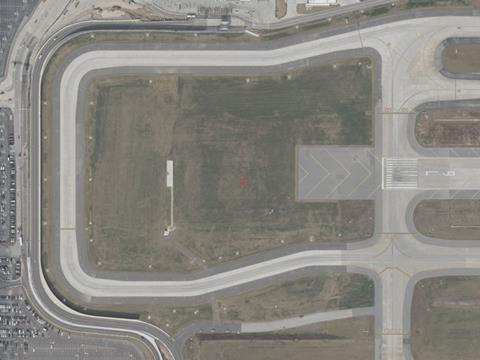
At an airport with limited ability to expand, opportunities to construct entirely new airfield infrastructure are rare. One such opportunity was the construction of ATL’s second end-around taxiway.
ATL already had a successful end-around taxiway serving its north airfield complex. Attention eventually turned to the centre complex, where arriving aircraft crossed a departure runway up to 750 times each day. An end-around taxiway offered the opportunity to reduce those crossings and improve both safety and operational efficiency.
The solution, however, created its own significant construction challenge.
The new U-shaped taxiway would wrap around the west end of ATL’s longest runway. Constructing it required impacts that extended well beyond the limits of the project site, including effects on carriers accustomed to operating long-haul flights to overseas destinations. During certain phases of construction, runway restrictions meant some flights would require a technical stop to take on fuel.
On an active airfield, construction phasing is much more than a construction decision. It becomes an operational decision with consequences for airlines, air traffic control, passengers and the airport itself.
Bring stakeholders to the table early
Communication and co-ordination are fundamental to developing a workable plan.
Airside operations, the FAA, airlines and other stakeholders participated throughout design to review proposed phasing, understand operational impacts and identify potential conflicts. Starting these discussions early helped build stakeholder buy-in while giving affected parties time to adjust flight schedules and operational plans.
That collaboration did not end when design was complete.
During construction, stakeholders remained actively involved as the project team and contractor communicated how work would progress, what pavement would be unavailable and what operational adjustments would be necessary.
This continuous engagement was critical. On a major airport construction project, the technical solution cannot be developed independently from the operational solution. The two must evolve together.
Design for the environment you operate in
ATL also benefits from decades of experience designing and constructing Portland cement concrete airfield pavements. Our details and specifications have evolved through generations of engineers, construction professionals, operations personnel and other subject matter experts who have watched the airport grow and learned first hand what performs successfully in this environment.
That institutional knowledge matters when designing infrastructure that must withstand intensive use while being constructed beside active aircraft operations.
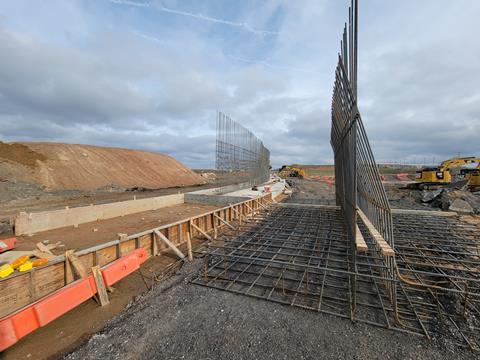
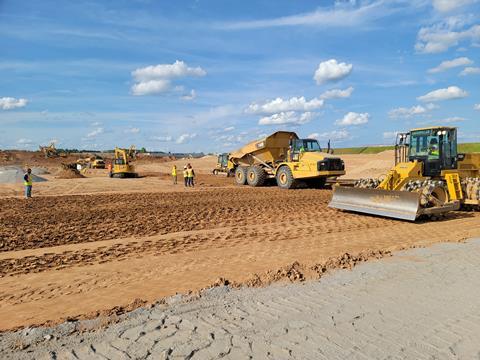
The end-around taxiway itself was approximately 5,600 feet long and required about 84,000 cubic yards of imported material to achieve the required elevations. Approximately 95,000 square yards of runway and shoulder pavement were constructed, along with a 2,700-foot blast wall, retaining structures, perimeter security fencing and significant utility relocations. Navigational aids and taxiway lighting also had to be relocated or extended, and approximately 53 acres of disturbed areas required stabilisation.
Each of these elements had to be incorporated into a construction sequence that protected airport operations.
Contractor capability is part of risk management
Selecting the right contractor is equally important.
As an airport owned and operated by the City of Atlanta, ATL follows the City’s and FAA’s public procurement requirements. Within that framework, experience requirements help ensure that contractors performing critical airfield paving have demonstrated experience working in large-hub airport environments.
ATL also maintains a pool of pre-qualified Portland cement concrete paving contractors, and bidders are required to use an approved contractor for applicable paving work.
This is more than a procurement consideration. Contractor experience is an important component of operational risk management.
Working inside an active airport requires more than the ability to construct pavement. Contractors must understand restricted work areas, security requirements, aircraft operations, limited access, tightly controlled closures and the consequences of missing a critical milestone. A schedule delay on a conventional construction site may affect the next construction activity. On an airfield, it can affect an airline schedule or the airport’s available capacity.
When construction starts, planning becomes execution
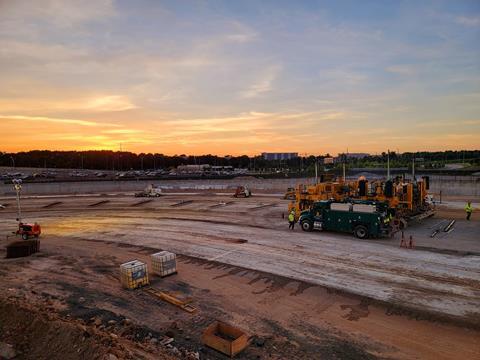
Once the contractor was on board, it was showtime.
Months of logistical co-ordination between the project team and contractor focused on ensuring that the construction schedule supported the airport’s operational commitments and that sufficient labour, equipment and materials would be available to execute the work.
Subcontractors were vetted through pre-activity co-ordination meetings, while extensive submittal reviews confirmed that materials and construction processes met the technical requirements before critical work began.
During construction, daily on-site co-ordination meetings allowed the team to compare actual field conditions and progress against the schedule. Stakeholders received frequent updates on progress, upcoming activities and potential operational impacts.
That communication provided something particularly valuable on a complex project: the ability to react early.
Expect the unexpected and build flexibility into the plan
Even the best-planned project will encounter conditions that cannot be fully predicted.
The end-around taxiway project faced qualified labour constraints, cement shortages, electrical challenges, increased costs and weather impacts. None of those issues could be allowed to stop progress.
The team worked through them using partnering, contingency funding where appropriate, schedule adjustments, and the flexibility to re-sequence work when conditions changed.
That experience reinforced an important lesson: a successful phasing plan cannot be so rigid that one disruption causes the entire plan to fail. The project team must understand the critical milestones, protect them aggressively and have enough flexibility to adjust the work around them.
Contingency is not simply a budget line, contingency means having options.
Success is measured in operations
When construction was complete, ATL opened a new end-around taxiway designed to increase operational efficiency, enhance safety, reduce taxiing delays and improve departure rates.
But the project’s success was not defined only by the infrastructure we delivered. It was also defined by our ability to deliver it while one of the world’s largest and busiest airports continued operating around us.
That is ultimately the challenge of major construction in a live airfield environment. Airports cannot simply close while we modernise them. We must find ways to renew ageing infrastructure while continuing to serve airlines and passengers safely and efficiently.
At ATL, that means starting operational planning early, involving stakeholders throughout the process, selecting experienced contractors, maintaining disciplined co-ordination during construction and building enough flexibility into the plan to respond when reality differs from what was anticipated.
And then we apply those lessons to the next project.
In 2027, ATL plans to replace approximately 46,000 square yards of taxiway pavement across two airfield complexes, followed by the replacement of our longest runway and connecting taxiways. Together, the projects will require approximately five months of high-impact, 24/7 construction.
Once again, success will depend on much more than concrete and construction schedules. It will require airport operations, airlines, the FAA, designers, contractors and the project team to remain aligned around a common objective: deliver critical infrastructure safely and efficiently while keeping the airport operational.
Norma will be speaking on this very topic during the International Airport Summit, on her panel ‘Managing major transformation in live airport environments’ on 12 November in Rome. Make sure you are in the room when she takes to the stage to hear her insights first hand and network with her afterwards.
Register for your FREE* VIP pass today
*Free aviation leader tickets are applicable to senior managers and above from airports, airlines, regulatory bodies and aviation authorities.



No comments yet