

Italy’s largest international airport has piloted autonomous robotic technology equipped with AI algorithms and advanced sensors to monitor local ecosystems, detect invasive species and support long-term environmental planning as part of a wider European initiative to accelerate sustainability across the aviation sector.
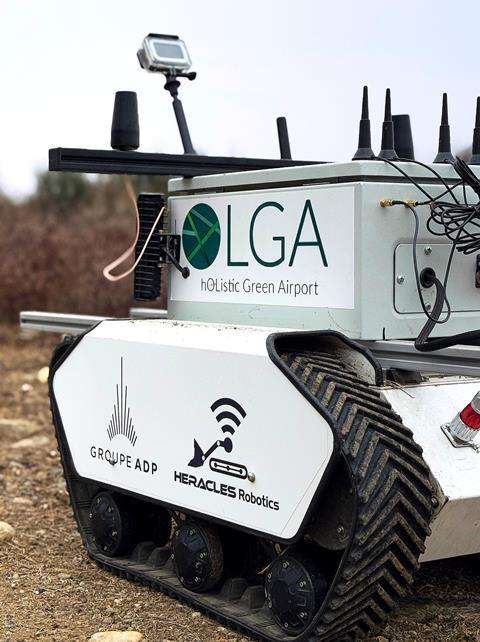
Milano Malpensa Airport (MXP) has conducted Italy’s first test of an artificial intelligence powered robot designed to support biodiversity monitoring, as part of the European OLGA project focused on sustainable airport development.
The trial took place at both the airport and the nearby Ticino Park, with the system collecting environmental data to improve understanding of local ecosystems and support conservation efforts.
Developed by Université Paris XII Val de Marne and coordinated by Paris Aéroport, the robot was deployed in collaboration with SEA Milan Airports and regional stakeholders.
The autonomous system is equipped with advanced sensors, digital imaging and georeferencing technology, enabling it to detect plant species, monitor habitat conditions and identify invasive vegetation. Artificial intelligence algorithms analyse the collected data, providing real time insights into the environmental status of surveyed areas.
The initiative forms part of the OLGA project, funded under the Horizon 2020 programme, which aims to accelerate sustainability across European airports through innovation in energy, mobility and environmental management.
Airport officials said the technology offers a more detailed and continuous approach to biodiversity monitoring compared with traditional methods, supporting long term environmental planning and decision making.
The pilot also focuses on protecting the heathland ecosystem surrounding Malpensa, a fragile habitat located within Ticino Park. SEA Milan Airports has identified this area as a priority for conservation, using the project to strengthen monitoring and preservation efforts.
By mapping vegetation and collecting quantitative and qualitative data, the robot provides valuable insights that can be used to develop scalable biodiversity strategies across other airports.
The OLGA project includes multiple European sites, including airports in Paris, Zagreb and Cluj, with Malpensa acting as a key testing ground for new technologies.
The trial highlights how airports are increasingly adopting advanced digital tools to balance operational activity with environmental responsibility, positioning innovation as a central component of sustainability strategies.











No comments yet