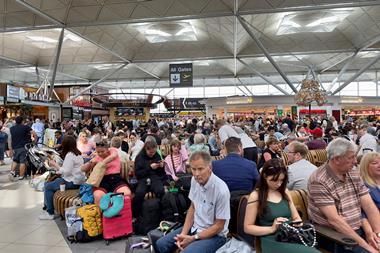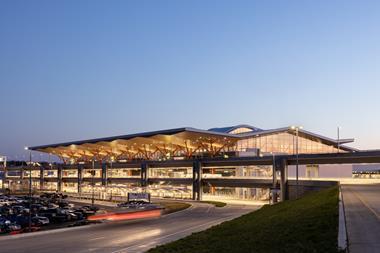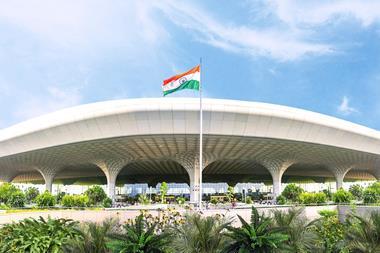
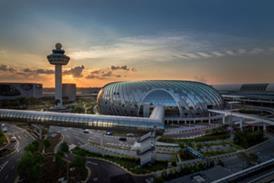
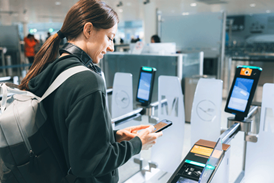
The second day of IAS2025 explored how airport leaders are navigating turbulence, embracing automation and delivering inclusive, data-driven passenger experiences.
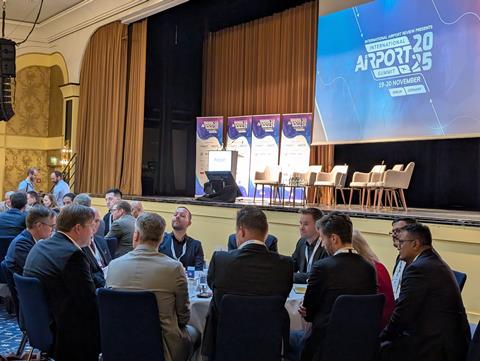
Airport executives share strategies for leading through turbulence and growth
Day two opened with a keynote panel moderated by Chris Woodroofe, Managing Director of Manchester Airport, featuring senior leaders Sigrún Björk Jakobsdóttir, CEOof Isavia Regional Airports Iceland and Laila Odina, CEO of Riga Airport. The discussion explored how airports are adapting to rising passenger volumes, ageing infrastructure and shifting commercial dynamics, including the paradox of increased footfall but declining per-passenger spend.
Speakers highlighted that resilience now depends on organisational agility as much as infrastructure planning. Geopolitical shocks, volatile transfer markets and natural disruptions such as volcanos require flexible horizons rather than rigid masterplans. Both airports noted the complexity of refurbishing legacy terminals, where hidden conditions and outdated documentation often make upgrades more costly and disruptive than new builds.
The panel stressed disciplined asset management, digital documentation and frank dialogue on funding and realistic returns. Leadership through turbulence, they agreed, demands clarity, strong middle-management capability and constant recalibration to keep airports functioning as vital economic engines.
Reinventing check-ins for speed and convenience
In a fireside chat moderated by Mats Berglind, Innovation Manager, Swedavia, Borry Vrieling (Eezeetags) and Doug Wycoff (Tampa International Airport) examined why check-in remains one of the most outdated, friction-heavy parts of the passenger journey and why modernisation is critical for capacity, commercial performance and satisfaction. While technology for biometrics, self-service bag drops and AI queue management exists, adoption has been slow, leaving processes largely unchanged for decades.
Speakers urged airports to design around human behaviour, not technology, noting that most travellers are stressed and want to “exhale” after security. Seamless check-in drives retail engagement and dwell-time opportunities, while clean facilities and intuitive wayfinding boost commercial returns. The vision ahead is decentralised, data-driven and nearly invisible, with remote bag-drop at hotels, stations and curbside. Though regulatory and infrastructure hurdles remain, the business case is strong: fewer staffed desks reshape terminal design and redeploy staff into passenger care, improving experience and revenue.
Net zero aviation powered by game-changing tech
This panel moderated by Maurice Jenkins, Chief Innovation Officer of Miami International brought together Chris Woodroofe, MD of Manchester Airport, Giampiero Goretti, Head of energy Management and Decarbonisation at Aeroporti di Roma and Rachel Gardner-Poole OBE, Sustainable Aviatin Consultant for NATS to examine the technologies shaping aviation’s decarbonisation journey. The discussion focused on sustainable aviation fuels (SAF), carbon capture, AI-driven efficiency and the regulatory and investment challenges ahead.
Speakers stressed that airports face a dual challenge: transforming energy systems, fleets and infrastructure while maintaining commercial viability. Aeroporti di Roma outlined its roadmap to net zero, positioning airports as energy producers through renewables and smart grids. Manchester Airport warned that unco-ordinated transitions risk “green bottlenecks”, citing grid constraints during rapid electrification.
The panel agreed there is no single fuel solution: SAF is vital but scarce, hydrogen and electrification have limits, and airspace modernisation offers major carbon savings. Ultimately, decarbonisation demands system-wide change, rapid innovation and collaboration—turning airports into energy hubs and operationally agile leaders in sustainability.
Accessibility revolution: inclusive tech takes centre stage
Al Titterington, Terminal Operations Director, Birmingham Airport moderated a panel featuring Darrell Watson, Senior Vice President & Chief Experience Officer Louisville Muhammad Ali International Airport and Michele Parietti, Head of PRM Assistance from SEA Milan Airports, showcasing innovations that transform accessibility from a niche service into a core passenger experience priority. With PRM volumes rising rapidly and encompassing physical, sensory and hidden needs, speakers urged airports to embed accessibility into every design decision rather than retrofitting solutions.
Louisville highlighted its GoodMaps app, which uses LiDAR to deliver precise indoor navigation for blind and low-vision travellers without requiring airport infrastructure—boosting autonomy and reducing assisted-travel costs. Milan discussed autonomous wheelchairs, sensory-friendly spaces and redesigning high-failure touchpoints to meet surging demand.
The panel stressed that technology must enable complete journeys, not partial fixes, and that autonomy is the new benchmark for service quality. Inclusive design and integrated systems, they concluded, will define future terminals and deliver better airports for all passengers.
Carbon-neutral baggage handling systems
In this session experts from Brussels Airport, Heathrow and Forbo explored how airports can cut emissions and energy use in baggage handling systems without compromising performance.
Forbo showcased low-friction conveyor components that reduce mechanical resistance, cutting energy consumption, heat generation and cooling needs, while enabling recycled or bio-based PVC. Heathrow emphasised embedding efficiency at the design stage, moving from legacy systems to demand-driven conveyor flows that operate only when bags are moving. This approach supports waste heat recovery, LED lighting and advanced monitoring to identify energy losses.
The panel agreed that carbon-neutral BHS is achievable through smarter materials, optimised layouts and continuous monitoring. Incremental innovations such as off-site processing and intelligent routing can deliver measurable reductions today, while rising passenger awareness strengthens the commercial case. Collaboration across suppliers, airports and operators will be key to future-proofing baggage infrastructure.
Robotics and autonomy address workforce shortages
A panel moderated by Henk Brandsma Strategic Process Developer Baggage, Airport Operations, Amsterdam Airport Schiphol explored how airports are deploying robotics and AI to tackle labour shortages, improve efficiency and enhance passenger experience. Speakers from Fraport, Aena and Vienna Airport shared real-world applications, including autonomous wheelchairs, ramp inspection robots, document delivery systems and condition-monitoring units.
Aena highlighted autonomous wheelchairs at Madrid-Barajas and ramp inspection robots, while Vienna showcased VR training for ramp staff and robots for interdepartmental document transport. Frankfurt Airport demonstrated wheelchairs capable of announcements and navigation in tight spaces, alongside robots performing terminal checks.
The discussion stressed that automation complements human expertise rather than replacing it. Staff engagement, training and change management are critical for adoption, while passenger trials show strong acceptance. Despite infrastructure challenges, robotics is delivering measurable gains in safety, efficiency and service quality, signalling a future where human-machine collaboration becomes central to airport operations.
AI that sees the future: predictive maintenance in action
This session explored how airports are using AI and real-time sensor data to predict failures, reduce downtime and optimise resources. Doug Wycoff (Tampa International) and Leif Johnson (Bentley) emphasised that the breakthrough lies not in adding sensors but in leveraging existing data for actionable insights.
Tampa International showcased AI-driven crowd management and facility monitoring, which cut staffing needs and improved passenger flow, while predictive smoke detection in car parks now provides 10–15 minutes of extra lead time. Bentley highlighted contextualised data as the key to success, enabling systems to correlate asset history, vibration patterns and energy use to trigger work orders before failures occur.
The panel stressed that predictive maintenance is a cultural shift, requiring trust, phased rollouts and strong data governance. Airports that treat AI as an operational evolution rather than an IT project will see the fastest and most sustainable returns.
Smart tech optimising every inch of the airport
Thomas Romig, COO of Brussels Airport moderated a panel featuring Edmonton, Aeroporti di Roma, +Impact and Synaptic Aviation, focusing on AI-driven tools that deliver measurable gains in airport operations. The discussion highlighted intelligent stand allocation, turnaround optimisation and frontline service enhancements.
+Impact showcased real-time translation and mobile tools that empower staff to resolve passenger queries instantly while generating valuable operational data. Synaptic Aviation demonstrated computer-vision monitoring for turnarounds, reducing delays and improving safety through transparent, unbiased records. Edmonton shared its rollout of generative AI tools across 60 teams, freeing staff from manual tasks and accelerating access to policies and documentation. Rome outlined its dual approach: deploying proven solutions and building in-house systems for apron monitoring and passenger engagement.
The panel concluded that AI’s greatest impact lies in augmenting people, not replacing them. Success depends on robust digital infrastructure, change management and treating AI as a people-centred transformation.
Transforming the passenger experience from curb to gate
This fireside chat with Kerry Skelly (Aerocloud) and Roland Böhm (Berlin Airport) explored how AI and real-time data are reshaping airport operations and passenger experience. The discussion highlighted predictive queue management, dynamic resource planning and the potential for personalised journeys, while addressing GDPR compliance and scalability for smaller airports.
AeroCloud emphasised privacy-by-design in AI flow modelling, while Berlin Brandenburg shared early successes with AI-driven security and turnaround optimisation. Both speakers outlined a future where airports actively “pull” passengers through checkpoints based on real-time capacity and preferences, reducing queues and improving dwell-time opportunities.
The panel stressed that personalisation must remain optional, supported by clear signage and staff assistance. Long-term, digital travel credentials could eliminate check-in entirely, freeing terminal space for revenue-generating uses. The message was clear: AI is becoming a structural enabler of seamless travel, but trust, transparency and robust infrastructure are essential.
Radar technology keeping skies safe
This session explored how advanced radar is transforming wildlife hazard management at Berlin Brandenburg Airport. Sibylle Giraud (Robin Radar Systems) and Christian Miersch (Berlin Airport) highlighted how real-time monitoring and deterrents are reducing bird strike risks and improving operational resilience.
Berlin’s upgrade from Robin Radar’s Flex to Max system delivered a step-change in precision, enabling altitude tracking and faster refresh rates to identify genuine conflicts with aircraft operations. The panel stressed that radar is not a replacement for human expertise but a force multiplier, extending situational awareness across BER’s 1,500-hectare footprint and guiding deterrents with greater accuracy.
Long-term data emerged as a key benefit, allowing airports to analyse seasonal patterns, evaluate habitat strategies and justify safety investments. Looking ahead, sensor fusion combining bird and drone detection promises unified situational awareness. The takeaway: high-fidelity radar is now essential for mitigating wildlife risks and demonstrating due diligence.
Securing the skies with cutting-edge security tech
Moderated by Oliver Braun, Head of Security at Berlin Airport this panel examined how airports are responding to escalating drone threats.
Speakers warned that drone incursions have evolved from hobbyist activity to sophisticated, state-level tactics, with recent incidents at Brussels Airport causing multimillion-euro disruptions. The panel stressed that single-sensor detection is no longer viable; airports need layered systems combining RF, radar, acoustic and camera analytics to confirm threats and restore operations quickly.
Legislative gaps remain a major challenge, with fragmented responsibilities across airports, ANSPs and law enforcement. Panellists called for stronger national coordination and investment in multi-sensor platforms that can also support wildlife monitoring and airfield inspections. The message was clear: counter-drone capability is now essential for operational resilience, requiring proactive planning, clear authority and rapid stakeholder collaboration.
Want to make sure you are at our 2026 event? Register your interest now!
Topics
- Accessibility & inclusion
- Advanced air mobility
- AeroCloud
- AI & analytics
- Airside operations
- Al Titterington
- ATM, capacity & network
- Automation & robotics
- Aviation security operations
- Baggage & reclaim
- Bentley
- Borry Vrieling
- Capital projects & design
- Chris Woodroofe
- Christian Miersch
- Darrell Watson
- Decarbonisation & environment
- Digital strategy & transformation
- Disruption & crisis management
- Doug Wycoff
- Eezeetags
- Forbo
- Foreign object detection (FOD)
- Giampiero Goretti
- Henk Brandsma
- International Airport Summit
- Isavia Regional Airports
- Kerry Skelly
- Laila Odiņa
- Mats Berglind
- Michele Parietti
- NATS
- Noise & community
- Rachel Gardner-Poole OBE
- Regulation & compliance
- Robin Radar Systems
- Roland Böhm
- SAF & hydrogen readiness
- Safety management
- Sensing & digital twins
- Sigrún Björk Jakobsdóttir
- Swedavia
- Terminal operations
- Thomas Romig
- Vijay Kapur
- Wayfinding & dwell
- Wildlife hazards
- Yorick Buys