

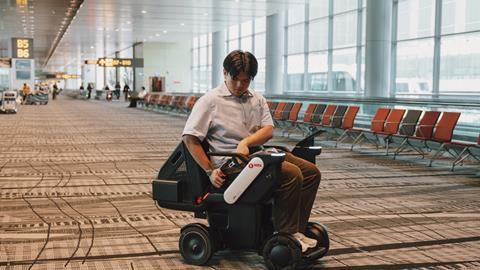
Changi Airport has begun deploying autonomous wheelchairs to improve accessibility, passenger independence and operational efficiency for travellers with reduced mobility.
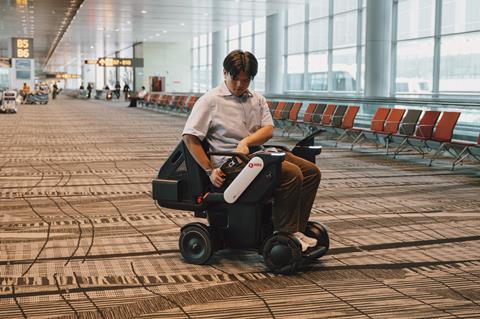
Changi Airport (SIN) has begun deploying autonomous wheelchairs across its terminals following successful trials, marking a significant step towards improving accessibility and supporting the growing number of passengers requiring mobility assistance.
The initiative, delivered by Changi Airport Group (CAG) in partnership with ground handling provider SATS, introduces autonomous mobility devices designed to give passengers with reduced mobility (PRMs) greater independence while enabling airport staff to focus on travellers requiring higher levels of assistance.
The rollout follows a steady rise in demand for accessibility services. Between 2023 and 2025, requests for wheelchair assistance at Changi Airport increased by 20%, driven by growing passenger numbers and an ageing travelling population.
Passenger journey enhanced through automation
The autonomous wheelchairs are equipped with advanced sensors that detect obstacles and surrounding pedestrian traffic while following predefined routes through departure transit areas. Safety features include seatbelt monitoring, an emergency stop button, an assistance call function and storage for cabin-sized luggage.
Each journey is monitored in real time by a SATS ground handling supervisor from a central control centre, allowing the technology to complement existing mobility services rather than replace frontline staff.
The deployment forms part of SATS’ Hub Handler of the Future programme, which uses automation to improve operational efficiency while enhancing passenger services. During this first phase, the autonomous wheelchairs are expected to support around 10% of Changi Airport’s daily mobility assistance demand.
The technology was first introduced in Terminal 3 in March 2025 before expanding to Terminal 2 later that year. Since the trials began, more than 13,000 passengers have used the autonomous wheelchairs. Prior to the passenger trials, Changi Airport Group conducted extensive testing covering navigation, obstacle detection, passenger comfort, speed control and overall operational safety.
Damon Wong, Senior Vice President, Airport Operations Planning at Changi Airport Group, said: “For those with reduced mobility, navigating a large airport can be challenging. The autonomous wheelchairs offer these passengers greater independence and convenience, while enabling frontline staff to provide more dedicated care to those who require higher levels of need.”
SATS said the new service complements its existing fleet of manual wheelchairs, airport buggies and e-Caddies, while enabling more intelligent deployment of mobility resources based on real-time demand across the terminals.








No comments yet