
Malta International Airport’s Lorna Refalo, shares how the airport’s expansion project is rooted in delivering an elevated, authentic experience for its passengers, developed with sustainable growth at its core.


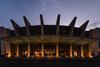
Facade_Central Crown_Evening

Facade Central Crown

Credit: Malta Airport


Behind Malta International Airport’s familiar limestone arches and central crown, Malta’s only air terminal has changed remarkably over the past two decades. But its most significant transformation lies ahead, as an ambitious eastward expansion steadily takes shape under the company’s multi-million investment programme for 2025-2029.

A long-term master plan for Malta International Airport

In 2010, Malta International Airport had a relatively modest operation, welcoming just over three million passengers a year. Yet even then, the company was already looking to the future. A long-term master plan charted the phased development of the airport grounds, clearly providing for the westward and eastward extensions of the original terminal, built between the late 1980s and early 1990s.

The primary ambition with this development is not merely to accommodate more passengers, but to add value to the departure experience.”

It was not until January 2020 that the company formally unveiled its expansion plans, shortly after announcing that Malta International Airport had served a record 7.3 million passengers in 2019. Published renders giving a peek into what the airport experience could look like in just a few years generated considerable excitement among the local community, particularly frequent travellers and aviation enthusiasts. However, that anticipation was short-lived. Within weeks, COVID brought airport operations and plans of growth to a sudden standstill, as the industry worldwide faced one of the most challenging periods in its history.

Six years on, the picture is markedly different.

Growth ambitions, challenges and logistics

Malta International Airport closed 2025 with just over 10 million passengers; a milestone achieved well ahead of expectations.

Following the completion of a 1,550sqm westward extension earlier that year, 2025 presented the opportune moment to revive the infinitely more complex East Expansion project. In the final quarter, works commenced on site after intensive months of detailed planning and design, ensuring that the development can address the long-term needs of multiple stakeholders while meeting stringent industry requirements.

During the planning stage, optimising the use of a constrained site presented a significant challenge, which was successfully addressed through innovative planning strategies and engineering solutions. As the east expansion is not a greenfield development, site enabling works introduced additional complexity, including excavation below road level adjacent to the existing terminal and the rerouting of critical building services essential to support the current operation.

Furthermore, with the construction site directly abutting a fully operational terminal, robust physical and operational separation measures were essential to safeguard passenger safety, security and comfort. These are being implemented through meticulous construction logistics planning, carefully designed hoarding arrangements, and dedicated vehicle routing to segregate construction traffic from passenger flows, among other considerations.

Given the limited available space, the project also required the temporary conversion of two aircraft parking stands to landside use to accommodate construction laydown areas and contractor compounds. This was made possible through long-term capacity planning and the commissioning of eight new aircraft parking stands between 2024 and 2025 as part of an investment in a new apron.

A new terminal by 2028

With the initial challenges addressed and work on site gathering momentum, a public commitment has been made to complete the project by the end of 2028. By then, the Maltese Islands will have a new 6,000sqm terminal, increasing the footprint of the existing facilities by almost 50%.

The new building, which will be connected to the current terminal, will accommodate 32 additional check-in desks, almost doubling Malta International Airport’s current check-in capacity. These desks will be designed with the flexibility to be upgraded to hybrid units, supporting the introduction of self-service bag drop facilities and, in time, biometric-enabled travel. The guest experience at check-in will be further enhanced through expanded baggage sorting facilities alongside a state-of-the-art baggage handling system that allows more efficient luggage take-up.

The development will also introduce five departure gates that are significantly more spacious than the airport’s existing ones, together with a crew gate.

Around 2,300 square metres of circulation space will ensure smoother passenger flows. The idea of openness is central to the design of the new terminal, set to be amplified using double and triple heights. Elevated ceilings will not only make spaces feel less crowded even during peak hours, but will support a more intuitive wayfinding.

Guests can also look forward to an enhanced retail and F&B offering, not only in terms of greater variety, but through a stronger emphasis on local food and home-grown brands. This forms part of the company’s drive towards heightened authenticity, which is considered essential to delivering a truly elevated and memorable airport experience.

The sense of place will also be strengthened through using Maltese limestone and architectural elements. Inspired by Valletta’s historic architecture, the traditional Mediterranean loggia will be reinterpreted in a contemporary manner. This will allow the new façade to maintain visual continuity with the existing terminal while introducing its own modern identity. At the same time, the loggia’s original functional intent of providing naturally shaded passageways will be retained.

Facade_Central Crown other

Facade Central Crown

Credit: Malta Airport


Minimising the environmental footprint

As the airport’s built footprint increases, the company will remain firmly committed to minimising its environmental impact, particularly in view of its pledge to achieve net zero status by 2050. The East Expansion project reflects this commitment to sustainable development through the integration of high-performance building systems and environmentally responsible materials.

Efficient energy and climate management will be central to the new building’s design. The extensive use of glass is envisaged to maximise natural daylight, reducing reliance on artificial lighting, while high-efficiency glazing will limit heat gains during the warmer months. Smart heating, ventilation and air-conditioning (HVAC) systems, energy-efficient lighting solutions, and the adoption of sustainable refrigerants will further optimise energy performance. Furthermore, the installation of additional photovoltaic panels will contribute to increased on-site renewable energy generation.

At first glance, the East Expansion project may be perceived simply as a capacity-building development; a step towards transforming Malta International Airport into a higher-traffic gateway.”

Responsible water stewardship is another key environmental priority. The project will incorporate landscaped areas featuring drought-tolerant vegetation, along with low-flow fixtures and leak-detection systems to reduce water consumption. Enhanced rainwater harvesting measures will also be explored, further strengthening the development’s sustainable credentials.

Shaping perceptions of the islands

At first glance, the East Expansion project may be perceived simply as a capacity-building development; a step towards transforming Malta International Airport into a higher-traffic gateway. In reality, however, it reflects a far more considered vision that takes into account the needs of the wider industry to continue positioning Malta as a quality destination with prospective visitors and airlines alike.

The primary ambition with this development is not merely to accommodate more passengers, but to add value to the departure experience. As the first and last touchpoint for visitors to the Maltese Islands, the airport plays a pivotal role in shaping perceptions of the destination. Through this new terminal, the company aims to contribute tangibly to the elevated, quality-driven tourism product that Malta is gradually shifting towards, ensuring that every journey begins and ends with an experience that reflects the standards the country aspires to uphold.

About the Author

1758268326401

Lorna Refalo

Lorna Refalo joined the Marketing and Communications team at Malta International Airport in 2016 as a Content Writer and Creator. Today, as Senior Communications and Media Executive, she plays a key role in formulating the company’s PR strategy, with a particular interest in communicating the airport’s environmental initiatives. Lorna takes the lead in putting together the company’s annual sustainability report, prepared in line with the Global Reporting Initiative (GRI) standards. She is also a longstanding member of Malta International Airport’s Corporate Responsibility Committee and a board member of the Malta Airport Foundation.