



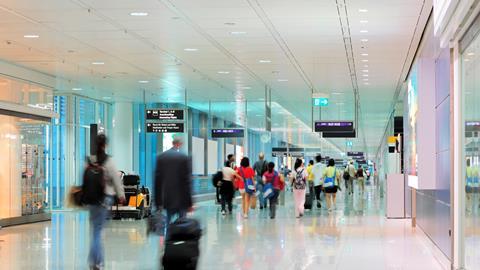
Passenger traffic across Europe’s airports returned to growth in May, led by strong leisure demand despite continued regional market divergence.
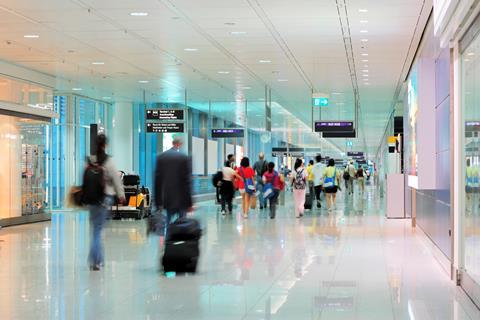
Passenger traffic across Europe’s airport network returned to growth in May, according to the latest figures from ACI EUROPE, with passenger numbers increasing by 3.2% compared with the same month in 2025.
The recovery follows a slight decline recorded in April, the first negative monthly result since the post-pandemic recovery began. Airports across the European Union, European Economic Area, Switzerland and the United Kingdom outperformed the wider market, recording growth of 3.4%, while airports outside the EU+ region increased passenger traffic by 2%.
The association said the European market continues to experience varying levels of performance due to factors including strong leisure demand, ultra-low-cost carrier expansion, airline capacity decisions, aviation taxes and the ongoing effects of instability in the Middle East.
European airport traffic continues to diverge across national markets
Among EU+ countries, Slovakia recorded the strongest growth with passenger numbers rising by 112.8%, followed by Malta (16.5%), Estonia (13.1%) and Slovenia (11.2%). Bulgaria, Poland, Lithuania and Denmark also delivered strong performances.
At the opposite end of the market, Cyprus continued to experience weaker demand because of the impact of regional conflict on traveller confidence, while Switzerland, Austria, Iceland and Latvia reported declining traffic linked to airline capacity reductions and operational constraints.
Among Europe’s largest aviation markets, Italy and Spain continued to outperform, recording passenger growth of 5.1% and 5% respectively. France and the United Kingdom remained below the European average, while Germany saw passenger traffic decline by 0.6% following capacity reductions associated with Lufthansa CityLine.
Outside the EU+, North Macedonia and Albania delivered the strongest growth, increasing passenger traffic by 27.4% and 26% respectively, while Montenegro, Uzbekistan and Armenia also recorded double-digit gains. Israel, Azerbaijan, Georgia and Kosovo all reported lower passenger numbers.
London Heathrow Airport (LHR) remained Europe’s busiest airport during May, handling 7.12 million passengers despite a 1.2% decline. Istanbul Airport (IST) followed closely behind, with only 3,012 fewer passengers.
Among Europe’s busiest airports, Barcelona Airport (BCN) led growth with a 6.5% increase, ahead of Madrid Airport (MAD), Palma de Mallorca Airport (PMI) and Amsterdam Airport Schiphol (AMS).
Freight volumes across Europe’s airports increased by 2.5% during May, with Leipzig Airport (LEJ), Brussels Airport (BRU) and Amsterdam Airport Schiphol recording the strongest gains among the continent’s leading cargo hubs. Aircraft movements increased by just 0.8%, reflecting continued airline capacity management and the operational impact of the conflict in the Middle East.
Smaller airports continued to experience the strongest annual passenger growth at 7.2%, although they remain more than 25% below pre-pandemic traffic levels recorded in 2019.









No comments yet