

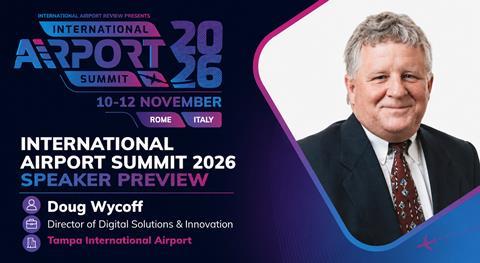
Doug Wycoff, Director of Digital Solutions & Innovation from Tampa International Airport explores how AI-powered apron monitoring and real-time operational awareness is helping TPA improve safety, co-ordinate ground handling activities and reduce turnaround uncertainty.
The modern apron isn’t suffering from a lack of data. It’s suffering from a lack of certainty. Every minute, hundreds of decisions are made that affect safety, efficiency and profitability. Is the gate actually clear? Has fuelling begun? Is a tug entering a safety zone? Has baggage loading stopped? Is an aircraft ready to push? Are people and equipment where they’re supposed to be?
Until now, most organisations have answered these questions by piecing together radio calls, cameras, manual observations and a combination of gut instinct and experience. Tampa International Airport (TPA) has introduced a continuously verified understanding of what’s happening on the ramp…in real time.
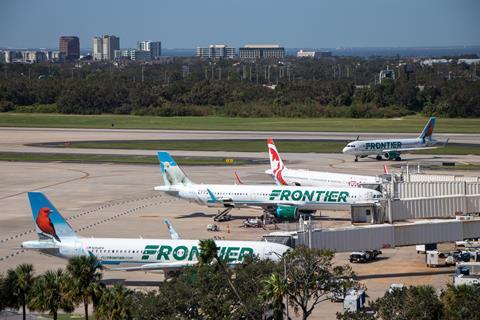
An aircraft turn is a tightly co-ordinated sequence that begins when an arriving aircraft enters the gate area, and ends when it pushes back for departure. Between those moments, dozens of people, vehicles, tools, systems, and service providers operate around and beneath the aircraft.
It’s impossible to overvalue the importance of ramp operations and the opportunity to enhance safety
This underwing environment is hazardous. Personnel work near engines, propellers, landing gear, control surfaces, fuel, high-pressure equipment, moving vehicles, and equipment capable of damaging an aircraft through a seemingly minor collision. Time pressure, noise, poor visibility, weather, congestion, and fragmented communication compound the risk.
The TPA Overwatch system
TPA, along with our partners at Sotereon.AI, is bringing operational certainty to enable smarter gate management, safer ground operations, and faster turnarounds. Using an agentic approach coupled with continuous 3D monitoring, AI, and a system of proactive alerts, we deliver automated milestone tracking and a complete operational record that every stakeholder can trust.
Unlike a conventional alerting system, the TPA Overwatch system continuously observes conditions, compares them with an approved operational plan, identifies conflicts, recommends corrective action, co-ordinates workflows, and verifies that required steps have been completed. It does not replace trained personnel, approved procedures, or operational authority. The system improves situational awareness and offers decision support to our highly trained team members, so they can make better decisions, faster.
What TPA’s Apron Overwatch covers:
Enhanced safety – Bringing ground operations to life, digitally
With global ramp-area damage projected to cost more than $10 billion annually by 2035, TPA is focused on reducing risk today. TPA’s Overwatch for Underwing Safety system encompasses the aircraft stand and the areas beneath and immediately surrounding the aircraft. Depending on the aircraft and operation, this includes:
- Engines, propellers, auxiliary power unit exhaust, and hazard zones.
- Fuelling points, hydrant systems, hoses, bonding equipment, and vents.
- Cargo holds, baggage doors, belt loaders, cargo loaders, and containers.
- Ground power, preconditioned air, air-start, potable water, and lavatory connections.
- Passenger boarding bridges, stairs, catering trucks, and service vehicles.
- Pushback tugs, tow bars, chocks, cones, and wing walkers.
- Marked equipment-restraint areas, vehicle lanes, passenger routes, and emergency-access zones.
By introducing real-time, 3D awareness, we bring the apron to life digitally and can now understand patterns of movement, detect safety hazards, and ensure compliance to airport and airline expectations—all automatically.
Before arrival, the system will inspect and declare readiness based on key conditions.
Turn planning and gate assignment: better decisions for better, more sustainable operations
The key to any airline and airport relationship is the ability to make an efficient turn, and that process begins before the aircraft arrives. Gate operations managers must confirm that the assigned stand is compatible with the incoming airplane and that the ecosystem of support services is available and ready to support:
- Aircraft geometry, including wingspan, length, tail height, engine location, and door positions.
- Stand restrictions, pavement limits, lead-in lines, stop positions, and adjacent-gate constraints.
- Ground services, such as fuel, electrical power, preconditioned air, water, lavatory, catering, and baggage systems.
- Operational conditions, including maintenance requirements, international-arrival controls, towing plans, weather, and de-icing.
- Emergency access, ensuring fire lanes, evacuation areas, and equipment routes remain available.
The TPA Overwatch system ramp-management by evaluating equipment readiness in concert with operational priorities.
Gate inspection and pre-positioning
Before arrival, the system will inspect and declare readiness based on key conditions.
Typical checks include:
- Foreign object debris has been removed.
- The lead-in path, stop area, safety envelope, and emergency lanes are unobstructed.
- Passenger boarding equipment is correctly parked and retracted.
- Ground-support equipment is positioned in designated staging areas.
- No personnel or vehicles are inside prohibited arrival areas.
Implementation roadmap:
Here’s how TPA’s operations stakeholders have approached the solution:
Phase 1: Map & classify the operation
Document each aircraft type, stand, task, role, dependency, exclusion zone, stop criterion, hand-off, and source of operational authority. Resolve inconsistent procedures before automating them.
Phase 2: Establish reliable data
Create authoritative identities for aircraft, stands, equipment, personnel roles, flights, work orders, and tasks. Synchronise timestamps and define how stale or missing data is handled.
Phase 3: Begin with advisory functions
Start with gate-conflict detection, FOD alerts, equipment tracking, task reconciliation, and safety-zone warnings. Measure missed detections and nuisance alerts under real ramp conditions.
Phase 4: Add controlled co-ordination
Allow the system to prepare notifications and stage approvals. Require humans to authorise aircraft movement, fuelling exceptions, load decisions, and technical releases.
Phase 5: Validate and scale
Test normal, abnormal, emergency, and degraded scenarios across seasons and stations. Include frontline workers, safety specialists, maintenance, flight operations, accessibility teams, unions or worker representatives, and regulators as applicable.
Conclusion
by maintaining a shared operational picture across the entire aircraft turn process: gate assignment, stand preparation, arrival, chocking, fuelling, baggage and cargo loading, catering, cleaning, maintenance, departure checks, pushback, and post-turn review.
A combination of AI and telemetry, combined with agentic capabilities, provides a comprehensive decision support system. The greatest value is not autonomous control of the ramp, which may in fact be the future, but in the near-term value lies in the ability to notice conflicts earlier, co-ordinate fragmented teams, verify critical steps, preserve evidence, and adapt the plan without losing sight of safety.
At TPA, the governing principle remains clear: AI may observe, reason, recommend, co-ordinate, and verify, but trained people and approved physical systems retain authority over safety-critical aircraft operations.
Doug will be presenting this innovation in more detail at the International Airport Summit 2026 during the ‘Innovation showcase: Intelligent airport operations’ segment taking place on 11 November.
Make sure you are in the room when Doug takes to the stage to hear his insights first-hand and to network with him afterwards.
Register for your FREE VIP pass today.
*Free aviation leader tickets are applicable to senior managers and above from airports, airlines, regulatory bodies and aviation authorities.




No comments yet