
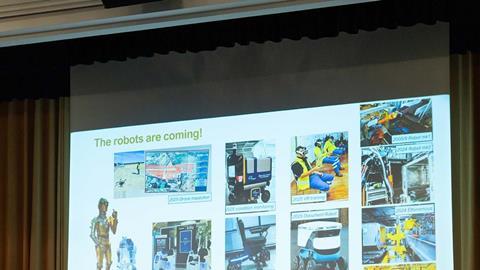
Airports worldwide are discovering that moving from robotic pilots to full operational deployment demands cultural change, resilient infrastructure and new skills. Insights from the most recent International Airport Summit reveal how leaders are making that leap.
Airports have never been short of pilot projects. Robotics trials appear regularly across terminals, aprons and baggage halls, often attracting headlines and excitement. Yet the true challenge is not the pilot but translating a promising proof of concept into an operationally resilient, financially justified and socially accepted part of the airport ecosystem.
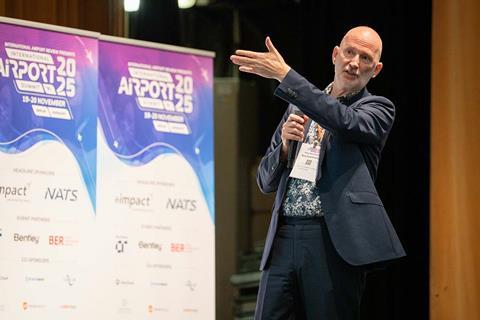
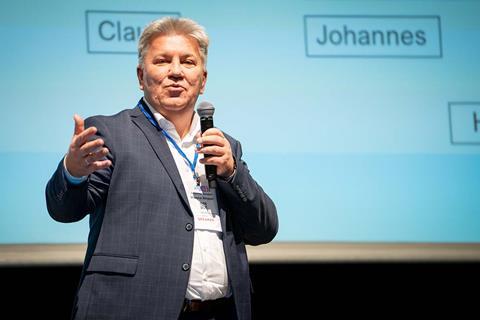
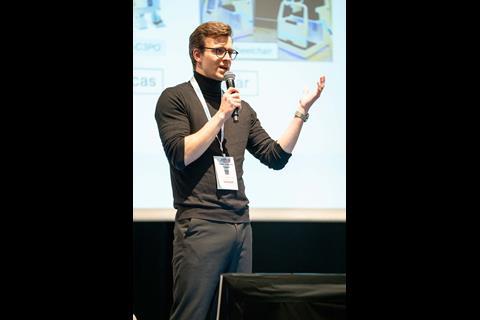
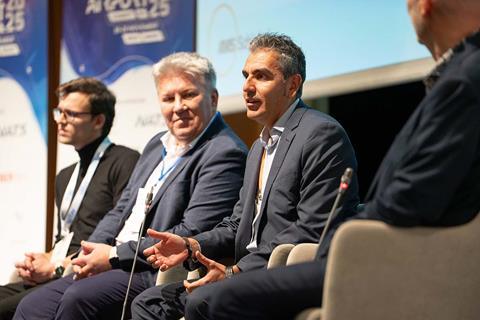
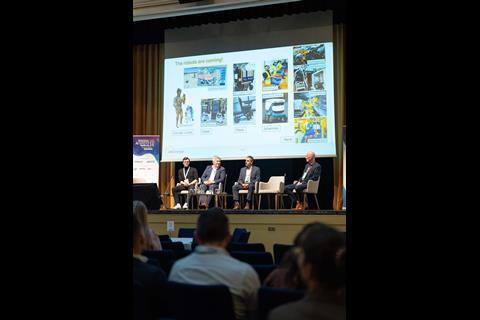
At the most recent International Airport Summit, leaders from Aena, Vienna, Frankfurt and Amsterdam airports offered a rare, candid look at how that transition is really achieved. Their shared message was clear: robotics can’t scale without cultural alignment, infrastructure readiness and a strategic vision that outlives a single pilot champion.
From drones to autonomous wheelchairs: why user acceptance comes first
Airports are increasingly exploring robotics to automate demanding or repetitive tasks. Madrid‑Barajas, for example, is trialling drones for runway and perimeter inspections with the long‑term ambition of enabling fully autonomous airfield operations. The airport is also testing autonomous wheelchairs to handle PRM demand at a scale of 2,000 service requests per day, reporting “extremely impressive” performance improvements in early trials.
Yet speakers repeatedly stressed that technology alone cannot deliver change. Introducing drones to staff who have manually inspected runways for decades requires careful, human‑centred change management. As Cesar Nava, Innovation Project Manager at Aena put it, “you have to make this cultural change inside the company.”
Similarly, Frankfurt Airport’s autonomous wheelchair pilot demonstrated very high passenger satisfaction, with 85% of users rating the service positively and more than half preferring the robot to a manual wheelchair. However, staff acceptance was initially mixed due to new procedures, modes and charging requirements. Bringing employees into the testing phase early proved to be a critical success factor.
Robots that coexist, not replace: learning from Vienna and Amsterdam
Vienna Airport’s document‑delivery robot exemplifies how airports can design automation that complements existing operations rather than displacing staff. Replacing an unreliable rail system for cargo paperwork, the robot now navigates forklift‑heavy environments with safe, defensive driving. Initial scepticism from forklift operators quickly dissipated once they observed that the robot slowed, yielded and adapted to their movements. Within three to four months, acceptance was high.
Amsterdam Schiphol offered a further lesson: robots alter workflows as much as they automate them. Early baggage robots prompted staff to intervene and ‘correct’ the machine, believing they could do it better. Training had to shift from teaching manual processes to teaching interaction with systems. The transition from baggage loader to robot operator involves not just new tools but a completely new mindset.
Henk Brandsma, Strategic Process Developer Baggage, Airport Operations at Amsterdam Airport Schiphol also found that automation can inadvertently isolate staff. Deploying a single robot in a dense processing area left the operator working alone, diminishing the social cohesion many ramp teams value. Scaling robotics, therefore, may require redesigning workspaces to maintain human interaction.
Infrastructure: the hidden barrier to scaling
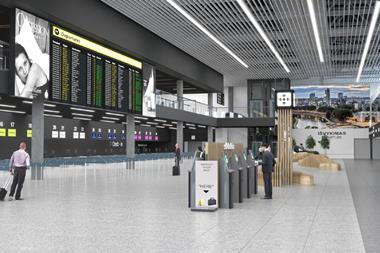
Unlike new ‘greenfield’ hubs in Asia or the Middle East, many European airports face a legacy environment of narrow corridors, mixed‑vendor lifts and space constraints. Leander Gottschalk, Senior Project Manager Corporate Strategy & Digitalisation at Fraport highlighted that autonomous wheelchairs cannot easily move between levels due to mismatched elevator systems, limiting scalable deployment until the infrastructure can be standardised.
Amsterdam described a similar challenge: retrofitting robotics into brownfield baggage halls often triggers a ripple effect through conveyor belts, load units and staffing patterns. A single robot is never a standalone solution. Full operational deployment requires redesigning the surrounding processes to ensure just‑in‑time bag flows and avoid bottlenecks.
Strategy, not serendipity: why airports need a robotics plan
Across the panel, one theme emerged repeatedly: pilot projects cannot live in isolation. Airports require a coherent robotics and automation strategy to guide investment, change management and long‑term scaling.
Madrid underscored this point, explaining that both the wheelchair and drone programmes sit within a formal innovation strategy with defined pillars and deployment pathways. Without such a framework, scattered pilots risk stagnation and never graduate to live operations.
Johannes Smejkal, Director of Ground Handling Services at Vienna Airport added that airports must be prepared to say no, acknowledging that robotics is not the answer to every problem. However, when a solution demonstrates clear benefits and operational fit, strong advocacy from early adopters can accelerate organisation‑wide acceptance.
Frankfurt is now establishing a robotics competence centre to centralise change management, skills and cross‑department adoption. This organisational approach mirrors the maturity airports already apply to cyber-security and digital transformation, and signals a shift from experimentation to institution‑building.
Scaling for impact: future directions
Across all four airports, the direction of travel is unmistakable. Autonomous wheelchairs will move into production fleets, document robots will expand into terminal operations, VR training will broaden from ramp to de‑icing and pushback teams, and next‑generation baggage robots will increasingly replace manual lifting – once space and process redesigns allow it.
But the greatest lesson from the summit is that scaling robotics is not a technical challenge alone. It is a human, organisational and infrastructural journey. Airports must balance efficiency with passenger experience, automation with employee engagement, and innovation with operational safety. The airports that succeed will be those that build cross‑department strategies, invest in user‑centred change, and recognise that technology adoption is as social as it is mechanical.
Looking ahead to 2026
As airports prepare for the next wave of automation, the International Airport Summit 2026 is set to continue the conversation on scaling robotics, digital transformation and human‑technology integration. With many pilots now transitioning into permanent operations, next year’s summit will offer an opportunity to learn first‑hand from airports that are redefining the boundaries of what autonomous systems can achieve.
If your airport is navigating similar challenges, or planning its next robotics or AI deployment – registration for International Airport Summit 2026 is now open and is free for senior airport leaders.
The insights shared on stage this year underscore that collaboration remains the industry’s most powerful accelerant.
Register today


No comments yet