





Waheedah Lawal Suleiman, Manager of the Economic Committee for ACI Africa shares an industry perspective on the gap between infrastructure investment and sustainable connectivity.
This is the first in a three-part article series intended to explore airport competitiveness within the African context.
Africa has been building. For the better part of two decades, governments across the continent have invested heavily in airport infrastructure, new terminals, extended runways, upgraded facilities. The ambition has been real. So has the investment. If you ask most people working in African aviation, they will tell you that aviation finally has the political attention it deserves.
Despite Africa accounting for nearly 18% of the world’s population, the continent still contributes only a small share of global air traffic. At the same time, many airports continue to face challenges linked to connectivity, airline retention, commercial sustainability, and long-term operational resilience.
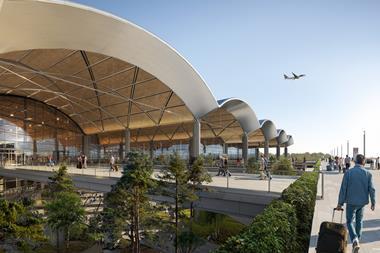
I have walked through many terminals. Some are genuinely impressive, modern, well-designed, and built to handle serious passenger volumes. Others feel like they were constructed for a future that hasn’t quite shown up yet. Beautiful facilities. Quiet departure halls. Airline slots that never got filled.
That gap, between what was built and what happened, is what I keep coming back to.
Despite Africa accounting for nearly 18% of the world’s population, the continent still contributes only a small share of global air traffic.
The concrete is there. The gates are there. The investment happened. And yet too many African airports are still fighting for routes, struggling to retain airlines, and generating revenues that fall far short of what their infrastructure should be able to support.
So, here’s the question I think the industry needs to sit with: what if the airports aren’t the problem anymore? What if we built the airports, but the strategy around them did not evolve at the same pace?
The story we have been telling ourselves
For a long time, the case for investing in African airports was easy to make. The infrastructure simply wasn’t there. Runways too short for wide-body aircraft. Terminals too small for growing passenger numbers. Navigation systems that didn’t meet international standards. If you wanted to fix African aviation, you started by fixing the airports. That logic made sense, and it drove a wave of investment that was genuinely needed.
Infrastructure alone is no longer the bottleneck it once was. Other factors are increasingly influencing airport performance and connectivity outcomes.
But that narrative has evolved, and the realities on the ground have changed with it. Capital is still flowing into African airports. New projects are being announced, existing ones are being expanded, and the momentum has not stalled. Terminals have grown. Standards have improved. The continent is not standing still on this.
And yet, if we are honest, infrastructure alone is no longer the bottleneck it once was.
However, other factors are increasingly influencing airport performance and connectivity outcomes. The challenge has evolved. It is no longer mainly about bricks and mortar. Increasingly, it is about ensuring that infrastructure investment is supported by clear commercial, connectivity, and long-term development strategies.
Infrastructure alone does not attract airlines
Here is something that still surprises people outside the industry: airlines don’t just show up because an airport exists. They go where the numbers work, where passenger demand is proven, where costs are manageable, where the data gives them enough confidence to commit.
Getting an airline to launch a route is a commercial process. It takes relationship-building, incentive structures, reliable traffic data, and persistent engagement with network planners who have a hundred other options in front of them.
Many African airports are still strengthening their route development and airline engagement capabilities. There can sometimes be an expectation that infrastructure investment alone will naturally lead to airline growth. In a few high-demand markets, that might happen. But in most cases, it doesn’t.
Airlines are ultimately guided by commercial viability. If an airport cannot clearly demonstrate why a route makes economic sense, it gets passed over, regardless of how impressive the infrastructure looks.
Infrastructure may attract attention. But strategy sustains connectivity.
The rules don’t match the ambition
Africa’s aviation market is still one of the most restricted anywhere in the world. The Single African Air Transport Market (SAATM), launched by the African Union in 2018, was built around the right vision: open skies, stronger competition, lower fares, and improved intra-African connectivity. But signing declarations and fully implementing them are two very different things. Progress has remained uneven.
The result is a situation that continues to challenge connectivity across the continent; passengers travelling between two African cities are often forced to connect through Europe or the Middle East, paying more and travelling longer than necessary.
Routes that should exist often don’t, not because demand is absent, but because regulatory structures still constrain market flexibility, new entrants, and network expansion.
You can build all the airports you want, but if policy and regulatory frameworks do not sufficiently support market growth, infrastructure investment alone cannot deliver the connectivity outcomes it promised.
Evolving management structures for a competitive environment
Many African airports continue to operate within government-led systems whose primary mandate has traditionally focused on operational oversight and national service delivery rather than commercial competitiveness.
This is not inherently negative. In many markets, government involvement remains essential for stability, national connectivity, and long-term infrastructure development.
However, modern airport competition increasingly requires airports to think beyond infrastructure management alone.
Winning airline business, growing non-aeronautical revenues, responding quickly to market shifts, and positioning airports competitively within a rapidly evolving aviation environment require a different level of commercial agility and strategic responsiveness.
It is not simply about individual talent. It is about building institutions that are equipped to respond effectively to an increasingly competitive aviation environment.
Whether that happens through concession models, public-private partnerships, institutional reform, or stronger commercial capability within existing systems, the need for more adaptive and commercially responsive airport management structures is becoming increasingly important across the continent.
This may ultimately become one of the most under-discussed challenges and opportunities in African aviation.
So, what needs to change?
To be clear: this is not an argument against infrastructure investment. Africa still needs airport expansion, modernisation, and improved operational capacity. The economic case for continued investment remains strong.
But investment without a strategy eventually becomes an expensive hope.
You can build all the airports you want, but if policy and regulatory frameworks do not sufficiently support market growth, infrastructure investment alone cannot deliver the connectivity outcomes it promised.
The next chapter of African aviation will not be defined primarily by construction activity alone. It will be shaped by:
- Commercial decision-making
- Regulatory reform
- Institutional adaptability
- Long-term strategic thinking.
That means airports placing greater strategic emphasis on route development, not simply hoping airlines will notice them, but actively building the commercial case for connectivity.
It means governments moving from open-skies commitments on paper toward practical implementation.
It means strengthening non-aeronautical revenue strategies and building airport leadership teams capable of understanding both the operational and commercial realities of modern aviation.
And perhaps most importantly, it means redefining what airport success looks like. Not simply terminals built.
But:
- Sustainable routes
- Resilient connectivity
- Airline confidence
- Passenger movement
- Economic value creation
- Long-term contribution to national and regional development.
The real opportunity ahead
Africa’s airports have shown they can build world-class infrastructure and that is no small achievement.
But the harder work is what comes next, building the strategies, institutions, regulatory environments, and commercial ecosystems capable of turning impressive facilities into truly competitive airports.
Because ultimately, the future competitiveness of African aviation may depend less on infrastructure alone and more on whether the systems surrounding that infrastructure evolve quickly enough to support sustainable growth.
The infrastructure is increasingly ready. Now the strategy needs to catch up.












No comments yet