
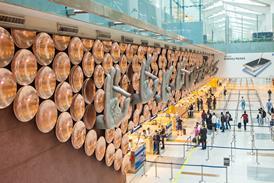
With lifetime costs far outweighing upfront investment, International Airport Review examines why airports must embed total cost of ownership and total expenditure principles into the way they design, procure, operate and maintain critical infrastructure.
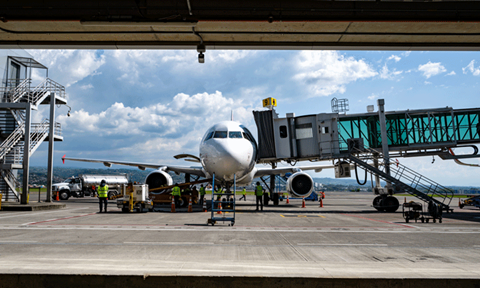
Airports operate some of the most complex, capital-intensive infrastructure in the world. From terminal systems and baggage machinery to pavements, power distribution and HVAC plants, the operational estate is vast, diverse and interdependent. These assets also share longevity: a design life often measured in decades and a cost profile dominated not by acquisition but by operation, maintenance and eventual renewal.
Total cost of ownership (TCO) analysis shows that the initial purchase or installation of an asset typically accounts for only 15–20 per cent of its lifetime cost. The remaining 80 per cent – energy use, cleaning, planned and unplanned maintenance, spare parts, downtime and end-of-life replacement – accumulates over years of operation. At a 24/7 airport, even a short, unplanned outage of a critical system can have a disproportionate financial impact.
Lifecycle cost optimisation becomes essential to sustaining performance, reducing risk and protecting the return on major capital programmes. It is central to end-to-end asset management because it ensures that capital investments deliver sustained benefits across the entire working life of an asset.
Embedding lifecycle thinking into capital programmes
Understanding and operationalising the total cost of ownership
The research highlights the need for airports to embed TCO principles not only in operations but also in procurement, design, and capital planning. When tenders are judged solely on the lowest upfront price, airports risk acquiring assets that are cheap to install but expensive to operate, difficult to maintain or prone to early failure.
A lifecycle-led tender process – such as the Most Economically Advantageous Tender (MEAT) approach – evaluates bids based on whole-life performance. This includes acquisition costs, operating costs, maintenance requirements, downtime impacts and end-of-life processes. It prompts suppliers to provide better data on asset efficiency, durability and maintenance needs, supporting more accurate lifecycle modelling.
Over time, this approach reduces the long-term cost burden and improves the affordability of capital programmes by preventing unplanned operational expenditure resulting from short-term procurement decisions.
Closing the information handover gap
A major source of lifecycle inefficiency arises during the transition from construction to operations. “As-built” data often arrives late, is incomplete, or is in non-standard formats incompatible with the airport’s asset systems. Without validated asset information, teams cannot activate maintenance regimes, manage warranties or address early-phase reliability risks.
Lifecycle cost optimisation, therefore, depends on structured handover standards such as COBie being built into project contracts from the outset. This includes specifying required data fields, validation procedures and compliance thresholds. Ensuring the asset register is populated before operational use accelerates the integration of new systems into the CMMS and enables predictive maintenance and digital twin functionality.
When this information flow is fully integrated, new assets enter service with far fewer uncertainties and can be managed proactively from day one.
Risk-based maintenance and targeted intervention
Not all assets carry equal operational importance. The research emphasises the need for risk-based maintenance (RBM) to align maintenance intensity with asset criticality. A primary baggage belt or runway lighting system requires more frequent intervention than a non-critical fan or office utility.
RBM typically categorises assets into high-, medium- and low-criticality groups. High-criticality assets receive predictive or preventive maintenance; medium-criticality assets receive condition-based interventions; and low-criticality assets may be run to failure if that is the most cost-effective strategy.
This avoids over-maintaining low-impact assets while ensuring that critical equipment receives the necessary attention to prevent disruption. It also supports regulatory expectations for prudent investment and evidence-based decision-making.
Renewal decisions based on condition and performance
Traditional renewal programmes often rely on accounting life, replacing assets when they reach the end of their depreciation cycle. The research shows the limitations of this approach. Some assets remain efficient and reliable well beyond their nominal lifespan, while others decline much earlier.
Lifecycle cost optimisation requires condition- and performance-based renewal planning. This involves assessing energy consumption, failure rates, operational impact and maintenance cost trends. Extending the life of efficient assets can defer substantial capital expenditure, while replacing poorly performing assets early may reduce long-term operational cost and carbon impact.
This approach provides a more accurate picture of lifecycle value, reduces waste, and strengthens the estate’s financial and environmental sustainability.
Adopting a TOTEX mindset
A recurring theme in the research is the need to overcome the traditional separation between capital expenditure (CAPEX) and operational expenditure (OPEX). A strict budgetary separation can create perverse incentives: for example, choosing a cheaper asset to satisfy CAPEX constraints, even when it results in far higher maintenance and energy costs.
A total expenditure (TOTEX) mindset integrates CAPEX and OPEX considerations, enabling airport leaders to evaluate options based on long-term financial and operational impact. This culture shift empowers asset managers to challenge design decisions, improve specifications and justify investments that deliver lifecycle efficiencies.
By adopting TOTEX thinking, airports ensure that spending decisions create long-term value rather than short-term savings that generate future liabilities.
Creating value across decades
Lifecycle cost optimisation remains central to effective asset management, but airports are increasingly recognising that true long‑term value extends beyond cost alone. A multi‑capital approach considering financial, natural, social, human and manufactured capital enables a more balanced, future‑proofed decision‑making.
By embedding TCO principles, improving data handover, implementing risk‑based maintenance and adopting a TOTEX mindset, airports can reduce long-term costs while also strengthening resilience, enhancing passenger experience, supporting decarbonisation goals and delivering broader social value.
In a sector where infrastructure lifespans span generations, optimising value across multiple forms of capital is no longer optional. It is the foundation of a truly future-ready airport.
This article featured in International Airport Review’s special eReport on end-to-end asset management for future-ready airports. Click the button below to view the full insights.