Eun-Jeong Seo, Executive Director of Digital Innovation at Incheon International Airport Corporation, outlines how the airport is prioritising technological innovation and value creation for its Vision 2040, including the introduction of the AI MBA.
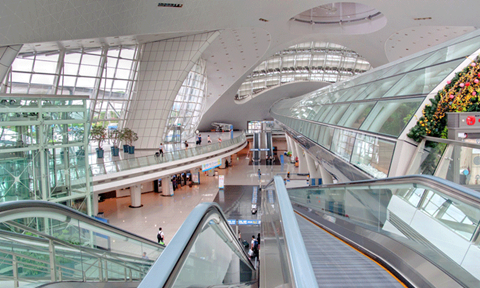
Incheon International Airport has long been a global benchmark for excellence in the aviation industry. However, as the world moves deeper into the digital age, the corporation is not resting on its laurels.
With the unveiling of Vision 2040, Incheon is embarking on a fundamental metamorphosis, shifting from a traditional transport hub to a pioneering "convergence innovation ecosystem" where industry, academia and innovators can co-develop and validate new solutions. At the heart of this strategy is the seamless integration of artificial intelligence (AI) to manage everything from predictive flight operations and passenger flows to ambitious sustainability targets.
To understand how this vision is being realised, we sat down with Eun-Jeong Seo, the Executive Director of the Digital Innovation Group at Incheon Airport. Our conversation revealed an organisation that is not only investing in cutting-edge software, but is also radically upskilling its human workforce to lead this technological charge.
A new philosophy: from hub to innovator
The transition to Vision 2040, which introduces the concept of Incheon 4.0, marks a significant departure from the airport’s previous strategic eras. While Incheon 2.0 focused on the logistics of being a premier transportation hub for cargo and passengers, and Incheon 3.0 sought to differentiate through culture and art, the Incheon 4.0 era is defined by value creation through technology.
Incheon plans to open its doors to the private sector and academia, allowing the airport to serve as a ‘real-world testbed for emerging technologies’.
As Seo explains, "Incheon Airport Vision 2040 is centred around transforming the airport into a space of value creation, driven by technology and innovation... Vision 2040 takes a bold step forward by redefining the airport as a hub for research and development (R&D) and technological innovation." This shift means the airport is no longer just a facility manager; it is a driving force for new industries, specifically targeting AI, digital transformation and sustainable practices.
To support this, the airport is building an AI Innovation Hub. By consolidating airport data into a central data centre, Incheon plans to open its doors to the private sector and academia, allowing the airport to serve as a ‘real-world testbed for emerging technologies’. This collaborative environment is designed to ensure the airport remains at the forefront of the global aviation industry by co-developing and validating new solutions with innovators.

c: Incheon International Airport Corporation[/caption]
Predictive operations and the green agenda
Sustainability is a cornerstone of Vision 2040. The airport's digital projects are explicitly designed to meet energy and emission targets by expanding solar power to electrifying ground equipment. One of the most significant developments in the digital realm is the focus on predictive and data-driven operations. Enter, total airport management (TAM). Currently, many airports rely on Airport Collaborative Decision Making (A-CDM), which is largely limited to airside operations. Incheon’s TAM system aims to expand this real-time information sharing to include the landside and access transportation. This holistic view allows for predictive and data-driven operations.
Seo highlights the environmental benefits of this system: "When fully implemented, TAM is expected to reduce unnecessary APU [Auxiliary Power Unit] runtime, shorten stand occupancy time, and improve the overall efficiency of aircraft and ground movements – all of which contribute to significant reductions in emissions." While the system is currently in the design phase, the airport has set an ambitious goal for full-scale implementation by 2028.
Revolutionising the passenger journey
For the millions of travellers who pass through Incheon’s gates, AI is set to become an invisible but essential guide.

c: Incheon International Airport Corporation[/caption]
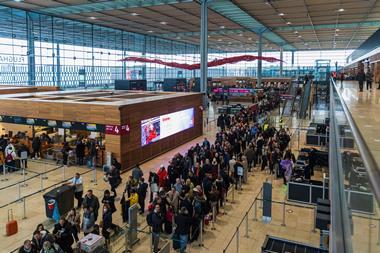
The airport has developed its own AI-based passenger flow prediction system, which has been trained on a staggering 500 million data points. By analysing data from 3D sensors and cameras, the system can forecast congestion and waiting times at various checkpoints. This allows the airport to optimise staff allocation in real-time, ensuring a smoother journey for every passenger.
Beyond operational efficiency, AI is also enhancing the commercial experience. The airport recently launched an integrated duty-free shopping app that allows passengers to make mobile purchases as late as 30 minutes before departure, a massive improvement from the previous two-hour cut-off. Furthermore, the introduction of ‘AI Human’ guides (virtual assistants designed for natural, human-like conversation) will soon provide personalised guidance, making the airport environment more intuitive and less stressful.
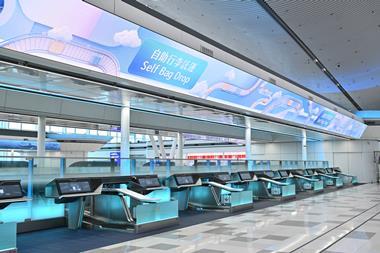
The physical landscape of the airport will also see the introduction of ‘Physical AI’. Ongoing projects include "check-in [robots] that autonomously detect congestion and adjust their movement to ease bottlenecks" and "indoor autonomous mobility to assist passenger movement within the terminals."
The human element: the AI MBA
Perhaps the most striking aspect of Incheon’s digital evolution is its focus on the workforce. Recognising that AI tools are only as effective as the people who use them, the airport is investing heavily in specialised education. This includes monthly training sessions on AI trends and the rollout of corporate AI tools to support daily tasks such as report writing and data analysis.
However, the flagship of their educational efforts is a specialised AI MBA programme. Partnering with Sungkyunkwan University (SKKU), a leading institution in Korea, the airport has created a tailored curriculum specifically for its needs. "This year we newly launched the AI MBA programme. We currently have around 40 students that are both working in Incheon and studying in that AI MBA programme," Seo notes.
AI tools are only as effective as the people who use them.
The objective is to foster a new generation of leaders who understand both aviation management and the complexities of machine learning. As Seo puts it: "Our goal is to ensure that every employee is equipped to work efficiently with AI, enhancing productivity and fostering innovation across the organisation."
A Vision of the future
When asked which technology will be the most transformative over the next five years, Seo is unequivocal: "The biggest game-changer for airports, as well as for industries across the board, will undoubtedly be AI."
Through Vision 2040, Incheon Airport is positioning itself not just as a global destination but as a global leader in the digital economy. By combining predictive technology, sustainable practices, and a highly educated workforce, Incheon is truly living up to its new slogan: ‘Beyond an Airport, Changing the World’.
 Eun-Jeong SEO is the Executive Director of the Digital Innovation Group at Incheon International Airport. With over 25 years of experience in the airport IT sector, she has played a leading role in advancing digital technologies across airport operations.
She currently oversees Incheon Airport’s overall digital transformation and AI initiatives, driving innovation across operational, service and infrastructure domains. Her recent flagship achievement includes the successful deployment of an AI-based departure hall congestion forecasting system, significantly contributing to congestion mitigation and operational efficiency.
Throughout her career, she has specialised in developing smart airport ecosystems, self-service passenger solutions, and next-generation digital platforms, positioning Incheon Airport as a global leader in smart airport innovation.