
Ralph Cutié, Director and CEO of Miami International Airport (MIA) explains how Smart Airport 2.0 aims to make travel at MIA effortless.
Passenger satisfaction and customer engagement remain two of Miami International Airport's top priorities. From congestion detection to stall availability, we’re leveraging real-time data to reduce wait times, enhance the travel experience and optimise airport resources. Through biometric processing and AI-powered video analytics, MIA is streamlining security and personalising every step of the curb-to-gate journey, moving from a reactive to a proactive and ultimately predictive environment. Welcome to Smart Airport 2.0 at MIA. This initiative isn’t just about smarter operations. It’s about making travel effortless.
Employee-driven innovation
MIA firmly believes that employees are the most effective agents of change. Under the leadership of our Chief Innovation Officer, Maurice Jenkins, innovation projects are conceived from employee feedback, empowering team members to identify challenges and propose solutions. With a workforce of over 48,000 badged personnel, this approach taps into the creativity of those on the frontlines of customer service. Our people-first strategy ensures that every technology deployment enhances engagement, boosts safety and improves performance across the entire airport ecosystem.
Building a scalable model
The Smart Airport 2.0 approach is a guiding principle of our $9 billion Modernisation in Action (M.I.A.) capital improvement programme and can serve as a roadmap for the global aviation community as well. Through collaboration with the OnGo Alliance and Airports Council International, we’re helping define best practices for smart aviation worldwide. By sharing knowledge and aligning strategies, airports everywhere can evolve together.
Through strategic investments in innovations like Internet of Things (IoT) sensor networks, AI-driven solutions and advanced analytics, we are modernising infrastructure, streamlining passenger flow and strengthening our responsiveness to dynamic operational challenges. Our focus on business process improvement, private wireless networks, smart airport technologies and automation ensures MIA remains at the forefront of innovation and delivers seamless, efficient travel experiences.
Commitment to innovation
The following key initiatives represent our most impactful advancements that are enhancing connectivity, optimising airport operations and elevating the customer and employee experience.
MIA becomes the first airport on the planet to offer ReBokeh’s sole-source technology.
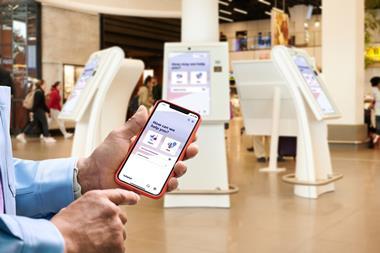
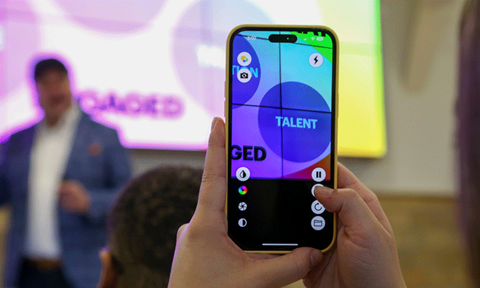
This June, MIA partnered with Baltimore-based software company ReBokeh Vision Technologies to launch free, unlimited access to ReBokeh’s empowerment-driven assistive technology software for low-vision users. With this partnership, MIA becomes the first airport on the planet to offer ReBokeh’s sole-source technology. The Rebokeh app is available for Apple users. ReBokeh’s technology works by allowing users to leverage the live camera feed from their mobile devices with overlayed, customised filters that adjust aspects like contrast, colour hue, zoom and lighting to meet the needs of low-vision users. ReBokeh AI, a brand-new feature, also offers the opportunity for lengthened interactions with ReBokeh’s custom-built AI tool. Users can ask ReBokeh AI personalised questions like what’s around them and what they’re seeing.

The ReBokeh app works by allowing users to leverage the live camera feed from their mobile devices with overlayed, customised filters that adjust aspects like contrast, colour hue, zoom and lighting to meet the needs of low-vision users.
c: MIA[/caption]
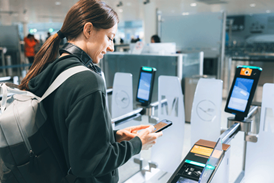
This fall, U.S. Customs and Border Protection is scheduled to launch Enhanced Passenger Processing (EPP) inside all three of MIA’s passport control areas. EPP, which decreases the processing time for U.S. citizens, is currently only available at three other U.S. airports. EPP leverages auto-capture technology to eliminate the administrative burden of the passport control process. By utilising CBP’s Traveller Verification Service, EPP biometrically identifies travellers, confirms U.S. citizenship and screens for any enforcement concerns – confirming the traveller’s arrival automatically without any officer interaction if there are no enforcement concerns. A photograph is captured automatically and processed through all CBP systems.

Enhanced Passenger Processing (EPP) decreases the processing time for U.S. citizens, is currently only available at three other U.S. airports. EPP leverages auto-capture technology to eliminate the administrative burden of the passport control process.
c: MIA[/caption]
MIA is developing a secure, high-speed private 5G network to enhance Wi-Fi connectivity across airport operations. The full installation is scheduled for completion in Winter 2026. The network will also enable IoT sensor integration for real-time monitoring of airport systems and passenger movement.
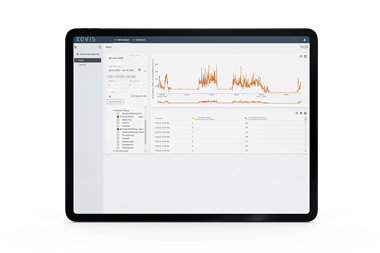
IoT sensors are being used to monitor elevators, escalators, moving walkways, air quality, temperature, noise levels, liquid overflows and passenger flow. Additionally, these sensors slow conveyance units down to a crawl when foot traffic ceases, saving valuable power and reducing wear and tear to extend the unit’s lifecycle. A centralised digital dashboard collecting all sensor data is being developed to enhance airport-wide monitoring and decision-making.
MIA plans to launch 3D hologram virtual assistants powered by an omnichannel AI chatbot to improve airport wayfinding and customer service response times inside its terminal.
In late 2025 or early 2026, MIA plans to launch 3D hologram virtual assistants powered by an omnichannel AI chatbot to improve airport wayfinding and customer service response times inside its terminal. The four hologram units will be installed at high-traffic intersections to provide personalised, immersive customer assistance and engagement. Travellers will have the ability to interact with a recognisable 3D holographic character to receive real-time airport information, flight updates and wayfinding directions within seconds.
Parallel reality display monitors, which offer personalised digital signage that can provide individualised flight and terminal information in real-time, are also currently in the design phase.
MIA is committed to fostering a culture of innovation that redefines how we operate and serve passengers. By harnessing cutting-edge technology, we are enhancing operational efficiency, improving real-time situational awareness and leveraging data-driven decision-making to optimise airport processes.

c: MIA[/caption]
Ralph Cutié is the Director and Chief Executive Officer of MIA. He oversees operations at MIA and four general aviation airports in the Miami area, which together generate $181.4 billion in business revenue and support nearly 843,000 direct, indirect, related and induced jobs. MIA leads the way, handling 56 million passengers and three million tons of cargo annually, placing it among America’s busiest international passenger and cargo airports.