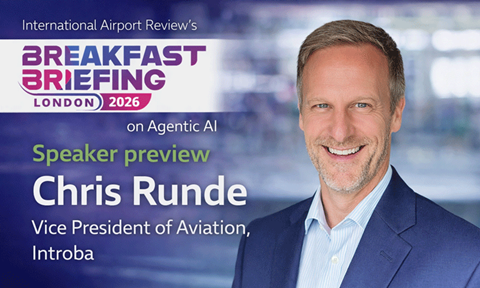
In the run up to his participation in International Airport Review’s annual breakfast briefing, aviation innovation expert, Chris Runde of Introba, shares the areas of impact for agentic AI and the central themes of successful deployments.
AI is poised to disrupt many industries, and airports must embrace the change or risk obsolescence.
Passenger expectations are rising, labour pressures are intensifying, and sustainability targets are no longer optional. Incremental improvements and siloed systems are no longer sufficient in a world where customers – and in this case, passengers – have so much choice, and the requirement to physically travel is becoming less of a necessity.
Agentic AI presents a practical opportunity for airports to improve how they operate today fundamentally, and the greater risk lies in waiting rather than acting.
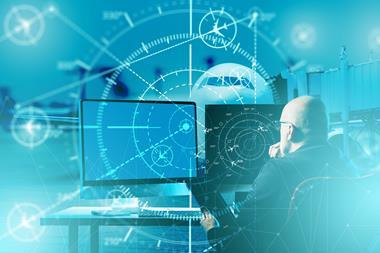
This breakthrough technology represents a meaningful shift from traditional analytics and generative tools. Rather than producing static insights, agentic systems are designed to act by synthesising complex data in real time and delivering the right information to the right people at the right moment.
In an airport environment, where conditions change constantly, and decisions have immediate consequences, that distinction matters.
When deployed effectively, agentic AI can transform airport operations across four critical areas – passenger experience, employee experience, operational cost and sustainability.
Passenger experience is where expectations are won or lost
Above all else, passenger experience remains king. It is the most visible measure of airport performance. Rankings, revenue, and reputation are all shaped by how calm, informed, and confident passengers feel as they move through a terminal.
Airports have invested heavily in passenger flow data, but the real challenge has been turning that data into real-time action. Agentic AI addresses this gap.
By synthesising data from flight schedules, passenger movements, concessions, and gate operations, agentic systems can deliver personalised, timely guidance. Instead of generic signage or static announcements, passengers receive information tailored to their journey. The result is reduced stress, clearer wayfinding, and increased engagement with services.
When passengers feel in control, they move more smoothly and spend more confidently. That benefits both travellers and airport operators.
Improving the employee experience is an operational imperative
While a lot of airtimes is used discussing passengers, employees matter just as much. Airports are major employers, yet they remain challenging environments for recruitment and retention. High stress, unpredictable workloads, and fragmented information all contribute to workforce fatigue and employee turnover.
AI is poised to disrupt many industries, and airports must embrace the change or risk obsolescence.
Agentic AI helps address this by enabling total airport management, ensuring staff have the information they need before issues escalate. Gate agents gain real-time visibility of boarding readiness, operations teams receive early warnings of congestion, and facilities staff are deployed based on predicted demand rather than reactive calls.
Even everyday tasks, such as restroom servicing, benefit from predictive insight. Aligning flight schedules with usage patterns allows issues to be addressed before they impact passengers, improving service quality and employee morale. The Mitie programme at London Heathrow International Airport (LHR) leverages this predictive analysis to guide deployment of its large fleet of autonomous cleaning “cobots”.
Lower costs through smarter, faster decisions
Operational efficiency is where the value of agentic AI becomes especially clear. Delays, disruptions, and safety incidents are costly, and many result from decisions made too late.
Agentic AI enables earlier intervention. Runway foreign object detection is a strong example, with real-time analysis identifying debris quickly and dispatching resources faster. This reduces risk and protects tight aircraft turnaround windows.
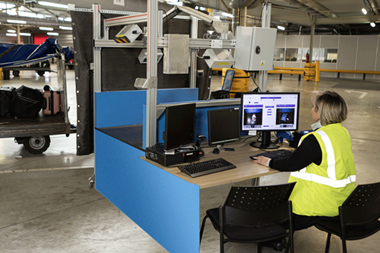
At passenger checkpoints, dynamic routing based on live and predictive data improves throughput without adding staff or infrastructure. These improvements translate directly into lower costs and more reliable operations.
Sustainability that is operational, not aspirational
Airport infrastructure plays a significant role in aviation’s environmental impact. Agentic AI allows energy use to be aligned with actual demand.
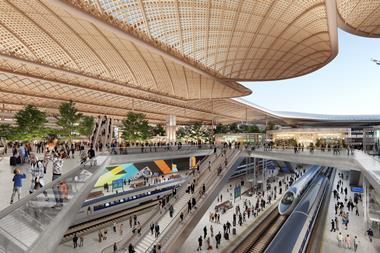
By correlating passenger and staff movement with HVAC, lighting, and electrical systems, terminals can dynamically adjust performance throughout the day. Over time, this reduces emissions while also lowering operating costs. Importantly, this is an achievable strategy today, not a distant ambition.
Turning insight into action
The opportunity is clear, but execution matters. To truly benefit from agentic AI, airports must prioritise three key areas:
- Data quality and federated access
- High-impact use cases
- Collaboration across airlines, concessionaires, regulators and operators.
In practice, data silos remain one of the biggest obstacles to success, and if all the ingredients are not in place, then any investment in the technology will fail.
Airports that embrace agentic AI now will help define the future of airport operations. Those who delay risk falling behind in an industry where experience, efficiency, and resilience increasingly determine success.
At Introba, we help airports worldwide move from concept to implementation. We work with clients to identify where agentic AI delivers the greatest value, ensure data readiness, and embed intelligence into both operations and the built environment.
Register for IAR’s London breakfast briefing on March 18 to hear Chris speak alongside experts from Aena and SITA on how agentic AI is revolutionising airport operations in passenger experience and resilience.
 Chris Runde is Vice President of Aviation at Introba, a Sidara company, where he specialises emerging technology and security. He is a regular speaker on emerging technology with recent topics including Technology Trends in Aviation, Artificial Intelligence in Airports, and Digital Twin Aviation Activation. Chris led the creation and management of the Airport Innovation Accelerator at the American Association of Airport Executives (AAAE) and led innovation programs at TSA including airport biometric credentialing, insider threat mitigation, and PreCheck. He currently serves as co-lead of ACI-NA’s Artificial Intelligence Working Group.