

International Airport Review Editor, Holly Miles, sat down with Andy Cliffe, CEO of London City Airport, to discuss the future of the airport and their exciting growth plans.
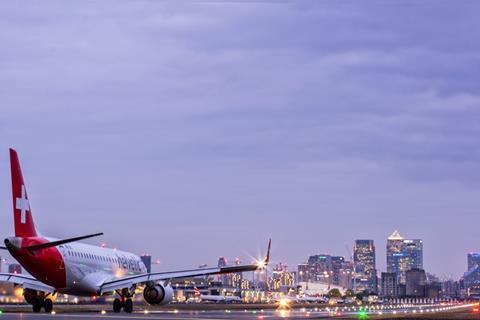
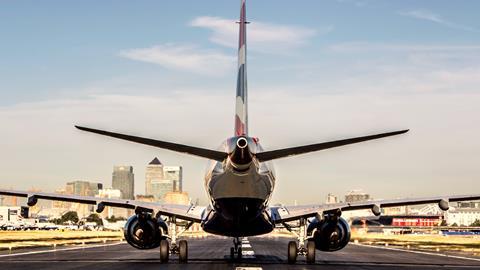
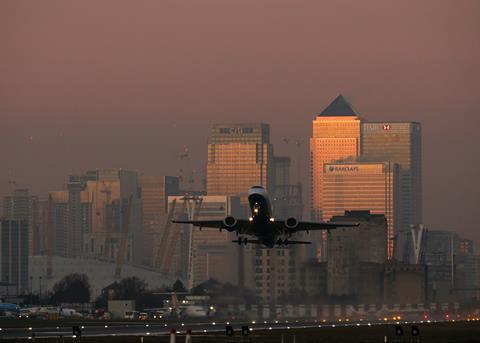
Anyone who has ever flown into London City Airport (LCY) will have felt as if they could almost reach out and touch the 95th floor of the iconic Shard building as they flew over central London. This 5.5-degree steep flight approach is one the airport is known for. However an Airspace Change Proposal (ACP) may see this approach become slightly shallower to 4.49-degrees, enabling larger aircraft such as the Airbus A320neo to land at the airport.
This is all part of a larger plan to grow annual passenger capacity from 6.5 million to nine million passengers, which has already been approved and will allow London City to realise its true potential within the enormous aviation market of London.
Leading the airport into its next chapter is new airport CEO Andy Cliffe, who succeeded CEO Alison FitzGerald in February 2026.
Speaking exclusively to International Airport Review, Cliffe said: “Our growth strategy is largely focused on introducing larger, quieter, next-generation aircraft. That would allow us to serve a broader range of destinations and strengthen business connectivity, which London City is well known for. If approved, the proposed changes would allow us to deepen our connectivity, add range, deploy larger aircraft and increase capacity to existing destinations.”
Much of the airside infrastructure, including stands and taxiways, is already in place, but an expansion in passenger numbers and larger aircraft would also eventually lead to investment in pier extensions and further terminal development focusing on passenger facilities.

Operating within a close-knit community
City Airport is in the heart of East London and located near the banks of the Thames. It is in the middle of a tight-knit community, who are not afraid to voice their opposition to noise increases, air quality and local impact. Despite local opposition and some concerns from politicians on the ACP, Cliffe remains confident that the introduction of next-generation aircraft will enable the airport to grow within its existing consented limits while reducing noise impacts.
“The airport plays an important role in the local community through outreach programmes, skills initiatives and employment opportunities. Growth at London City represents a significant economic and job creation opportunity. When you combine a quieter operating environment with economic benefits, skills development and employment opportunities, there is a compelling case for growth,” he says.
Despite the introduction of newer aircraft, such as the Airbus A320neo, meaning that planes would fly 90ft (27m) lower than they currently do, the airport insists that overall noise exposure would actually be reduced for around 110,000 local people compared to the current scenario. The planes will continue to fly the same path, meaning no new communities will be overflown.
The ACP change would also result in approximately 76,000 fewer flights over the next 12 years compared with doing nothing, according to the airport.
The Civil Aviation Authority is due to decide on lowering the flight approach into the airport by Autumn 2026.
Check out their Airspace Change Process Virtual Room here.
Challenges and resilience
Despite global passenger traffic recovering in 2024, London City has still not fully recovered its pre-COVID passenger numbers, still missing around a million travellers. The recent Middle Eastern conflict has also caused some market disruption, reduced confidence among some customers and contributed to higher fuel prices, which can affect airfares. “However, we remain positive about the market outlook and have experienced no fuel supply issues, and that has generally been true across the UK aviation sector. We continue to see strong performance across both business and leisure routes and would encourage passengers to continue booking travel.”
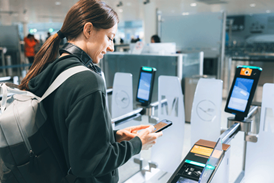
To improve resilience of their operations, LCY is increasing baggage reclaim capacity and changing the check-in experience. Over the next year, the airport will move towards a fully common-use self-service check-in model. This will improve the customer experience and speed up processes compared with the more traditional check-in environment.
“London City is already a remarkably resilient operation. Our focus is on building on that existing strength,” says the CEO.
Opportunities ahead
One of the main opportunities Cliffe is looking to capitalise on is a re-education of the perception that LCY is mainly a business airport.
“Many people assume London City is overwhelmingly business-focused, but that has not been true for some time. The shift began around 2013-14, and today the split is closer to 60% leisure and VFR (visiting friends and relatives) and 40% business travel.”
As London City is the local airport for more than half of the capital, the approval for next-generation aircraft will see the airport able to offer new routes to more far-flung destinations and provide more capacity on existing services.
“London City is currently one of the few airports in London with peak-time slot availability, which is generating significant interest from carriers across the UK and Europe… It’s also important to note that many passengers are still surprised by the breadth of leisure destinations available from London City, and we’re working to raise awareness of that.”
British Airways CityFlyer recently launched a new route to Toulon in the south of France. “That’s an important indicator of both passenger demand and the growing importance of leisure travel at London City.”
A people-centric airport
What Cliffe is trying to build is an airport that serves its people, whether that be passengers, staff or the surrounding community.
“I’m excited by the opportunity to transform the role London City plays, both for passengers and for the communities around it. That includes supporting employment, skills development and economic regeneration in East London, while also expanding the range of services available across the capital. We’re already a major employer and airports have a significant catalytic effect on economic development. There is substantial investment taking place around the Royal Docks, and we want to be a key partner in that development.”
LCY is the largest private sector employer in the London Borough of Newham, with over 2,100 employed on-site. Around 640 of these people are direct airport employees and over two-thirds of its employees live in the local area.
For passengers, LCY looks to differentiate itself by its convenience and overall experience.
“Passengers can arrive quickly, collect their baggage efficiently, and be on the DLR and heading into London within a very short time. That convenience is a key part of our proposition and one that we are looking to maintain.”
That said, the airport will be opening its first luxury passenger lounge in early 2027, enticing the passenger to slow down and enjoy a more elevated experience.
As London’s youngest airport approaches its 40th birthday, London City Airport finds itself at a pivotal moment. The decisions made over the coming months, particularly around its Airspace Change Proposal, will help determine how the airport balances growth with its responsibilities to passengers, airlines and local communities. For Cliffe, the ambition is clear: to build an airport that is bigger in reach, not impact, and one that continues to demonstrate that sustainable growth in aviation is possible.






No comments yet