

More than 400 personnel took part in a full-scale emergency exercise at Porto da Barra beach, helping develop integrated response protocols for aviation incidents in aquatic environments.
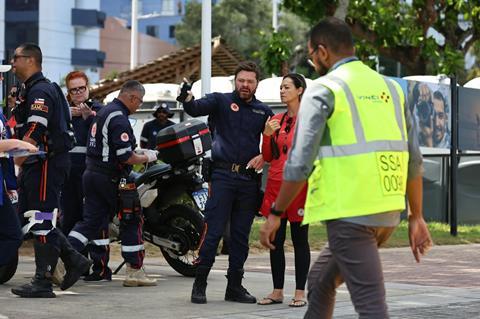
Salvador Bahia Airport has conducted a major simulated air accident exercise at Porto da Barra beach, bringing together more than 400 participants from municipal, state, federal and private organisations to test emergency response capabilities in an aquatic environment.
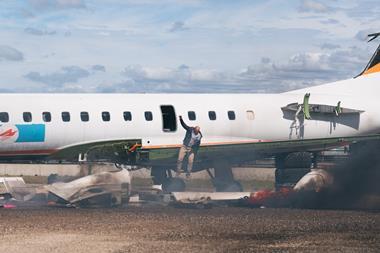
The full-scale drill, held on 17 September, recreated the response to a complex aviation emergency, from the initial activation of rescue teams and victim recovery through to medical treatment, crisis management and inter-agency coordination. The exercise was designed to support the development of integrated emergency protocols that can be deployed in the event of a real-world incident.
Led by Salvador Bahia Airport, managed by VINCI Airports, the operation involved a wide range of stakeholders, including aviation authorities, emergency services, military organisations and healthcare providers. Participants included the Brazilian Air Force, Brazilian Navy, Military Fire Department, SAMU emergency medical service, Federal Police, Military Police, Civil Police, ANAC, airlines and local maritime rescue organisations.
A key objective of the exercise was to assess how multiple agencies could work together under realistic conditions during a major aviation emergency in a coastal setting. The simulation also saw the simultaneous activation of crisis centres at Salvaero/FAB in Recife, the Integrated Operations Centre of the Bahia Security Secretariat and Salvador International Airport’s Emergency Operations Centre, replicating the coordination required during a large-scale incident.
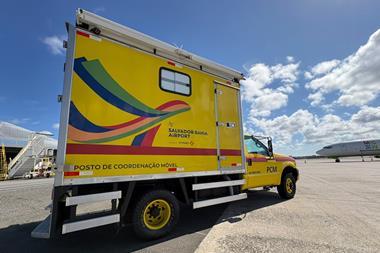
Another notable element of the drill was the deployment of Brazil’s first Mobile Coordination Post (PCM) developed specifically for airports. The mobile command facility includes a dedicated crisis room, enabling incident commanders to coordinate resources and response efforts directly at the emergency site.
Developing integrated emergency response protocols
Data and operational insights gathered during the exercise will now be used to create a coordinated emergency response protocol for aviation incidents in aquatic environments. The framework will establish clear communication channels, responsibilities and operational procedures between participating organisations.
The initiative is particularly relevant as Brazil prepares to host major international events, including the 2027 FIFA Women’s World Cup, where robust emergency preparedness and multi-agency coordination will be critical.
Julio Ribas, CEO of VINCI Airports in Brazil, said the exercise demonstrated the importance of collaboration between different levels of government and industry partners.
“Conducting a simulation of this scale requires all involved organisations to be prepared to operate in an integrated manner, and this is exactly what we sought to test at Porto da Barra. We brought together municipal, state, federal and private institutions in a single operation to understand how coordination functions in practice during an emergency situation. This alignment is essential to ensure that, in a real occurrence, every agency understands its role and can work together to deliver a faster and more effective response.”
Representatives from participating emergency services also highlighted the value of the exercise in strengthening preparedness, decision-making and operational coordination for high-complexity incidents.
Given Salvador Bahia Airport’s location near the coastline, emergency planning for potential incidents in aquatic environments forms an important part of its safety and resilience strategy. The latest exercise provides an opportunity to refine procedures, enhance communication between agencies and improve response readiness in scenarios where rapid, coordinated action can be critical.





No comments yet