



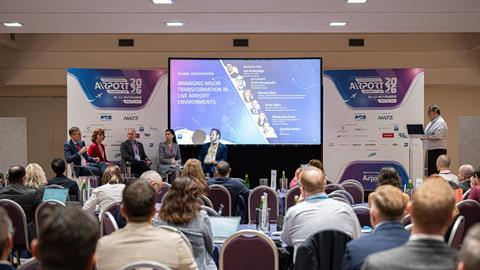
Speakers in Rome argued that new systems fall short without early planning, frontline buy-in and shared data, from border control to runway rebuilds.

Day two of International Airport Summit (IAS) 2026 moved from where airport capacity will come from to how it is delivered under pressure. Across border control, construction sites, the apron, the maintenance workshop and the energy grid, speakers kept returning to the same point: new systems fall short when the planning, the people and the data sharing around them are not ready.
EES one year on: “a digital process which is actually not digital”
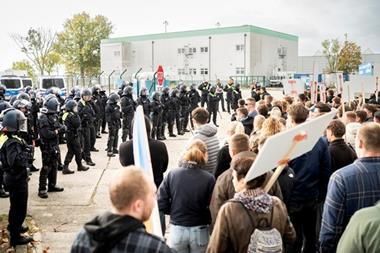
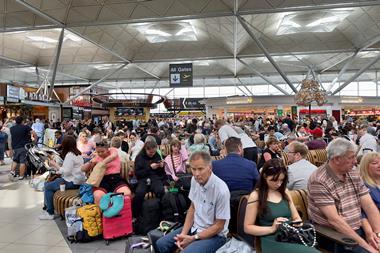
In conversation with International Airport Review Editor Holly Miles, István Szabó, Managing Director and Chief Operating Officer at Berlin Brandenburg Airport, gave a blunt assessment of the EU Entry/Exit System a year after rollout. The aim of stronger external borders is justified, he said, but transaction times at the border are four to five times what they were, so a wave of long-haul arrivals quickly becomes a long queue and departing passengers have missed flights. He described “a complete failure of the processes, a complete failure of the preparation in terms of technology”.
Airports cannot capture biometrics or check passports, Szabó noted, so Berlin has invested in signage, extra staff, priority for families and older travellers, and shared planning data with the police. He wants passengers to be able to pre-register at home, as the UK and US already allow, and a louder joint message from airports, airlines and the tourism industry. “I think we need a stronger voice,” he said.
Keeping airports open while rebuilding them
Moderated by Ian Betteridge, Director of Content at International Airport Review, the transformation panel compared notes on building around live operations. Chris Woodroofe, Managing Director of Manchester Airport, said its 10-year, £1.5 billion programme worked because the Terminal 2 extension was built first, creating room to move airlines before the old building was refurbished. His advice was to expand “before you’re absolutely ram-jam full”. The refurbishment kept producing surprises behind walls, and a shortage of skilled trades left the programme dependent on a small number of specialists.
Norma Click, Director of Airside / Landside Projects, Planning & Development at Hartsfield-Jackson Atlanta International Airport, explained how the airport replaced the central section of Runway 8L-26R, which she described as its busiest, in 29 days by bringing airlines, air traffic control and operations into the design from the outset and pre-qualifying every contractor. She said next year its longest runway and adjacent taxiways will be replaced in 60 days, tracked by the hour. “Every time we dig a hole, we find something,” she said.
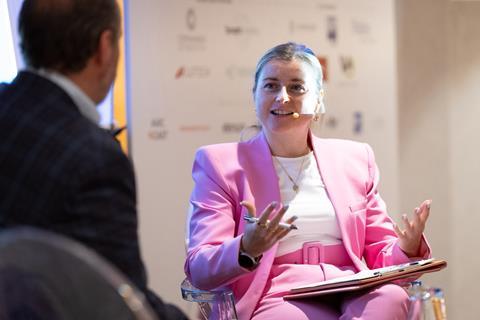
Brian Ryks, Executive Director and CEO of the Metropolitan Airports Commission, said Minneapolis-St Paul let Delta manage a concourse modernisation covering 75 gates, a first for the commission that freed his team for other projects. Elisabetta Fossi, Head of Terminal, Real Estate and Cargo Planning at Aeroporti di Roma (ADR), pointed to a weekly meeting of every affected department and a capacity test each September to prepare for the following summer. Damien Breier, CEO of BNP Group, named his three priorities as “planning, planning and planning”, alongside early involvement of operations teams and decision makers empowered at project level.
It’s never the technology, it’s always change management.”
Festival crowds as a passenger segment
Silke Devacht, Senior Product Development Manager at Brussels Airport, said 40 per cent of the airport’s passengers are under 35 and that events, from festivals to marathons, increasingly trigger travel. Her case study was Tomorrowland, the electronic music festival that draws around 400,000 visitors over two weekends in July.
Departing festival-goers arrive hours early on the Mondays after each weekend. The airport now moves them airside quickly, at times through a dedicated security lane, and for 10 years has installed a DJ booth in its food and drink area, with a pop-up merchandise shop added more recently. “Does it disturb other passengers? Yes, it does for sure,” she said. But those Mondays deliver record food and drink sales and social media reach the airport does not have to pay for.
Squeezing more from the airside
Thomas Hoff Andersson, Managing Director and Group Chief Operating Officer at Munich Airport, said the bottleneck moves around. Security has largely been fixed by new scanners, and the pressure now sits with EES, which he called “poorly executed by the Commission”. On the apron, Munich is equipping 150 stands with cameras to monitor turnarounds and is negotiating with its works council over how much management may see. “We’re not going after the individual,” he said.
Munich is also planning an airport operations centre with 85 seats, each with defined decision rights and measures of success. Asked how the airport copes when ageing IT fails, Andersson was candid: “I think we’re mastering workarounds.”
Sunil Kumar Munnangi, Associate General Manager, Airport Operations & Safety at GMR Hyderabad International Airport, said Hyderabad developed its turnaround monitoring in-house and rotates staff between its operations centre and the field so each understands the other’s work. “We don’t see the bottlenecks as a single isolated event,” he said, pointing instead to the interfaces between stands, taxiways, gates and agencies.
We’ve got to start sharing no matter what.”
Predictive maintenance runs on technicians’ trust
Paul Puopolo, EVP, Chief Technology & Innovation Officer at Dallas Fort Worth International Airport, said a year of predictive maintenance on HVAC systems has brought a 34 per cent reduction in break-fix work. Technicians helped design the tool and came to trust it once its predictions proved right on the floor. “It’s never the technology, it’s always change management,” he said.
Maurice Jenkins, Chief Innovation Officer at Miami International Airport, said sensors on conveyances have cut response times from as much as 24 hours to under 15 minutes. The model makes a recommendation and the engineer still decides. “It’s a tool to support,” he said. Ralph Struck, Senior Vice President Technical & Infrastructural Facility Management at Berlin Brandenburg Airport, said experienced craftsmen are retiring and are hard to replace, so the airport asked its teams which machines cause them the most trouble and built from there.

Data that meets passengers where they are
Brian Cobb, Chief Innovation Officer at Cincinnati / Northern Kentucky International Airport, told moderator Lukas Scherrer of Zurich Airport that an AI chat assistant launched in December 2024 handled around 75,000 interactions in a year, saving about 700 staff hours. Most questions were about basics such as parking and signage, which showed where information was falling short. He warned peers to keep such tools closed off from the open internet.
A survey delivered over the airport’s Wi-Fi now gathers 700 to 1,000 responses a day, and around 35 per cent of respondents said they would pay up to $900 per trip for a private terminal service. On data sharing between airports and airlines, Cobb was direct: “We’ve got to start sharing no matter what.” Roberto Formica of ADR said no single KPI matters most; the value lies in linking satisfaction scores to operational data, while spatial intelligence lets his team alert the police as border queues build.
Planning for fuels that keep slipping
The closing session, moderated by Mirjam Wiedemann, asked how airports should invest for electric and hydrogen aircraft when timelines keep moving. Thomas Romig, Chief Airport Operations Officer at Masterise Group, said manufacturers’ entry-into-service dates slip repeatedly while grid capacity takes years to secure. “You don’t build a power station overnight,” he said. Hydrogen also burns so quickly that today’s three-minute fire response standard “goes out of the window”.
John Nilsson, Strategy Manager for battery-electric and hydrogen aircraft at Swedavia, described his role as a filter between his board and manufacturers’ optimism. Swedavia favours mobile, flexible charging that can be installed when aircraft arrive. “We cannot build infrastructure that will be just sitting there for the next five, six years,” he said. Some of its smaller airports have peak demand below one megawatt, against two to three for a single charging aircraft, and the business model for electric routes remains the largest unknown.
The message from day two was that delivery is a matter of preparation. Whether the task is a border system, a runway, a maintenance model or a charging network, the airports that plan early, involve the people who will run it and share their data stand the best chance of making it work.








No comments yet