


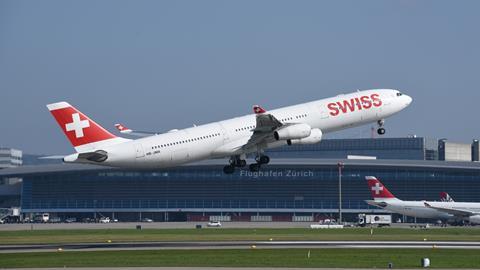
Zurich Airport manages summer growth as weather, airspace restrictions and infrastructure constraints challenge operational resilience.
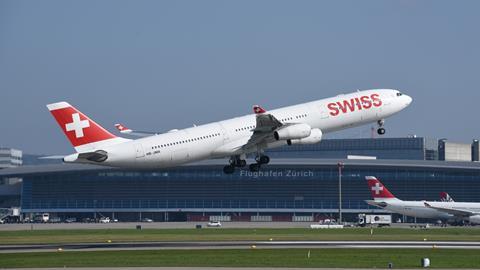
Zurich Airport (ZRH) handled a renewed summer peak in 2026. Severe weather, airspace restrictions and geopolitical tensions all placed pressure on operations. Demand remained strong throughout. Some 3,334,827 travellers passed through the airport in July alone, a rise of 2.4 per cent on the same month last year.
SWISS carried 1.75 million passengers over July. Between the end of June and mid-August, it transported just under three million passengers across 22,160 flights, a fall of 3.4 per cent on the prior-year period.
The airport’s busiest day of the season was Sunday 2 August. Some 121,981 travellers passed through, almost 62,000 of them flying with SWISS. New York, Chicago and Boston were SWISS’s most popular long-haul destinations, with London, Berlin and Palma de Mallorca leading in Europe.
Shared data supports coordinated operations
Zurich Airport Ltd, SWISS and around 300 other airport partners worked to manage the summer’s travel volumes smoothly. They continued and refined measures introduced the previous year, including sufficient staffing and a shared operational data basis.
This summer tested us all to the limits”
Central to this has been the Airport Operations Plan, or AOP, now in its third year. It gives some 7,400 users mobile access to real-time information, from gate changes to the latest weather developments. The system provides partners with a shared view of the airport’s operational situation, helping them identify deviations earlier and coordinate responses across the airport system.
The approach has become increasingly important as Zurich’s operations depend on tightly coordinated waves of short- and long-haul flights. With multiple aircraft arriving and departing within relatively narrow windows, disruption in one part of the operation can quickly affect other partners and subsequent flights.
Several challenges affecting punctuality originated beyond Zurich itself. These included severe thunderstorms at the end of June, the wider geopolitical situation, air navigation bottlenecks in Europe and new regulatory requirements. Zurich Airport also operates within a complex airspace and runway framework. Restrictions affecting the use of southern German airspace limit approaches from the north during certain morning, evening and weekend periods, adding another constraint to the airport’s operating concepts.
Punctuality remains below target
July departure punctuality across Zurich Airport stood at 56 per cent, a five-percentage-point improvement on the same month last year. Year-to-date punctuality reached 66 per cent. SWISS, however, recorded substantially more diversions and cancellations than in the previous year’s peak summer period.
The result also fell short of the airline’s pre-season ambitions. Ahead of the summer, SWISS expected to handle around 60,000 passengers a day across approximately 450 flights and had prepared measures aimed at delivering a more stable and punctual operation.
“This summer tested us all to the limits,” said SWISS Chief Operating Officer Oliver Buchhofer. “Our people and our partners really helped us get through it, and for this I offer them my sincere thanks. But, while we were still often able to save the situation on each operating day, an overall punctuality performance of 58.7 percent and an operating stability of 97.1 percent are just not what we aim to achieve. We cannot and will not be satisfied with this. We know where we need to improve. And we’ll be tackling the task together.”
Passenger processes largely proved efficient. Digitalised check-in and bag-drop services gave travellers greater flexibility, while new CT scanners at the centralised security checkpoint became operational in time for the peak, simplifying screening for liquids and electronic devices.
Around 90 per cent of passengers waited less than six minutes at security, in line with target times. Border control saw longer queues in places, linked to a new EU system recording biometric data for third-country nationals.
Stefan Tschudin, Chief Operating Officer of Zurich Airport Ltd, said the summer’s results showed investment was having an effect. He described operations as encouragingly stable from the operator’s perspective, while stressing continued commitment to optimising processes. Medium- and long-term structural measures, he added, still needed to take effect for greater impact.
Weather exposes runway constraints
The impact of weather on Zurich’s operation is particularly significant because the airport does not operate with a single fixed runway configuration. Its three runways are used according to the time of day, prevailing winds and other operating conditions, with changes required when weather makes the normal concept unsuitable.
For example, strong westerly winds can require departures from Runway 32 and arrivals on Runway 28, while north-easterly winds can require a different configuration. Zurich Airport says short-notice changes to the operating concept are undesirable because a stable configuration is preferable for maintaining predictable operations.
This makes severe weather more than simply an external source of delays. Thunderstorms, strong winds, fog and poor visibility can require changes to runway use, potentially affecting the sequencing of arrivals and departures and increasing operational complexity.
As a major hub, Zurich Airport depends heavily on effective coordination between its roughly 300 partners. Waves of short and long-haul flights arrive and depart within tight windows throughout the day, making punctuality and stability all the more essential.
Infrastructure aims to improve resilience
The summer’s disruption also highlights the importance of Zurich’s longer-term infrastructure programme. The airport is progressing plans to extend Runways 28 and 32, with the planning-permission applications submitted to the federal government in March 2026 and publicly reviewed in June. Construction is not expected to begin before 2030.
Runway 28 is planned to be extended by 400 metres, from 2,500 to 2,900 metres, while Runway 32 would gain 280 metres, increasing its length from 3,300 to 3,580 metres. Zurich Airport says the changes are intended to increase the safety margin and support more stable operations across different weather conditions.
The changes could also reduce the need for operating-concept changes. The extension of Runway 28 is expected to increase the availability of the eastern operating concept and reduce evening delays. Extending Runway 32 would allow heavy long-haul aircraft to depart directly from the runway rather than switching to Runway 34. This would shorten taxi distances and remove some runway-crossing movements, with further potential to reduce evening delays.
The runway projects therefore represent a longer-term response to some of the structural constraints exposed during periods of disruption. Alongside more efficient use of existing routes and infrastructure, they are intended to give Zurich greater operational resilience when weather or other conditions make the normal operating concepts difficult to maintain.




No comments yet