

Steven Yiu, Executive Director, Airport Operations, Airport Authority Hong Kong details the application of smart technologies, streamline design and intermodal connectivity all engineered to enhance and inspire the passenger experience at HKIA’s new Terminal 2.
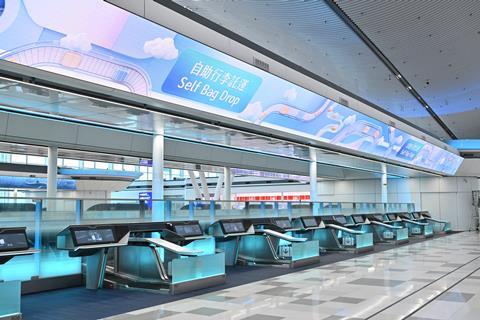
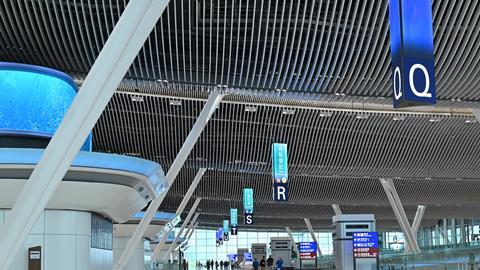
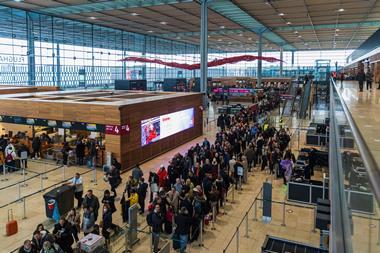
Hong Kong International Airport (HKIA) reached a new milestone at the end of May this year with the commissioning of departure facilities at the new Terminal 2 (T2). The new terminal welcomed the relocation of 15 airlines, mainly operating regional routes across Asia, from Terminal 1. Designed with passenger experience in mind, T2 features abundant natural light, immersive animated LED screen displays, and spacious aisles planted with self-service kiosks and check-in counters. T2 presents a refreshed and energetic outlook and offers passengers a vibrant start to their journey.
Smart tech reimagining passenger experience
HKIA, Asia’s leading aviation hub serving 61 million passengers in 2025, has long been recognised by the international aviation industry for its proactive application of smart technologies to enhance efficiency and passenger experience.
Building on this strong foundation, we set out to make T2 as smart and technology driven as possible, so that our travellers, especially the younger generation, can enjoy a smooth and relaxing airport experience, as they embark on leisure and journeys.
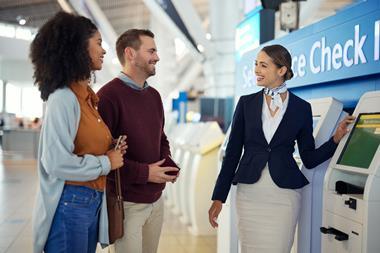
A key feature of T2 is its wide range of smart technology facilities that redefine frictionless travel, including 68 express self bag drop counters, 58 smart check-in kiosks and 108 hybrid check-in counters in the departure hall.
Self-service bag drop
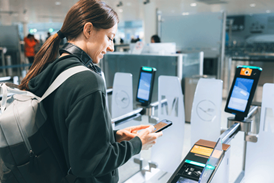
The departures hall is predominantly equipped with HKIA’s proudly in-house designed self bag drop counters. The counters feature a touchscreen that looks like a dashboard of an electronic vehicle. Installed with 10 AI cameras to read barcodes and assess baggage convey-ability, each of these smart units helps passengers to complete the biometric-enabled self-bag-drop procedure in 45 seconds, with just a single touch to confirm that they are not carrying dangerous goods.
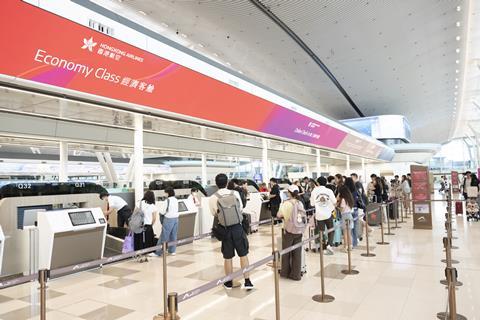
All self bag drop counters and airline check-in counters also feature an ultra-low platform design that makes it easy for passengers to put their bags onto the conveyor belt.
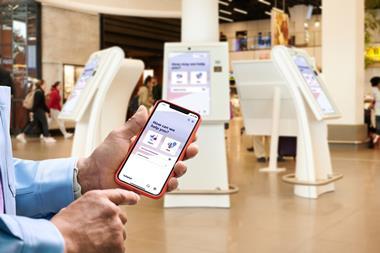
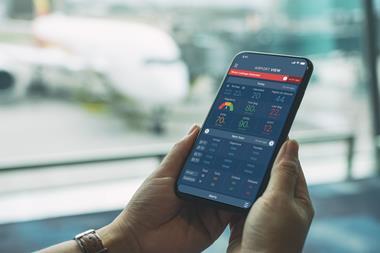
Passengers who have completed online check-in and scanned their travel documents using their smartphone apps before arriving at HKIA can proceed directly to the bag drop counters. Alternatively, passengers can also use the smart kiosks at the terminal for check-in.
e-security gates
After completing bag drop, passengers can enjoy another key feature – our e-security gates. There are 20 of them at the entrances to the restricted area, and they are all embedded with facial recognition technology. Unlike those in Terminal 1, the e-security gates in T2 are located at the centre of the departures hall to offer greater convenience for passengers approaching from every direction.
T2 presents a refreshed and energetic outlook and offers passengers a vibrant start to their journey.”
If passengers have already registered their biometrics with the airport, they do not need to show their passports to pass through the gates. To further enhance efficiency, the minimum age for using facial recognition at e-security gates has also been lowered from 11 to 7 in both T1 and T2 since the end of May.
Smart security screening and immigration channels
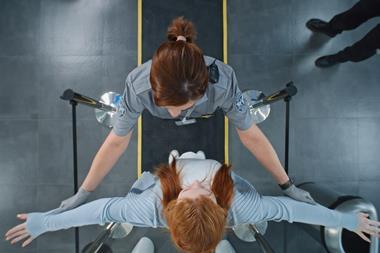
The third technological highlight of T2 is the 15 smart security screening channels in the restricted area. These smart channels allow passengers to keep their laptops and bottled liquids under 100ml in their carry-on luggage during screening. Moreover, the Immigration Department has installed 35 e-channels and 60 counters to facilitate efficient clearance before passengers take the Automated People Mover (APM) to T1 for boarding.
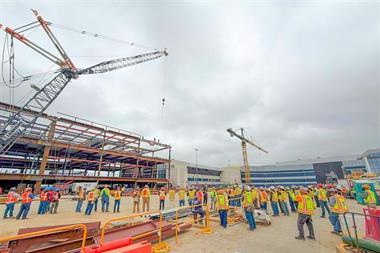
In the next phase of development, passengers using T2 will be able to use the boarding gates in the new T2 Concourse (T2C) for both departures and arrivals, in line with traffic demand.
Expected to start operation before the end of next year, T2C will be bringing more innovation, convenience and excitement to travellers from around the world.
Retail options inspiring excitement and joy
Apart from smart technology, we also want T2 to be full of surprises, fun and delight for passengers of all nationalities, backgrounds and ages.
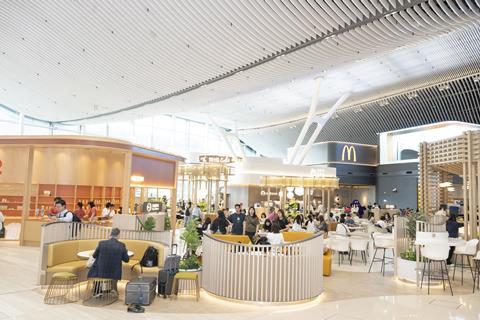
While T1 is renowned for its wide range of international culinary choices and premium offerings, T2 focuses more on local Hong Kong food and beverage brands. Notably, four outlets serve hot meals 24 hours a day to cater to travellers at any time.
With 25 vibrant retail and dining options, T2 is the place for passengers from around the world to taste Hong Kong-style “silk-stocking” milk tea, Yunnan-style rice noodles, and gourmet pastries. For something more playful, passengers can enjoy toy vending machines that are stocked with cute and highly collectible mini-figures or plushies. Since its opening, T2 has become the new must-visit destination for both regional passengers and local residents alike.
Adding to the experience, T2 features large LED displays of different shapes and sizes at different levels of T2. Showcasing dynamic 3D visuals and ocean-themed content create a relaxing vibe, while offering unforgettable photo moments and memories as passengers start their journeys.
We believe T2 will continue to grow in popularity, among young passengers. The airy interiors, clean sightlines, and its streamlined design make T2 a timeless architecture
.
Intermodal connectivity enhancing growth capacity
Speaking overall, T2 is well connected with multiple modes of transport, providing convenient access for passengers.
At the lower level of T2 is the coach hall, which provides 41 parking bays for tour buses, cross-boundary coaches, limousines, crew and resident coaches, as well as ticketing counters for cross-boundary transport to the Greater Bay Area and beyond.
T2 is also seamlessly connected to T1, which mainly focuses on long-haul and transfer/transit services. Together, the two terminals strengthen HKIA’s capacity to meet growing passenger demand while enhancing the passenger experience.
T1 has an annual capacity of 70 million passengers. With the opening of boarding gates at the new T2 concourse next year, T2 will add a further 30 million passengers in capacity, raising the overall capacity of HKIA to 100 million under the Three-Runway System.
The departures facilities at T2 are expected to handle around eight million passengers in its first 12 months of operation.
T2 will play an important role in enhancing our capacity as Asia’s leading aviation hub. It helps to redistribute passenger traffic from T1 and free up space for new airlines to join HKIA or for existing airlines to expand their business.
From 27 May to mid-June, 15 airlines – primarily operating regional routes, including the three home-based carriers – relocated their check-in services to T2 in phases, in time for the summer peak travel season.
The facilities have been running smoothly since its commission. We are delighted to see the well-coordinated relocation of airline partners to T2 and the positive passenger response to the new facilities.

No comments yet