Imagine a world where data from ATC, airlines, and airports worked in unison. The industry shifted away from isolated technology towards common data platforms. Additional data streams, such as weather and passenger volumes, flowed seamlessly to allow everyone to make better, longer-term decisions. This future is now.
Interview with Marco Rueckert, CTO of Searidge Technologies,
a wholly owned subsidiary of NATS, exhibiting at
Passenger Terminal Expo, 17-19 March, Stand E360.
Imagine a world where data from air traffic control (ATC), airlines, and airports worked in unison. Where the aviation industry had shifted away from legacy, isolated technology architectures and towards a model built around service delivery and common data platforms. Where additional data streams, such as weather and passenger volumes, flow seamlessly to allow everyone to make better and longer-term decisions.
Data is everything
For Marco, data is everything. “Being able to share data in real-time helps to reduce the workload and the ‘unknown’ elements, supporting better decision-making for everyone. What we are trying to do is systemise decisions and smooth out the operation.”
And when you add in AI as an aid to that decision making, you start to see why this new approach is truly transformative. “Saving those 10-15 seconds per decision is very valuable to the mental load of the controller. Scale that up across an entire operation, and the benefits of this new approach become clear.”
Digital transformation is a journey
Digital transformation is a journey, not something that happens overnight. Airports of any size and technology maturity, no matter where they are on their digital transformation journey, can benefit from implementing an open enterprise architecture that enables seamless data sharing across their operation.
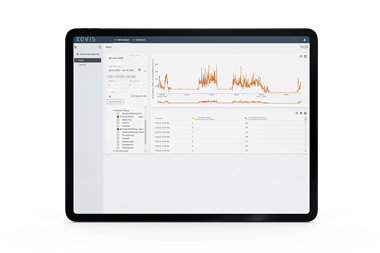
At one end of the data convergence spectrum, NATS and Searidge recently launched Intelligent Stand Manager, powered by Searidge’s open architecture platform, Chorus. The tool creates and adjusts a balanced, fair, optimised stand plan in just minutes that means improved resilience through faster turnarounds and an agile response to change.
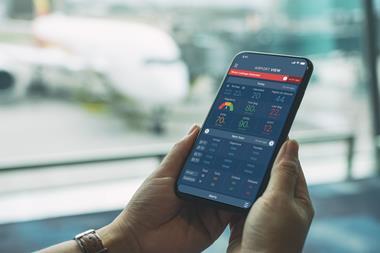
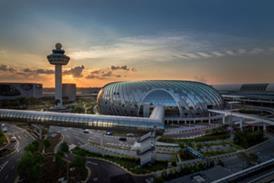
At the other end of the spectrum is our Hong Kong Airport installation, where we have a digital apron and digital tower system. Everything is shared in real time so operators can make the decision based on the most up-to-date information. Today, Hong Kong is operating in a much more data-rich environment resulting in reduced wait times and more predictable on and off-boarding times.
Open Architecture platforms
By being built on the same open architecture platform, these new generation tools have the capacity to integrate with each other. By taking control of data and running systems on a single platform, data integration is no longer point-to-point, it becomes a unified data model where everybody within the operation can access information without having to incur integration costs over and over again.
“Data should belong to the customer not the technology provider, no matter who the vendor is – it should be easy to retrieve. You need to own your data so that you can control your destiny and what you want to achieve operationally.”
Take a tour of Intelligent Stand Manager.