

CANSO used ICAO’s Seventh Worldwide Air Transport Conference to urge States to plan and finance air traffic management modernisation before traffic growth creates capacity constraints.
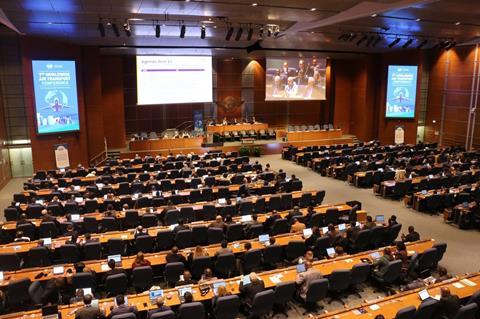
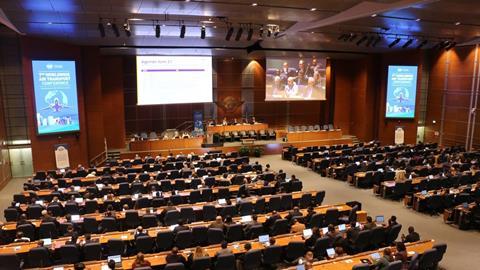
CANSO has called on States to treat air traffic management (ATM) and airspace as strategic national infrastructure at the International Civil Aviation Organization (ICAO) Seventh Worldwide Air Transport Conference (ATConf/7), held in Montreal, Canada, from 16 to 20 November 2026.
Speaking on the opening day, CANSO President and CEO Simon Hocquard told States that ATM is an economic enabler as well as an operational service. He said it connects markets, unlocks airport and airline capacity, and supports trade, tourism and regional development. He called for modernisation to be planned and financed before traffic growth creates constraints.
“If we want aviation to grow, we have to build the airspace system for that growth, and we have to start before the demand arrives,” said Hocquard. “Modernisation is no longer simply a technology programme. It is an infrastructure investment programme. We should not treat ATM investment as a consequence of aviation growth. We should treat it as an enabler of aviation growth.”
Three priorities for States
Hocquard set out three priorities for States. The first was to include ATM and airspace in national infrastructure and economic development plans looking ten to 20 years ahead. The second was regulatory and charging frameworks that allow air navigation service providers (ANSPs) to plan, finance and recover investment over realistic timeframes, with transparency and accountability. The third was cross-border coordination through ICAO, in line with the Global Air Navigation Plan.
CANSO estimates the global air navigation services market at around US$45 billion a year.
On 17 November, CANSO presented working paper ATConf/7-WP/152, “Enabling Aviation Growth through Coordinated and Economically Sustainable ATM Modernisation”. It presented the paper jointly with Brazil, Airports Council International (ACI), ASA World, the International Coordinating Council of Aerospace Industries Associations (ICCAIA), the International Federation of Air Line Pilots’ Associations (IFALPA) and the International Federation of Air Traffic Controllers’ Associations (IFATCA).
The paper asks the conference to recognise that sustained investment in modern ATM and airspace infrastructure is essential to aviation’s future growth. It argues that terminals, runways and aircraft fleets are widely seen as essential investments, but the airspace connecting them does not always get the same strategic attention, which limits the economic benefits they can deliver. It also stresses that modernisation must be coordinated globally, as its benefits depend on interoperability and institutional readiness.
Investing in the whole network
On the same day, Andrea Sack, Senior Vice President, Global Operations, CANSO, spoke on an investment panel. She said ATM priorities include replacing legacy infrastructure, preparing for new airspace users such as drones, advanced air mobility and commercial space operations, and investing in the skills of the people who run the system.
She noted that modernisation involves high upfront costs, while the benefits are shared across the aviation system. These include fewer delays and lower fuel burn for airlines and more capacity for airports. Developing States also need better access to affordable long-term finance.
“Aviation is an interconnected system, and we need to invest in the entire network, including the airspace and the infrastructure that makes it work,” said Sack.
CANSO also co-presented six further working papers and one information paper, on topics including the aviation workforce, taxation, new airspace users, digitalisation and climate resilience.

No comments yet