As assisted travel demand surges, airport leaders shared unfiltered insight at the International Airport Summit on why accessibility, autonomy and inclusive design now sit at the heart of operational resilience and passenger experience.
Accessibility is no longer a niche consideration in airport operations, it is a defining pillar of passenger experience, operational resilience and reputational trust. That message landed loud and clear during the accessibility panel at the International Airport Summit, where airport leaders from Europe and the U.S. unpacked the realities, risks and opportunities of assisted travel today.
With demand for assistance rising rapidly, driven not only by physical disabilities but also hidden and neurological conditions, the panel made one thing abundantly clear: airports that fail to adapt will struggle to cope with growth, while those that lead on accessibility will unlock better experiences, stronger efficiency and even new revenue streams.
Assisted travel at scale: a growing operational challenge
The discussion opened with a stark reality check on scale.
“If you get assisted travel wrong, the impact on the customer is huge, but the reputational impact on the airport is even harder to recover from.”
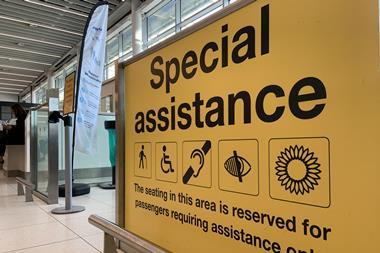
At Birmingham Airport, assisted travel customers now represent more than 2.5% of total passengers, rising above 3% at peak times, equating to around 400,000 passengers a year. Milan Malpensa, handling nearly double the passengers, supports around 200,000 assisted travellers annually. On peak days, individual long-haul flights can require assistance for more than 100 passengers.
This is not a marginal service. It is complex, resource-intensive, and expensive, yet essential. As Al Titterington, Terminal Ops Director for Birmingham Airport noted: “If you get assisted travel wrong, the impact on the customer is huge, but the reputational impact on the airport is even harder to recover from.”
Autonomy, not dependency, is the goal
A central theme throughout the session was autonomy. Passengers requiring assistance do not want to be rushed curb-to-gate or stripped of choice; they want to travel independently, on their own terms, just like everyone else.
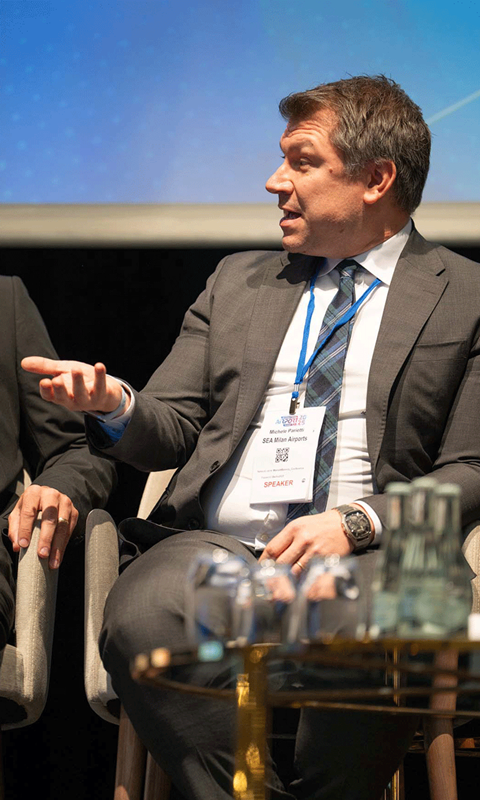
“The demand for assistance is rising, and we cannot deploy an equivalent amount of workforce. Autonomy must be the key, for the passenger experience and for operational sustainability,” said Michele Parietti, Head of PRM Assistance at SEA Milan Airports.
One such way to promote autonomy is the deployment of innovative technologies, and Darrell Watson, Senior Vice President and Chief Experience Officer from Louisville Muhammad Ali International Airport, shared how digital wayfinding technology for blind and low-vision passengers is helping deliver exactly that. Using infrastructure-free, LiDAR-mapped navigation apps, passengers can move through the terminal independently, with metre-level accuracy. Crucially, these tools benefit all passengers, not just those with disabilities, improving flow, reducing anxiety and enhancing overall wayfinding.
The commercial implications were also openly discussed. Data shared during the panel highlighted that passengers with disabilities actively want to spend money in airports on food, retail and experiences, but only if the environment allows them to do so independently. In the U.S, this group of travellers represents about $10bn in missed revenue opportunity. Accessibility, the panel argued, is not a cost centre alone; done right, it is an enabler of value.
Designing airports for everyone; not retrofitting later

Michele Parietti, Head of PRM Assistance at SEA Milan Airports[/caption]
From Milan’s perspective, the challenge is shifting from adapting legacy terminals to embracing a ‘design for all’ philosophy. Rather than creating dedicated infrastructure for specific needs, accessibility is being embedded into every design decision – from circulation routes and toilets to security layouts, digital systems and sensory environments.
Milan Malpensa is also among the first European airports to introduce dedicated quiet spaces for passengers with hidden disabilities, recognising that overstimulation at security and other touchpoints can be a major barrier to travel. These spaces are designed to support sensory regulation, reduce stress and improve the end-to-end journey.
The panel agreed: accessibility must now sit alongside lifts, escalators and vertical circulation as a core design principle in terminal master planning – not as an afterthought.
Technology, systems and the reality of integration
While innovation is accelerating, the panel was refreshingly honest about the challenges. Autonomous wheelchairs, for example, offer huge potential for independence, but only if they can be seamlessly integrated with security, border control, gate processes and human assistance where needed.
The future, the panel suggested, lies in blended journeys: autonomy where possible, human support where necessary. Achieving that requires airports to rethink systems, workforce models and operational ownership, not simply deploy new equipment.
There was also a strong call to improve accessibility across everyday interfaces that are often overlooked: airline kiosks, vending machines, retail technology and digital displays. In 2025/2026, panellists agreed, it should not be possible for a passenger to reach the final step of a transaction only to be blocked by poor accessibility design.
Beyond compliance: raising the bar
Perhaps the most provocative moment came when the panel addressed regulation head-on. Building codes and compliance standards, particularly in the U.S., were described as a minimum bar, one that is often far too low.
“If we treated all passengers the way we treat passengers with disabilities under current standards,” Darrell noted, “we’d have a riot on our hands!”
The takeaway was clear: true accessibility is about mindset, not box-ticking. And it is good to hold the industry to account, as Darrell went on to note: “We've got airports in the U.S. that are spending millions of dollars on artwork but are concerned about spending tens of thousands of dollars on accessibility.”
Airports are willing to invest millions in artwork, branding and aesthetics, yet comparatively modest investments in accessibility can transform experiences for hundreds of thousands of passengers.
Looking ahead: pressure, preparation and opportunity
With Milan preparing to host the Olympic and Paralympic Games, the panel also explored how major events act as catalysts for accessibility improvements. From levelling curbs and redesigning reflective toilets to stress-testing every failure point in the journey, preparation is driving a more integrated, cross-functional approach to accessibility than ever before. “We are identifying every failure point in the journey and fixing it, from curbs and toilets to reflections, lighting and circulation, because accessibility only works when it works everywhere,” said Michele.
Why this conversation matters
What made this panel stand out was not just the technology discussed, but the candour. Accessibility was framed not as a compliance burden, but as a strategic lever, one that touches passenger satisfaction, operational efficiency, staff workload, reputation and revenue.
As Al noted:
Accessibility isn’t about extracting value from passengers; it’s about enabling independence, dignity and a seamless journey for everyone.”
For airport professionals grappling with rising assisted travel demand, ageing infrastructure and evolving passenger expectations, this session offered practical insight, hard-earned lessons and a glimpse of what good can look like.
And if you weren’t in the room? Let’s just say this is one conversation you won’t want to miss next time.
Sign up for the 2026 summit in Rome today.