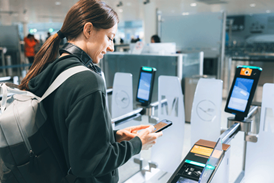
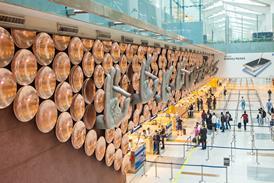
Ahead of his involvement in PTE World, István Szabó, Managing Director & COO of Berlin Brandenburg Airport outlines how BER is maximising capacity, accelerating digital integration and preparing for an AI driven future.
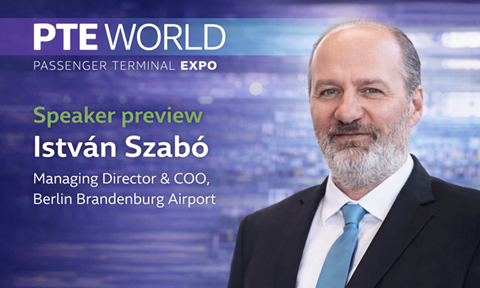
What are the biggest operational challenges Berlin Brandenburg faces as passenger numbers continue to grow?
Our primary challenge is maximising capacity within our existing infrastructure while improving service quality and efficiency. With over 26 million passengers annually we must optimise every aspect of operations – from security checkpoint throughput to turnaround times. Our airline customers demand operational efficiency and cost-effectiveness. Balancing these demands while ensuring seamless passenger experience requires constant innovation in how we deploy resources and leverage technology.
What strategies are in place to optimise existing infrastructure without major physical expansion?
We're taking a comprehensive approach to infrastructure optimisation. This includes detailed capacity analysis of potential process bottlenecks like security checkpoints or passport control areas. The key is making data-driven decisions about where tactical improvements can yield strategic capacity gains.
How is Berlin Brandenburg leveraging digital tools to improve operational performance and passenger flow?
We're moving beyond tactical digital applications toward integrated strategic frameworks. For passenger flow optimisation, we're utilising data analytics to understand peak patterns and bottlenecks, enabling dynamic resource allocation. The goal is not just digitisation of existing processes, but reimagining how digital tools can create entirely new operational models that improve both efficiency and passenger experience.
What role does data-driven decision-making play in your day-to-day operations?
Data-driven decision-making is fundamental to how we operate. With complex operations serving millions of passengers, intuition alone isn't sufficient. We use data analytics for everything from security checkpoint capacity planning to understanding carrier-specific operational patterns. This approach allows us to make evidence-based decisions about resource allocation, identify emerging bottlenecks before they become critical, and benchmark our performance against industry standards. The challenge – and opportunity – is integrating data from various operational systems to create holistic insights that drive strategic decisions rather than just tactical adjustments.
How do you approach integrating new technologies with legacy systems across the airport?
Integration with legacy systems is one of our most significant challenges. Our approach is pragmatic: we evaluate whether new technologies can operate alongside existing systems, or whether they require more fundamental architectural changes. We're also assessing which legacy systems represent true technical debt that should be replaced versus those that are stable and functional. The key is creating integration frameworks that allow innovation without disrupting critical operations. This requires careful change management, phased implementation strategies, and ensuring our teams have the capabilities to manage increasingly complex technology ecosystems.
Is BER leveraging agentic AI? And how do you see this influencing airport operations?
We're in the early stages of exploring agentic AI applications. I see tremendous potential for agentic AI in airport operations through systems that can make autonomous decisions about resource allocation, dynamically optimise passenger flows, or manage complex scheduling across multiple operational domains. The challenge is moving from conceptual possibilities to practical implementations that integrate with our operational reality. We are actively working on developing a comprehensive AI strategy that will guide how we approach these more advanced applications, ensuring they're implemented holistically rather than as isolated point solutions. But most important: we must make sure that we involve our staff in this technological revolution, we need the commitment and the buy-in from our colleagues.
What opportunities do you see for AI to optimise resource allocation and improve resilience at Berlin Brandenburg?
AI presents significant opportunities across multiple dimensions. For resource allocation, AI can enable dynamic staffing models that respond in real-time to passenger flows, weather disruptions, or operational incidents. For resilience, predictive analytics can help us anticipate and mitigate disruptions before they cascade through the system. I'm particularly interested in AI applications that can handle the complexity of airport operations, where decisions in one area (like gate assignments) have ripple effects across baggage handling, passenger services, and ground operations. The opportunity is to create integrated AI systems that optimise holistically rather than sub-optimise individual functions.
What organisational or cultural changes is BER implementing to embrace advanced AI solutions?
Cultural transformation is essential for AI success, and it's something we are actively focusing on. We understand that technology alone isn't sufficient, you need organisational readiness as well. We will need to build AI literacy across our leadership teams and create frameworks for data-driven, technology-enabled decision-making. This includes fostering cross-functional collaboration, since AI implementations typically span multiple operational domains. We're also addressing change management proactively, helping teams understand how AI augments rather than replaces human expertise. Success will require moving from tactical experimentation to strategic commitment, with organisational structures and capabilities that support this transformation.
What will your focus be at PTE? What are you there to talk about/present on?
As the panel to which I was invited will focus on the future operational challenges of the airports, I will talk about our possible solution how to tackle these.
What are you looking forward to learning from other airports at PTE?
I am keen to learn and listen to other fellow airport colleagues share how they are dealing or preparing themselves for the technological revolution around AI.
István will be speaking on the below session at PTE World:
‘The future operational challenges of airports’
17 March at 10:05-11:05am GMT