

Joaquin Franco, Vice President of Airport Services and Passenger Experience at Tocumen International Airport and International Airport Summit 2026 speaker, explains why moving beyond passenger personas and listening more closely to real traveller needs is helping build a more inclusive, human-centred airport experience.
Airports are designed around passengers, yet sometimes we spend more time studying categories than understanding people. At Tocumen International Airport, we have learned that some of the most meaningful improvements come from simply observing, listening and responding to what passengers truly need.
Every passenger has a different story
Throughout my career in airport services and passenger experience, one lesson has become increasingly clear: passengers do not experience airports in the same way.
A family travelling with young children, a business executive rushing to make a connection, an elderly passenger travelling alone, or a tourist visiting Panama for the first time may all be standing in the same terminal, but their expectations and needs can be completely different.
While passenger profiles help airports plan, they rarely tell the full story. What truly matters is understanding what passengers are experiencing in the moment.
Are they confused? Are they stressed? Are they looking for information? Do they need assistance? Or are they simply looking for a comfortable place to relax before their next flight? Answering these questions has become one of the most important drivers of improvement at Tocumen.
Learning by listening
One of the biggest changes we have made over the years is placing greater value on direct observation and passenger feedback. Some of our best ideas have not come from reports or presentations. They have come from conversations with passengers, observations from our frontline teams, and listening to the challenges people face while travelling. Our customer service agents, maintenance personnel, security officers, cleaning teams, commercial partners, and airline representatives interact with passengers every day. Together, they provide an invaluable perspective on how the airport is truly functioning.
By listening to these voices and encouraging collaboration between departments, we are able to identify opportunities more quickly and implement meaningful improvements.
Building an airport around real needs
Over the last five years, many of the improvements introduced at Tocumen have been inspired by observing passenger behaviour and understanding evolving expectations.
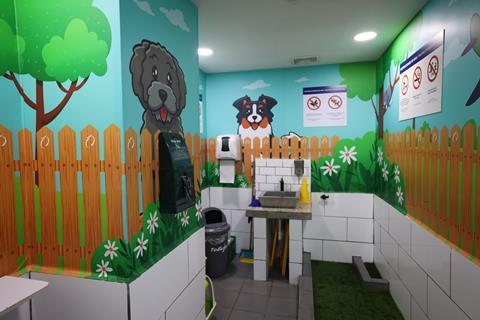
Pet Relief areas
One example is the creation of our Pet Relief areas. As more travellers began flying with service animals and pets, we recognised the need to provide dedicated spaces that would make their journey more comfortable.
Passenger clinic
We also strengthened our passenger care services through the development of a modern, high-technology medical clinic capable of responding to passenger health needs and medical emergencies within the airport environment. As passenger volumes increased and traveller expectations evolved, ensuring immediate access to quality medical assistance became an important part of the overall passenger experience.
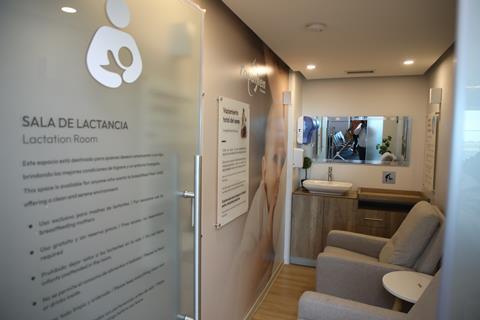
Lactation room
In addition, we introduced dedicated lactation room, providing mothers with a private, comfortable, and welcoming environment while travelling with young children. These facilities address a very real passenger need and contribute to a more inclusive and family-friendly airport experience.
Sensory room
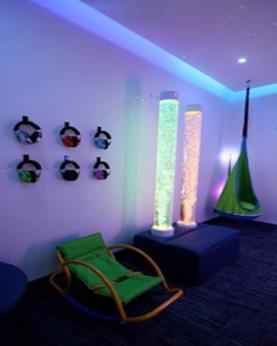
Another meaningful addition has been the creation of a sensory room, designed to provide a calm and supportive environment for passengers with autism, sensory sensitivities, or other hidden disabilities. We recognise that the airport experience can be overwhelming for some travellers, and this dedicated space offers an opportunity to reduce anxiety and help passengers feel more comfortable before continuing their journey. It reflects our commitment to making Tocumen a more inclusive airport where every passenger feels welcomed and supported.
Passenger experiences activation
Creating memorable experiences also means giving passengers an authentic taste of Panama. Throughout the year, Tocumen hosts weekly cultural and experiential activations that allow travellers to engage with our country’s rich heritage, even during a short layover. These include tastings of traditional Panamanian cuisine, locally produced coffee and artisanal chocolates, as well as live folkloric music and dance performances that celebrate our history, culture and traditions. These initiatives transform waiting time into meaningful moments, allowing passengers to leave the airport with a genuine connection to Panama even if they are only passing through.
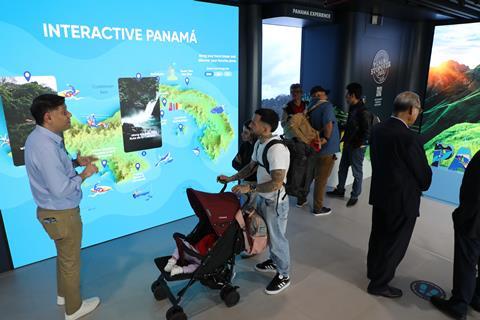
SALA Panama
Another initiative that is particularly important to us is SALA Panama.
As one of the region’s leading connecting hubs, millions of passengers travel through Tocumen every year without ever leaving the airport. We wanted to create a space that allows travellers to experience a small piece of Panama during their journey.
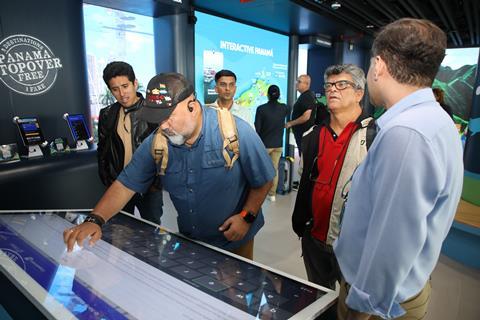
SALA Panama was developed to showcase our culture, identity and hospitality, helping transform a connection into a memorable experience. Airports should not only move people efficiently, they should also create lasting impressions. This also supports one of the country’s most successful tourism initiatives (with Promtour, Tourism Authority, and Tocumen Airport): Copa Airlines’ Panama Stopover Programme. Last year alone, approximately 250,000 travellers entered Panama through the Stopover Programme, and this year the programme is projected to grow by an additional 40%.
Each of these initiatives reflects the same philosophy: listening to passengers, understanding their needs, and designing services that make their journey safer, easier and more enjoyable.
Accessibility has also been a major focus of our passenger experience strategy. To make moving through and beyond the airport easier, Tocumen has introduced both internal and external shuttle bus services, improving connectivity between terminals, parking areas, and key airport facilities. In addition, the recent integration of the Panama subway with the airport has transformed how passengers access the city, providing a safe, affordable and efficient connection between Tocumen International Airport and downtown Panama City. Together, these initiatives reduce travel uncertainty, improve accessibility, and create a more seamless journey from the moment passengers arrive until they reach their final destination.
Experience and performance go hand-in-hand
There is sometimes a perception that passenger experience and operational performance are separate goals: in reality, they are deeply connected.
When passengers feel comfortable, informed and confident, airports operate more efficiently. Passenger flows improve, service demands decrease, and travellers are more likely to engage with airport amenities and commercial offerings.
Looking ahead
The future of airport operations will not be defined solely by technology or infrastructure. It will be defined by our ability to understand people.
Technology will continue to provide valuable tools, but the most important insights will always come from listening to passengers, empowering employees, and remaining willing to adapt. As passenger expectations continue to evolve, airports must become more agile, more collaborative, and more attentive to the small details that shape the travel experience. At Tocumen International Airport, we continue to learn that every improvement begins with a simple question: what does the passenger need right now?
The airports that continue asking that question will be the ones that create the most meaningful experiences in the years ahead.
When passengers feel comfortable, informed and confident, airports operate more efficiently.
Conclusion
Moving beyond personas means recognising that every passenger’s journey is unique.
The most successful airports are not necessarily those with the newest technology or the largest terminals. They are the airports that listen carefully, respond thoughtfully, and continuously adapt to the needs of the people they serve. By combining observation, collaboration, and a commitment to innovation, airports can create experiences that are more seamless, inclusive and memorable.
Joaquin will be speaking about using behavioural insights to design better airport operations at the International Airport Summit 2026 taking place in Rome on 10-12 November. To make sure you are in the room when he takes to the stage and to network with him afterwards, make sure you register for your free place now.

No comments yet