

Germany’s second-largest airport has reached a historic milestone, welcoming its billionth passenger since operations began in 1992. The achievement underscores Munich’s evolution into a major international hub, supported by strong airline partnerships, strategic location and consistent growth in passenger and cargo traffic.
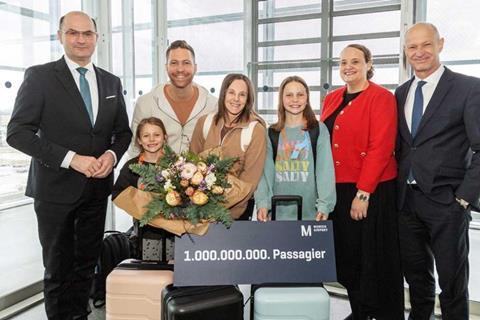
Munich Airport (MUC) has marked a major milestone this week, welcoming its one billionth passenger since opening in 1992, underlining its position as one of Europe’s leading aviation hubs.
The milestone passenger, Amanda Walls, was travelling with her family and was welcomed at Terminal 2 in a ceremony attended by Albert Füracker, Chairman of the Supervisory Board of Munich Airport, Jost Lammers and Roswitha Becker from Lufthansa.
The airport said the milestone reflects more than three decades of growth, supported by its strategic partnership with Lufthansa and its role as a key gateway for Bavaria and southern Germany.
Füracker said: “One billion passengers represent over three decades of successful regional development in Bavaria. Munich Airport is a central pillar of infrastructure and an important gateway to the world.”
Lammers added: “The one billionth passenger is a sign of appreciation for the work of our employees and a motivation to continue developing Munich Airport in a quality oriented and sustainable manner.”
Munich Airport’s development began on 17 May 1992 when operations commenced at its current location. The first aircraft to land was a charter flight from Aero Lloyd, arriving from Izmir with a McDonnell Douglas MD 83.
Since then, the airport has evolved into a major international hub, now serving more than 230 destinations across over 70 countries. Its central European location and strong airline partnerships have supported consistent growth in passenger and cargo traffic.
In 2025, Munich Airport handled 43.4 million passengers, alongside approximately 337,000 aircraft movements, representing a 3% increase year on year. The average seat load factor reached 80.9%, reflecting strong demand for air travel.
Cargo volumes also increased, rising by 10% to 340,000 tonnes and exceeding pre crisis levels.
Today, Munich Airport continues to play a critical role in supporting regional connectivity, tourism and economic development, reinforcing its status as one of Europe’s largest and most important aviation hubs.
Stay Ahead in Aviation — Subscribe for Free!
Get exclusive access to the latest aviation insights from International Airport Review — all tailored to your interests.
✅ Expert-Led Webinars – Learn from industry leaders
✅ Weekly News & Reports – Airport updates, thought leadership, and exclusive interviews
✅ Event Invitations – Be part of the International Airport Summit
✅ Partner Innovations – Discover the latest industry trends
Choose the updates that matter most to you. Sign up now and stay informed, inspired, and connected — all for free!
Thank you for being part of our community. Let’s keep exploring the future of aviation together!








No comments yet