

Global passenger traffic reached 9.8 billion in 2025 as Asia-Pacific airports strengthened their position among the world’s busiest aviation hubs.
Global passenger traffic reached 9.8 billion travellers in 2025, bringing the aviation industry within touching distance of the historic 10 billion passenger milestone, according to the latest Airport Traffic Dataset published by Airports Council International (ACI) World.
The report, covering 2,817 airports across more than 180 countries and territories, shows passenger traffic increased by 3.7% compared with 2024 and stood 6.5% above pre-pandemic levels recorded in 2019. The world’s 20 busiest airports handled a combined 1.59 billion passengers, accounting for 16% of all global air travellers.
ACI World said the latest rankings demonstrate how investment in airport infrastructure, improved international connectivity and growing tourism demand continue to reshape the global aviation landscape, particularly across Asia-Pacific.
Asia-Pacific airports drive global passenger growth
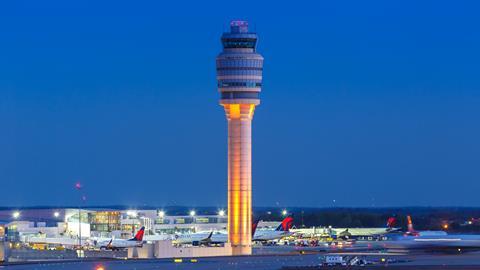
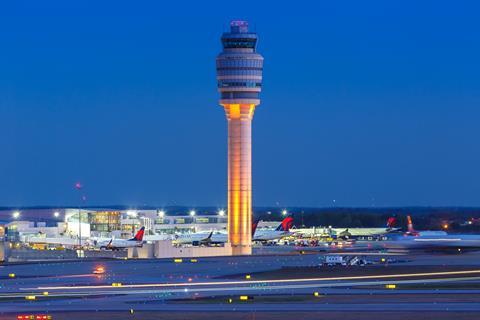
Hartsfield-Jackson Atlanta International Airport (ATL) retained its position as the world’s busiest airport, handling more than 106.3 million passengers during 2025 despite a 1.6% decline compared with the previous year. Dubai International Airport (DXB) remained second with 95.2 million passengers, while Tokyo Haneda Airport (HND) climbed into third place after recording passenger growth of 6.7%.
Shanghai Pudong International Airport (PVG) was one of the year’s strongest performers, rising from tenth to fifth place after passenger numbers increased by 10.7%. Kuala Lumpur International Airport (KUL) also made significant progress, climbing six places to enter the global top 20 following an 11% increase in passenger traffic.
Guangzhou Baiyun International Airport (CAN) continued its recovery, returning to ninth position after previously falling outside the world’s busiest airports during the pandemic recovery period.
Commenting on the findings, ACI World Director General Justin Erbacci said: “Global air travel is approaching a historic milestone, but record demand is also exposing growing pressures on capacity. The planning and investment decisions made today will determine whether aviation can meet the demands of the next generation of travellers.”
Cargo activity also remained strong during 2025. Global freight volumes exceeded 131 million metric tonnes, an increase of 3.3% compared with 2024 and 7.4% above 2019 levels. Hong Kong International Airport (HKG) retained its position as the world’s busiest cargo airport with more than five million metric tonnes handled, ahead of Shanghai Pudong and Ted Stevens Anchorage International Airport (ANC).
Aircraft movements also continued to recover, increasing by 2% globally to exceed 103 million operations. Chicago O’Hare International Airport (ORD) overtook Atlanta to become the world’s busiest airport for aircraft movements, recording more than 857,000 take-offs and landings during the year.
The report concludes that while global aviation has largely completed its recovery from the pandemic, sustained passenger growth is increasing pressure on airport capacity, making long-term infrastructure investment essential to support future demand.






No comments yet