


Copenhagen Airport handled 16.1 million passengers in the first half of 2026, with stronger revenues and investment supporting continued growth.
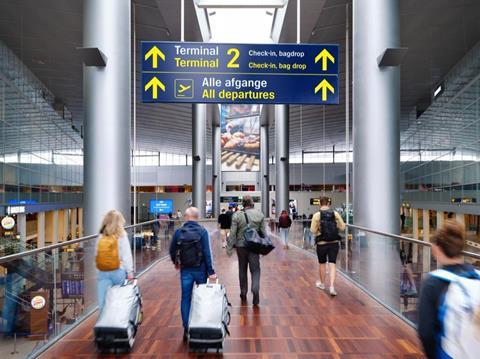
Copenhagen Airport (CPH) recorded its busiest first half of a year after 16.1 million passengers travelled through the airport during the first six months of 2026, a 9% increase compared with the same period last year.
The passenger growth contributed to a stronger financial performance, with Copenhagen Airport reporting profit before tax of DKK 851 million, 43% higher than during the corresponding period in 2025. Total revenue increased 9% to DKK 2.8 billion.
Christian Poulsen, CEO of Copenhagen Airport, said the results reflected continued strong demand for air travel and growing numbers of passengers choosing Copenhagen as a connecting hub.
Transfer traffic strengthens hub position
Transfer traffic was a significant contributor to the growth. During the first half of 2026, 4.3 million passengers transferred through Copenhagen, representing a 31% increase year on year. Transfer passengers accounted for 27% of the airport’s total passenger traffic.
The airport said most transfer passengers were travelling from Norway, Sweden and Denmark, connecting through Copenhagen to destinations across Europe, North America and Asia. Growing numbers of American and Asian travellers are also using the airport as a gateway to Europe.
The increase in transfer traffic is helping support additional intercontinental routes, strengthening Copenhagen’s position as the largest aviation hub in the Nordic region.
Investment prepares airport for growth
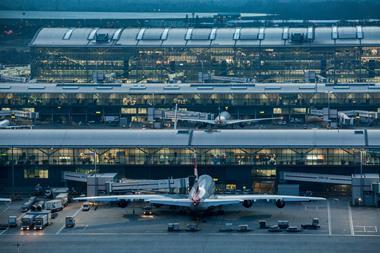
Copenhagen Airport is also investing to accommodate continued growth. The airport invested DKK 1.167 billion during the first six months of 2026, with projects including additional aircraft stands and expanded passenger facilities.
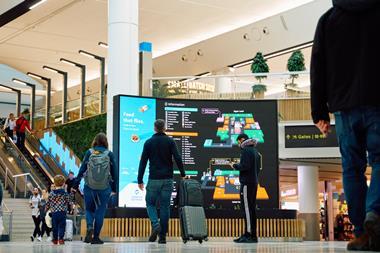
A new terminal area in Terminal 3 is scheduled to open next year, adding expanded passport control and baggage handling facilities alongside additional restaurants, shops and lounge areas.
The airport is also developing a longer-term planning framework to support future infrastructure requirements, including the ability to accommodate newer generations of aircraft while continuing to expand terminal facilities.
Technology supports environmental measures
Environmental measures remain part of the airport’s development programme. Thermal imaging cameras and artificial intelligence are being used to monitor whether aircraft auxiliary power units remain switched off while aircraft are parked at stands. The airport is also replacing petrol and diesel vehicles and ground support equipment with electric alternatives.
By 2025, 41% of Copenhagen Airport’s vehicles had been converted to electric power. Vehicles without an available electric alternative have instead used HVO biodiesel since 2025.
In spring 2026, the airport installed 18 additional sensors to monitor ultrafine particles, particularly around aircraft stands. The resulting data is intended to identify where measures to improve local air quality could have the greatest impact.
Passenger outlook revised
Despite record passenger numbers, Copenhagen Airport has revised its 2026 passenger forecast from 35.5 million to 34.5 million, although this remains above the 32.4 million passengers recorded last year.
Profit before tax is now expected to reach between DKK 1.80 billion and DKK 1.95 billion. The airport said uncertainty remains due to geopolitical and macroeconomic conditions that could affect travel demand and financial performance.





No comments yet