

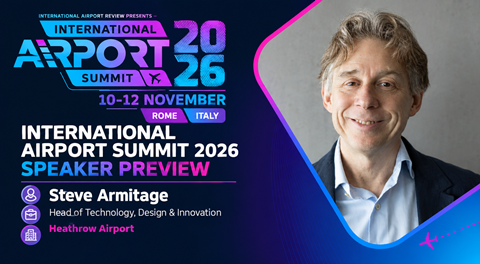
Steve Armitage, Head of Technology, Design & Innovation, Heathrow Airport, describes how the airport is focusing on trusted data, shared platforms and operational change to improve resilience, decision-making and passenger outcomes.
Heathrow’s approach to digital transformation is increasingly pragmatic. Less about creating a perfect digital twin as a showcase, and more about building the trusted data, platforms and operating models that allow the insight needed to change the way the airport runs. The starting point is recognising the nature of Heathrow itself. It is a highly constrained, multi-party hub where airlines, handlers, border agencies, technology partners and operational colleagues all affect the passenger journey. In that environment, value does not come from a single dashboard or algorithm; it comes from creating a shared, reliable picture of the operation and giving teams the confidence to act on it.
The case for better data governance
The first strand is data foundations. Heathrow has been clear that digital capability depends on governed, reusable and high-quality data rather than fragmented with local workarounds. The strategic direction is to make data discoverable, owned, secure and trusted, with clearer lineage, quality measures and controls. This matters because teams will not rely on recommendations if they do not understand where the data came from, whether it is current, or who is accountable for it. Heathrow’s Data Exchange thinking extends this beyond the boundary of the airport company itself, recognising that many of the most important operational decisions depend on data shared between Heathrow, airlines, ground handlers, regulators and other partners.
From visibility to action
The second strand is platform modernisation. To shift from disconnected operational systems towards a single operational backbone that can unify real-time data, support airport collaborative decision-making and provide a continuously optimised operational plan. This is important for Heathrow because resilience depends on speed, visibility and co-ordination. In disruption, the airport needs earlier warning of pressure points, a better view of knock-on effects and a clearer route from insight to action. The purpose is to create the conditions for operational orchestration.
Turning digital capability into operational gains
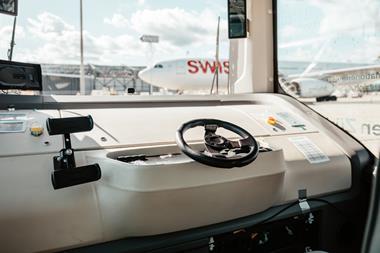
The third strand is applying digital capability to tangible operational use cases. Heathrow already has examples that show the direction of travel: passenger flow monitoring, baggage analytics, operational status tools, AI-enabled productivity opportunities, and emerging smart airside capabilities. The foundation supports use cases such as turnaround monitoring, autonomous vehicle trials, remote supervision and predictive maintenance.
The airport increasingly needs to act as the orchestrator of a wider ecosystem. Along with the airport itself, airlines and ground handlers will bring new technologies into the airside and terminal environment. Heathrow’s role is to set the standards. How trials are proposed, how safety cases are evidenced, how cyber risk is controlled, how data is shared, how degraded modes work, and how responsibilities are allocated when something goes wrong.
Heathrow recognises that operational data only creates value when frontline and control room teams trust it, interpret it consistently and use it in live decisions.”
Making digital transformation stick
The fourth strand is culture and operating model change. Heathrow recognises that operational data only creates value when frontline and control room teams trust it, interpret it consistently and use it in live decisions. That means moving beyond pilots and proofs of concept into repeatable scale pathways. Each initiative needs an owner, a benefits case, a data model, a safety and cyber assurance route, a funding path, a colleague impact assessment and agreed measures of success. It also means developing new skills: supervision, exception management, data interpretation, partner governance and human-machine ways of working. In practice, this is as much a business change agenda as a technology agenda.
Reusing foundations to unlock value
The final strand is disciplined value realisation. Heathrow’s opportunity is not just better technology; it is improved resilience, safer operations, better use of constrained capacity, lower avoidable cost and a more predictable passenger experience. The strongest cases are likely to be those that reuse common foundations across multiple use cases rather than creating isolated systems. This is why shared data platforms, interoperability standards, common assurance models and reusable operational products matter. They reduce duplication, make scaling easier and prevent complexity from becoming a permanent operating cost.
In summary, Heathrow is approaching this as a staged transformation from data foundations to operational orchestration. The ambition is not a digital twin for its own sake, but a trusted, connected and governable airport ecosystem where decisions are better informed, interventions are better co-ordinated and innovation can scale safely.
I will be speaking about this in more detail during the roundtable discussion I am hosting at International Airport Summit 2026 in Rome on 10-12 November.
On 11 November I will host ‘Before the digital twin: building the data infrastructure that actually enables it’, and the next day, I will chair ‘From insight to intervention: closing the loop between data and operational decision-making’.
Make sure you register to join this VIP, closed-door discussion in Rome.








No comments yet