The roundtable discussions that took place at the International Airport Summit 2025 revealed airport's top challenges and focus areas for the years ahead.
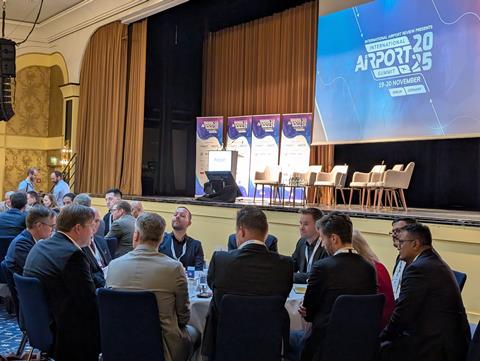
The International Airport Summit 2025 delivered outstanding results, marking a significant evolution in its format. This year, we introduced an innovative roundtable concept that brought together five senior airport leaders, each co-chairing discussions alongside technology partners Synaptic Aviation, Zühlke, Copenhagen Optimization and HID.
These closed-door sessions provided a unique environment for airport executives to engage in candid dialogue on the industry’s most pressing challenges. The roundtables focused on critical themes, including:
- Running efficient airside operations - co-chaired by Thomas Romig, Chief Operations Officer, Brussels Airport and Justin Kester, VP of Global Sales, Synaptic Aviation.
- Harnessing data for smarter, more resilient airports - co-chaired by Gerri Sinclair, Chief Prioritisation, Planning and Performance Optimisation Officer, Vancouver International Airport and Karl-Heinz Keller, New Business Principal, Zühlke
- Digital Sovereign Cloud: A strategic imperative for airports - co-chaired by Tara Mulrooney, Chief Technology Officer, Edmonton International Airport and Karl-Heinz Keller, New Business Principal, Zühlke
- Unlocking the potential of AI in airport operations - co-chaired by Maurice Jenkins, Chief Innovation officer, Miami Airport and Anders Dohn, co-CEO and Founder of Copenhagen Optimization.
- Evolving security and identity strategies - co-chaired by Oliver Braun, Head of Security, Berlin Brandenburg Airport and Matt Insley, Director of Strategic Alliances and Rob Sutton, Director of Solution Enablement, Aviation/Travel both from HID.
Attendance was strong, and delegate feedback highlighted the exceptional value of these sessions in fostering actionable insights and collaboration.
Across the discussions, several recurring challenges emerged that will shape airport operations in the year ahead. These include managing exponential passenger growth within constrained physical footprints and addressing the regulatory and geopolitical complexities associated with deploying new technologies.
These are the top five themes that came from the discussions.
1. Managing Capacity and Physical Constraints
A primary challenge is the anticipated surge in passenger numbers, expected to reach 9.8 billion by the end of this year and grow to 11.8 billion by 2040. This is driven by post-Pandemic recovery, regional growth, and the rise of “mega-events” – global scale events which are occurring every year (such as the forthcoming World Cup).
- Infrastructure limits: Many airports are "landlocked" or "land-constrained", meaning they can no longer solve capacity issues by simply "adding on to the house" or building new physical assets
- Operational transformation: Because infrastructure is expensive and slow to build, airports are shifting focus toward "squeezing the lemon" of existing assets through process efficiency and digital transformation rather than purely capital-intensive projects
- Legacy design issues: Airports must frequently contend with sub-optimal historical designs, such as runways that are not perfectly parallel or taxiway crossings that create inherent safety and capacity bottlenecks
2. Data Integration and Stakeholder Collaboration
A recurring theme across the sessions is that airports are "data rich but information poor".
- Breaking down silos: Significant data remains trapped in silos across different departments or stakeholders, such as ground handlers, airlines, and Air Navigation Service Providers (ANSPs)
- Lack of standardisation: Unlike the banking industry, aviation lacks a common data format, which hinders the ability to share actionable intelligence seamlessly across the global network
- Willingness to share: There is often resistance to data sharing due to competitive concerns (particularly in the U.S.) or a lack of clear monetisation strategies and business cases for why stakeholders should collaborate
3. Human Capital and Workforce Challenges
The "human element" is cited as a major bottleneck for the next year.
- Staff shortages: Critical roles, particularly Air Traffic Controllers, are in severe shortage, and the long training lead times (up to three years) mean this cannot be solved quickly
- The "AI fear" and upskilling: There is widespread anxiety among staff that technology like AI will replace their jobs. Experts consistently argue that the challenge is to upskill employees so they can use AI to "liberate" them from mundane tasks, allowing them to focus on high-value human interaction.
- Knowledge loss: Airports face a crisis of succession planning as an ageing workforce retires, taking decades of institutional knowledge with them.
4. Regulatory Hurdles and Technical Sovereignty
Innovation frequently outstrips regulators' ability to keep pace.
- Regulatory uncertainty: Airports risk investing in technologies (e.g., CT scanners or biometrics) only for regulators to shift their stance mid-deployment.
- The "Sovereign Cloud" risk: As airports migrate to the cloud to enhance agility, they face geopolitical risks related to data sovereignty. There is growing concern about dependence on foreign-owned cloud providers (primarily US-based) that could shut down access due to political sanctions or legal disputes.
- Accountability and safety: In a "safety-critical" environment, using AI for decision-making remains problematic because an "AI bot" cannot be held legally accountable in a court of law.
5. Balancing Sustainability with Efficiency
Sustainability is no longer an optional extra but a central operational constraint.
- Contradictory objectives: Some environmental mandates, such as noise-related night curfews, can actually reduce efficiency and increase safety risks by forcing aircraft into stressed manoeuvres.
- Monitoring requirements: Airports are increasingly tasked with policing environmental compliance, including monitoring Auxiliary Power Unit (APU) usage on stands, which necessitates new sensor deployments and data agreements with airlines.
Thank you to our sponsors Synaptic Aviation, Zühlke, Copenhagen Optimization and HID for supporting the first edition of the roundtable discussions.