

With capacity stretched to the limit, explore why provable resilience is the top priority for airport leaders at the International Airport Summit 2026 roundtables.
Operational resilience is no longer measured by how effectively an airport responds to disruption, it is defined by how well disruption is designed for, rather than merely endured.
As traffic outpaces the infrastructure built to absorb it, resilience has moved from an operational objective to a leadership imperative, and from a strategy conversation to a measurement one.
For airport executives, the challenge is no longer just accommodating higher volumes. It is finding capacity inside the existing footprint, through smarter stand allocation, airspace redesign and terminal repurposing, while proving, with data, that these interventions actually work rather than simply claiming intent.
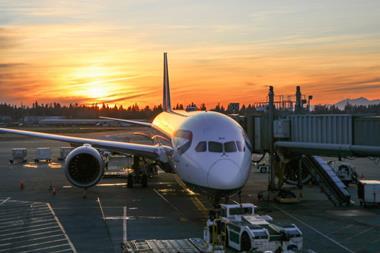
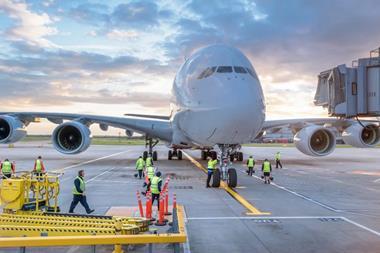
Turnaround performance has become the clearest example of this shift. At Seattle-Tacoma International Airport, Alaska Airlines used AI-powered turnaround technology to reduce aircraft turn times, while Berlin Brandenburg Airport has prioritised AI-enabled turnaround management to maximise capacity within its point-to-point operating model.
But the sequencing matters as much as the technology. Fiumicino’s approach, layering AI onto an existing Airport Collaborative Decision-Making discipline rather than replacing it, shows why data foundations have to come before automation, not after.
This trust in automation is now being tested in public. As turnaround management and resource allocation become more automated, leaders are confronting what happens when the algorithm gets it wrong, or the underlying data is unreliable. Few airports have yet designed for graceful degradation when these systems fail mid-operation.
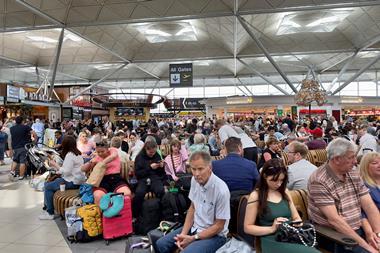
Heathrow’s March 2025 closure made the resilience-versus-convenience trade-off impossible to ignore, and its cascading effect across airlines and airports worldwide raised a harder question still: whether mutual aid and shared protocols are the future, or whether every airport remains, in practice, on its own.
Resilience should be viewed as an investment, not a cost. But in 2026, it also has to be provable. Airports that can demonstrate measurable gains, not just describe them, will be the ones airlines and regulators trust with the next disruption.
These are exactly the questions being worked through at the IAS 2026 Roundtables on Operational Resilience & Capacity, in a peer-only setting where airport leaders can compare what has genuinely delivered results and what hasn’t, away from vendor pitches and public scrutiny.
Join the conversation in Rome this November. Register your interest for the IAS 2026 Roundtables.




No comments yet