





Improving resilience | Unlocking capacity | Modernising systems

Abandoning the fortress in a geopolitically complex world
For decades, the aviation industry has treated security as a straightforward, front-door problem. Airports built stronger fences, deployed sharper X-ray machines, and focused resources on stopping prohibited items and bad actors at the checkpoint.
But as this eReport on ‘Airport security in a geopolitically complex world’ demonstrates, this fortress mentality is dangerously outdated. The perimeter we have spent billions defending has become increasingly porous - not because the gates are weak, but because the modern deeply interconnected threat landscape transcends them.

The articles in this report demonstrate that the industry must abandon its strategy of isolated prevention and instead embrace system-wide, integrated resilience, or risk being paralysed by the next inevitable crisis.
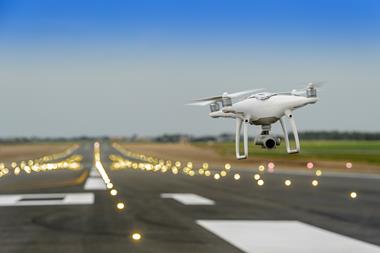
We have entered an era where geopolitical volatility is no longer episodic, but the new normal. As Patrick Cuschieri (p. 5) and Darryl Dowd (p. 11) point out in their respective pieces, a drone launched miles away, or a sudden airspace closure prompted by conflict, can instantly transform an airport from a commercial transport hub into a frontline crisis centre.
It is naive to think that airports can independently “defend” against these macro-events, especially when they lack the legal and military authority to do so. In fact, as Stijn De Vleeschhouwer of SkeyDrone (p. 7) warns, attempting to deploy active physical countermeasures against drones is highly risky and can dangerously interfere with manned aviation. Therefore, an uncomfortable but necessary shift must occur. We must accept that some threats are unpreventable at the airport level, making operational survivability and rapid recovery far more critical than prevention alone.
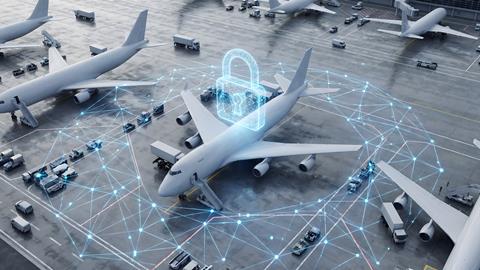
Furthermore, we are blinding ourselves to the threats bypassing our physical infrastructure altogether. The “One Security” approach championed by Oliver Braun and Ricardo Roth at Berlin Brandenburg Airport (p. 6) is exactly the kind of integrated thinking the industry desperately needs. Treating a third-party IT outage or a cyber-attack as a strictly digital problem is a fatal flaw; in today’s interconnected environment, a cyber anomaly instantly cascades into terminal congestion and physical security risks. If we continue to treat cyber and physical security as siloed departments, we are practically inviting disruption.
This siloing is equally dangerous when it comes to the people inside our buildings. As Ajesh Verma (p. 10) rightly argues, our relentless drive toward automation has engineered away the “soft oversight” that once caught insider threats. What is clear is that we cannot allow the pursuit of seamless passenger journeys to create blind spots on the ramp or in our IT networks. A biometrically secured door is useless if the person walking through it has been compromised by financial exploitation or radicalisation, highlighting that security is ultimately a human and cultural challenge, not just a technological one.
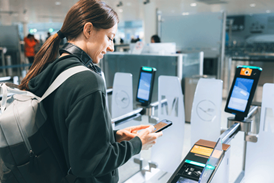
Technology, of course, remains a powerful enabler. AI-powered screening and decentralised digital identity frameworks promise to dramatically improve both passenger flow and threat detection. But as Raúl Valencia notes regarding digital identity, the true test of these technologies is not biometric accuracy, but the trust architecture that allows cross-border interoperability. Without a unified governance framework, we are just building faster silos.
With research by Uppsala University finding that conflicts are now at their highest level since the Second World War, this increases the risk of terror attacks, state-backed threats and radicalisation, and with airports being national infrastructure, it is crucial that we safeguard this globally-important sector. The true test of a modern airport is no longer just whether it can stop an attack at the checkpoint, but how easily it can absorb, adapt to, and recover from shocks that originate in the cloud, in conflict zones, or from within its own ranks. It is time we stop defending an illusionary perimeter and start building truly resilient airport systems, fit for a world that will only become more complex.
I hope you enjoy the eReport.

Topics
Airport security in a geopolitically complex world
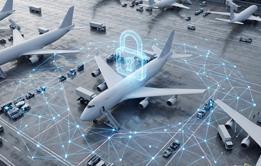
As geopolitical instability, cyber threats and insider risks reshape aviation security, this report explores why airports must move beyond perimeter protection towards integrated resilience, combining technology, governance and human oversight to withstand disruption and recover rapidly.
 Currently
reading
Airport security in a geopolitically complex world [1]
- 2
- 3
- 4
- 5
- 6
- 7
- 8





No comments yet